Black Lives Matter: Systemic Reform Challenges and Social Backlash
Source:Indian Express ↗
Why It Matters
For UPSC aspirants, this issue serves as an important international case study on social movements, systemic discrimination, and the gap between institutional promises and actual implementation. It offers parallels to India's own struggles with caste-based discrimination, communalism, and the challenges of enforcing affirmative action and social justice.
Summary
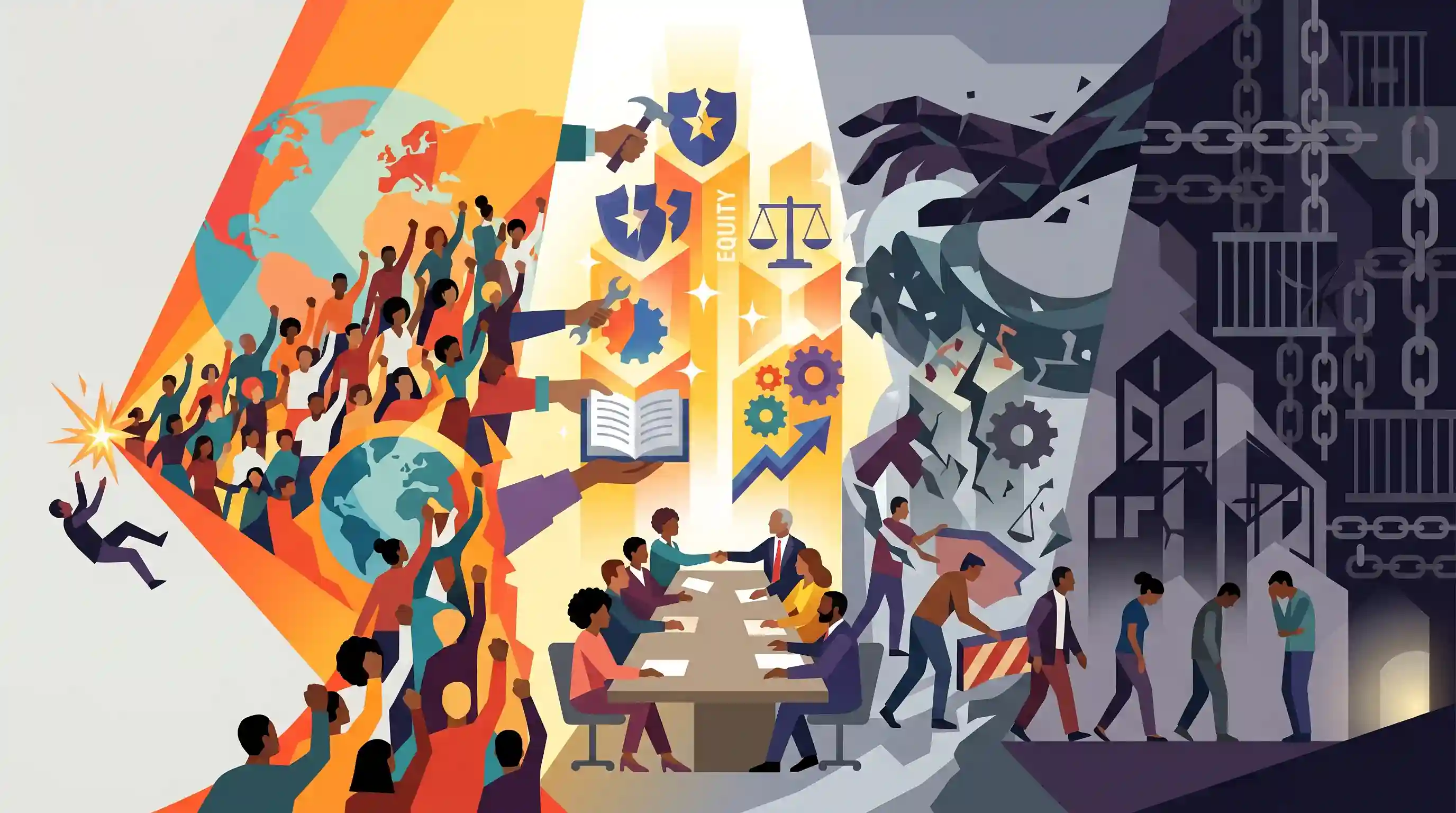
Five years after the murder of George Floyd galvanized the global Black Lives Matter movement, many institutional and political commitments to address systemic racism have been abandoned. Despite initial surges in corporate and government promises regarding diversity, equity, and police reform, a subsequent backlash has led to a retreat from these goals. The waning momentum highlights the persistent challenge of overcoming entrenched systemic discrimination and translating temporary social outrage into lasting structural change.
Key Points
- Five years after the murder of George Floyd, which sparked the global Black Lives Matter movement, momentum for anti-racism reforms has waned.
- In the immediate aftermath of the protests, numerous institutions made strong commitments to combat systemic racism and promote diversity, equity, and inclusion (DEI).
- Many of these initial promises and institutional commitments have since been scaled back or completely abandoned amidst political backlash and shifting priorities.
- The regression underscores the deep-rooted nature of systemic discrimination and the challenges of translating social movements into permanent institutional or legislative change.
Important Terms
Black Lives Matter (BLM)

A global decentralized human rights movement originating in the U.S. that protests against police brutality and racially motivated violence toward Black people, gaining massive momentum after 2020.
UPSC context
GS II: Social Justice; tests understanding of global civil rights movements and their influence on domestic social narratives.
Systemic Racism
Discrimination embedded within society's institutional and social structures—laws, policies, and norms—that creates unequal opportunities and outcomes for specific racial or ethnic groups regardless of individual intent.
UPSC context
GS I: Indian Society; relevant for discussing entrenched inequality and the structural challenges faced by marginalized sections.
Police Reform
Efforts to improve law enforcement's accountability, transparency, and professional conduct. In India, this often focuses on replacing colonial-era laws and implementing the Supreme Court's Prakash Singh directives.
UPSC context
GS II: Governance & GS III: Internal Security; essential for topics on institutional accountability and civil liberty protections.
Diversity, Equity, and Inclusion (DEI)
Organizational frameworks aimed at promoting the fair treatment and full participation of all people, particularly underrepresented groups. These programs currently face significant political and corporate backlash.
UPSC context
GS II: Social Justice & GS IV: Ethics; relevant for corporate governance and the ethics of inclusive administration.
Global Social Movements
Large-scale, often informal group actions aimed at social or political change that transcend national borders, often inspiring local struggles through shared narratives of justice.
UPSC context
GS I: Social Empowerment; tests the ability to connect international social dynamics to national movements like #DalitLivesMatter.
Social Empowerment
The process of enhancing the capacity of individuals or groups, especially the marginalized, to make choices and transform them into actions that improve their social standing and autonomy.
UPSC context
GS I & II: Syllabus keyword; central to questions on the upliftment of vulnerable sections of society.
Prelims Trap
"India has not ratified the UN Convention on the Elimination of All Forms of Racial Discrimination (ICERD)."
India ratified ICERD in 1968. However, India maintains a strict legal stance at UN forums that 'caste' discrimination is not synonymous with 'racial' discrimination.
Static Concepts Connected
How does Indian Affirmative Action (Reservation) differ from Western DEI models?
- Legal mandate: Indian reservation is a fundamental constitutional guarantee (Art 15, 16) against the State. DEI is largely a voluntary, private-sector corporate governance framework.
- Target groups: India targets historically disadvantaged castes/classes (SC/ST/OBC). Western DEI encompasses race, gender, and sexual orientation, aiming for broader workplace representation.
What are the typical lifecycle stages of a social movement?
- Emergence & Coalescence: Triggered by a catalyst (e.g., George Floyd), leading to initial unorganized agitation and subsequent mass mobilization around specific grievances.
- Institutionalisation: Movement demands are absorbed into formal structures (like corporate policies or police reform bills), requiring sustained bureaucratic implementation.
- Decline or Backlash: Movements often face regression once initial social outrage fades, confronting organized political pushback or corporate rollback when priorities shift.
Cross-Topic Patterns
BLM and India's anti-caste movement
UPSC often links Western anti-racism protests with Indian anti-caste movements, questioning whether systemic race discrimination mirrors the historical and structural nature of the caste system.
Corporate Ethics and "Ethics Washing"
The rollback of corporate DEI commitments post-2020 serves as a perfect GS-4 example of organizations prioritizing superficial public relations (ethics washing) over deeply embedded, morally responsible behavior.

Expect a GS-2 Mains comparative question on how US affirmative action and DEI (race) differs from Indian Constitutional reservation (caste).
Linked PYQs · 3
Linked PYQs · 3
- 2024MainsGS1
Despite comprehensive policies for equity and social justice, underprivileged sections are not yet getting the full benefits of affirmative action envisaged by the Constitution. Comment.
- 2024MainsGS4
“The concept of Just and Unjust is contextual. What was just a year back, may turn out to be unjust in today's context. Changing context should be constantly under scrutiny to prevent miscarriage of justice.” Examine the above statement with suitable examples.
- 2015MainsGS1
Debate the issue of whether and how contemporary movements for assertion of Dalit identity work towards annihilation of caste.
