First direct Vande Bharat rail link between Jammu and Srinagar
Source:Indian Express ↗
Why It Matters
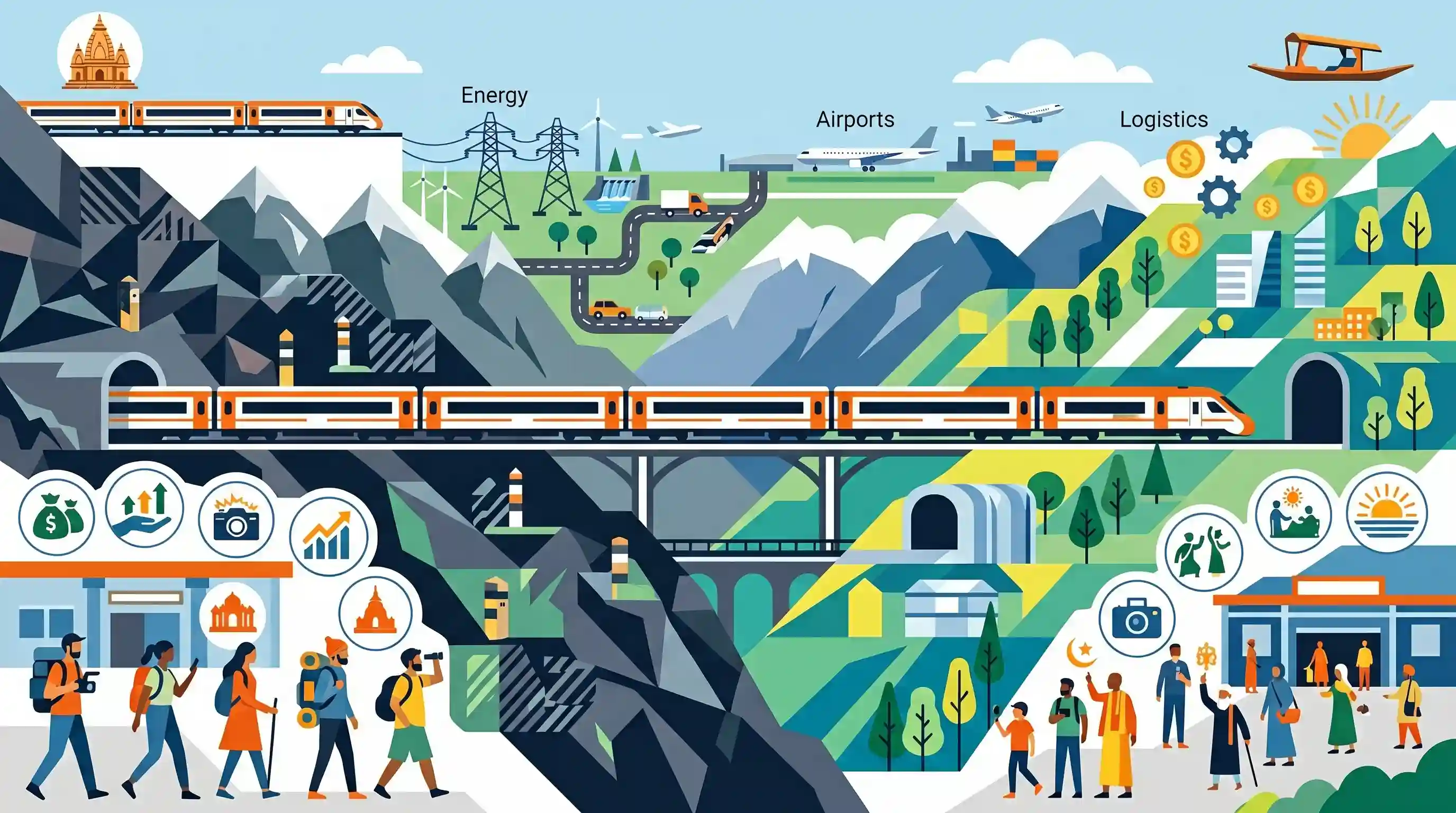
Demonstrates the practical implementation of major infrastructure projects in challenging border terrains. It highlights the strategic use of connectivity (like the Vande Bharat Express) to drive economic growth, promote tourism, and foster social integration in strategically vital areas like Jammu and Kashmir.
Summary
Railway Minister Ashwini Vaishnaw has flagged off the first direct 20-coach Vande Bharat Express between Jammu and Srinagar. Replacing the previous 8-coach Katra-Srinagar service, this high-capacity train is designed to meet the massive demand from tourists and pilgrims visiting the region. The project provides a crucial all-weather connectivity boost to Jammu and Kashmir, overcoming historical geographical barriers. J&K Chief Minister Omar Abdullah welcomed the move, highlighting its significance for regional mobility, economic integration, and tourism development.
Key Points
- Railway Minister Ashwini Vaishnaw flagged off the first direct 20-coach Vande Bharat Express connecting Jammu and Srinagar.
- The new service replaces the previous 8-coach Katra-Srinagar train, significantly expanding capacity to accommodate tourists and pilgrims.
- The high-speed rail line provides a crucial all-weather connectivity boost to the geographically challenging region of Jammu and Kashmir.
- Enhanced infrastructure integration aligns with broader strategies to stimulate regional economic development, promote tourism, and foster stability in border areas.
Important Terms
Vande Bharat Express

India’s first indigenous semi-high-speed trainset, featuring distributed power technology and speeds up to 160 km/h. Developed by ICF Chennai, it symbolizes the 'Make in India' initiative in the transport sector.
UPSC context
GS-III (Infrastructure); tests knowledge of indigenous technology, railway modernization, and the shift toward self-propelled trainsets.
USBRL Project
A 272-km National Project designed to provide all-weather rail connectivity to the Kashmir Valley. It involves complex engineering across the Himalayan terrain, including the Pir Panjal tunnel.
UPSC context
GS-I (Geography) & GS-III (Infrastructure); covers strategic regional connectivity, engineering milestones, and socio-economic integration of Jammu and Kashmir.
Chenab Rail Bridge
The world’s highest railway arch bridge, standing 359 meters above the Chenab River. It is a key component of the USBRL, designed to withstand extreme wind and seismic activity.
UPSC context
GS-III (Infrastructure/Strategic Assets); showcases Indian engineering prowess and the ability to project state presence in difficult border terrains.
All-Weather Connectivity
Transportation infrastructure designed to stay operational year-round despite extreme weather like heavy snowfall or landslides. In J&K, it reduces reliance on the vulnerable NH-44 highway.
UPSC context
GS-III (Security/Infrastructure); essential for military logistics, maintaining supply chains, and fostering regional stability in sensitive border zones.
Kavach (Safety System)
An indigenous Automatic Train Protection (ATP) system that prevents collisions by automatically applying brakes if a loco-pilot misses signals or in case of overspeeding.
UPSC context
GS-III (Science & Tech/Railways); critical for understanding safety reforms and domestic technical breakthroughs in Indian Railway operations.
Dual-Use Infrastructure
Infrastructure projects that serve both civilian socioeconomic purposes and strategic military logistics. The J&K rail link facilitates tourism while ensuring rapid troop mobilization.
UPSC context
GS-III (Security/Infrastructure); tests the understanding of how development acts as a deterrent and a tool for national defense.
Prelims Trap
The USBRL project introduces the first-ever railway operations inside the Kashmir Valley.
False. A local train network (Baramulla-Banihal) already existed in the Valley. USBRL is historic because it connects this isolated segment to the national grid.
Static Concepts Connected
What are the distinct engineering achievements of the USBRL project?
- Chenab Bridge: The world's highest railway arch bridge, standing at 359 meters above the river bed.
- Anji Khad Bridge: India's first cable-stayed railway bridge, designed to span deep gorges in fragile geological zones.
- Tunnel T-50: India's longest transportation tunnel (12.77 km), built through the Pir Panjal using the New Austrian Tunnelling Method.
How does border infrastructure development help counter extremism?
- Economic Integration: Links isolated populations to national markets, boosting local incomes through reliable trade and tourism flows.
- Security Mobility: All-weather roads and railways allow rapid, year-round deployment of security forces across treacherous Himalayan terrains.
- Alienation Reduction: Visible state investment and massive local job creation counter anti-state narratives and reduce youth radicalization.
Cross-Topic Patterns
Fast-tracking Himalayan Agri-Exports
High-speed rail eliminates weather-disrupted highway delays, seamlessly integrating perishable Kashmiri horticulture (like apples and cherries) into the national supply chain.
Geography + Internal Security
Bypassing snow-bound Pir Panjal passes via all-weather tunnels ensures uninterrupted strategic mobility, fundamentally altering J&K's security and logistical calculus.

Expect Prelims pairs on Himalayan infra (Anji Khad: cable-stayed, Chenab: arch) or a Mains Q on rail integration curbing J&K alienation.
Linked PYQs · 4
Linked PYQs · 4
- 2021MainsGS3
“Investment in infrastructure is essential for more rapid and inclusive economic growth.” Discuss in the light of India's experience.
- 2024MainsGS3
India has a long and troubled border with China and Pakistan fraught with contentious issues. Examine the conflicting issues and security challenges along the border. Also give out the development being undertaken in these areas under the Border Area Development Programme (BADP) and Border Infrastructure and Management (BIM) Scheme.
- 2023MainsGS3
Winning of 'Hearts and Minds' in terrorism-affected areas is an essential step in restoring the trust of the population. Discuss the measures adopted by the Government in this respect as part of the conflict resolution in Jammu and Kashmir.
- 2022MainsGS3
Why is Public Private Partnership (PPP) required in infrastructural projects ? Examine the role of PPP model in the redevelopment of Railway Stations in India.
