गंगा जल बंटवारे की संधि का नवीनीकरण और द्विपक्षीय जल कूटनीति
स्रोत:इंडियन एक्सप्रेस ↗
क्यों मायने रखता है
The expiration of the Ganges Water Treaty in 2026 is a looming geopolitical flashpoint in South Asia. Understanding the intersection of transboundary water sharing and bilateral diplomacy is critical for answering questions on India's 'Neighbourhood First' policy and border dispute management in GS Paper 2.
सारांश
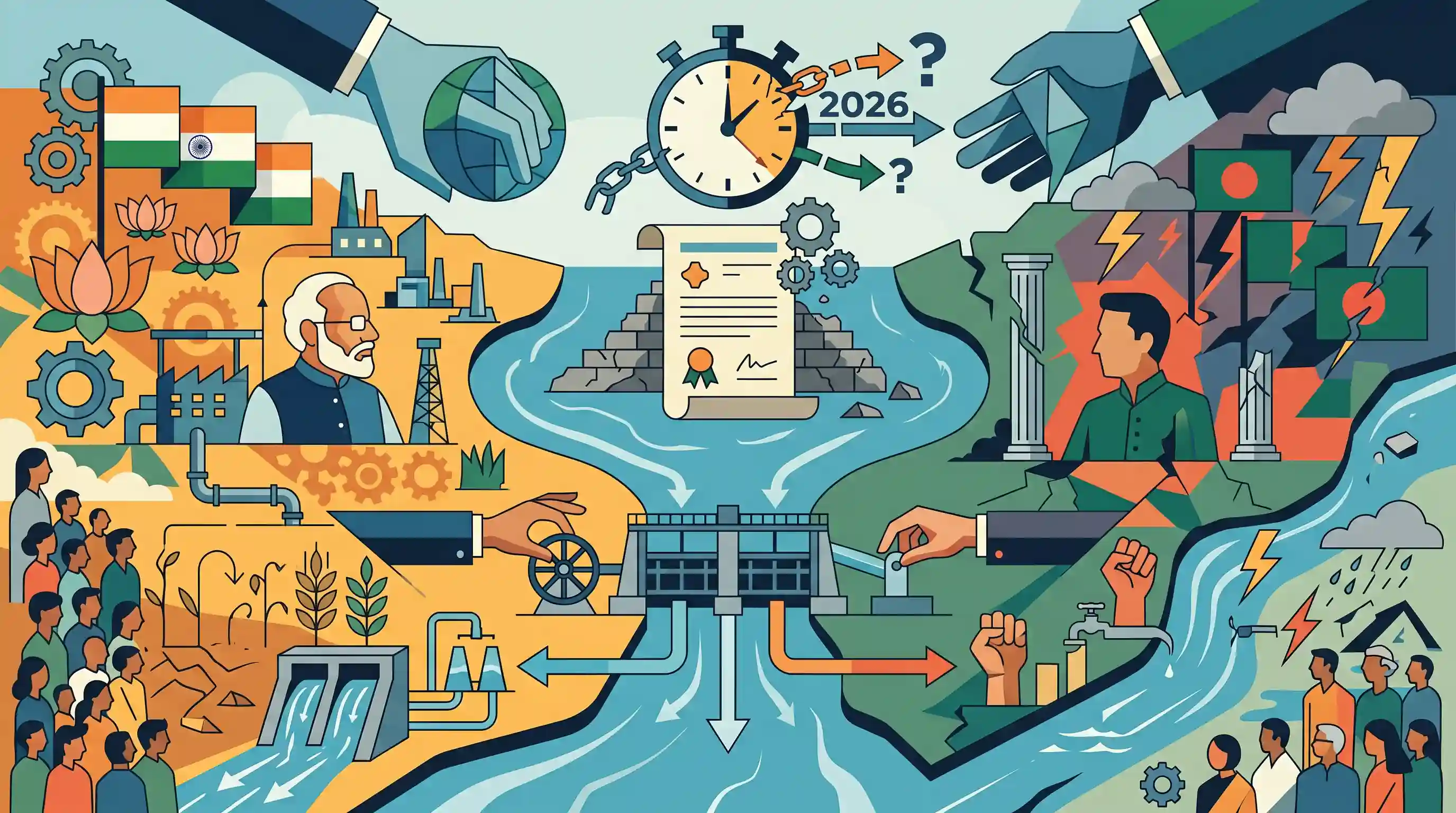
The article examines the uncertain future of the 1996 Ganges Water Sharing Treaty between India and Bangladesh, which expires in 2026. Its renewal is heavily contingent on the state of bilateral relations, which have become complicated following recent political shifts and regime change in Dhaka. The piece highlights the broader challenges of hydro-politics in South Asia, illustrating how transboundary river agreements—such as those involving the Ganges and Teesta rivers—are intricately tied to both domestic political pressures and international diplomatic ties.
मुख्य बिंदु
- The 1996 Ganges Water Sharing Treaty between India and Bangladesh is scheduled to expire in 2026, making its renewal a pressing diplomatic issue.
- The fate of the treaty's renewal is clouded by strained bilateral ties and changing political dynamics following the recent regime change in Dhaka.
- Transboundary river management, including the unresolved Teesta water dispute, remains highly sensitive and intricately linked to the broader geopolitical relationship between the two nations.
- यह स्थिति दक्षिण एशिया में जल-राजनीति (hydro-politics) की जटिलताओं को रेखांकित करती है, जहाँ घरेलू राजनीतिक हित (जैसे कि भारत में राज्य सरकारों की भागीदारी) अंतर्राष्ट्रीय जल कूटनीति को गहराई से प्रभावित करते हैं।
महत्वपूर्ण शब्द
गंगा जल साझाकरण संधि (1996)

A 30-year bilateral agreement (expiring 2026) governing the sharing of the Ganges' waters at Farakka Barrage during the lean season (January–May) based on a specific volumetric formula.
UPSC context
GS पेपर II/अंतर्राष्ट्रीय संबंध; जल कूटनीति और द्विपक्षीय संधियों पर घरेलू संघवाद के प्रभाव के विश्लेषण के लिए अनिवार्य।
तीस्ता नदी विवाद
तीस्ता नदी के जल बँटवारे को लेकर एक प्रमुख द्विपक्षीय विवाद; पश्चिम बंगाल राज्य सरकार की आपत्तियों के कारण 2011 का एक अंतरिम समझौता अटक गया था।
UPSC context
GS पेपर II; भारत-बांग्लादेश संबंधों और विदेश नीति में राज्य-स्तरीय हितधारकों की भूमिका की समझ का परीक्षण करता है।
जल-राजनीति
यह अध्ययन कि कैसे जल संसाधन प्रबंधन और तटवर्ती स्थिति (ऊपरी बनाम निचले प्रवाह वाले देश) अंतरराष्ट्रीय संबंधों, राजनीतिक शक्ति की गतिशीलता और घरेलू नीतिगत निर्णयों को प्रभावित करते हैं।
UPSC context
GS पेपर II/International Relations; दक्षिण एशिया में क्षेत्रीय आधिपत्य, सहयोग और साझा प्राकृतिक संसाधनों पर संघर्ष पर चर्चा के लिए प्रासंगिक।
Farakka Barrage
A barrage in West Bengal built to divert Ganges water into the Hooghly River to flush out silt at Kolkata Port; it is the physical focal point of India-Bangladesh water sharing.
UPSC context
GS Paper I/Geography and GS II; critical for understanding the environmental and diplomatic fallout of transboundary river infrastructure.
नेबरहुड फर्स्ट पॉलिसी
A primary pillar of India’s foreign policy that prioritizes active engagement, connectivity, and stable relations with immediate neighbors like Bangladesh to ensure regional security and prosperity.
UPSC context
GS Paper II; central to questions regarding India’s strategic autonomy and its ability to manage regime changes in the neighborhood.
Transboundary Rivers
Rivers that cross international borders; India and Bangladesh share 54 such rivers, necessitating joint management through bodies like the Joint Rivers Commission (JRC).
UPSC context
GS Paper II/I; fundamental for discussing international water law, regional ecology, and the 'riparian rights' of lower-stream nations.
प्रारंभिक ट्रैप
The 1996 Ganges Treaty permanently allocates specific eastern rivers to Bangladesh and western rivers to India.
Unlike the Indus Water Treaty which partitions entire river systems, the Ganges Treaty only determines a volumetric sharing formula for dry-season flow at a specific location (Farakka).
संबंधित अवधारणाएँ
How does the Constitution balance international treaties with state powers over water?
- Article 253: Empowers Parliament to enact laws on any subject (even State List) to implement international treaties or agreements.
- State List (Entry 17): Water supplies, irrigation, and canals fall under Entry 17 of the State List, making state governments vital stakeholders.
- Political convention: Despite constitutional supremacy via Art 253, the Union rarely bypasses riparian states (e.g., West Bengal on Teesta) to prevent federal friction.
What is the geographical trajectory and significance of the Teesta River?
- Origin: Originates from the Pauhunri glacier and Tso Lhamo lake in the Himalayas of Sikkim.
- Course: सिक्किम के पहाड़ों और पश्चिम बंगाल के मैदानों से होकर तेज़ी से बहती हुई बांग्लादेश में प्रवेश करती है।
- Confluence: Acts as a major right-bank tributary to the Brahmaputra River (known locally as the Jamuna) in Bangladesh.
अंतर-विषय पैटर्न
ऊपरी तटवर्ती जल-आधिपत्य और पड़ोस प्रथम
India's downstream concerns regarding China's run-of-the-river projects on the Brahmaputra structurally mirror Bangladesh's downstream anxieties regarding India's control over the Ganges and Teesta rivers.
Glacial retreat altering historical water treaties
Static volumetric water agreements like the 1996 Ganges pact face structural threats from Himalayan glacial melt and erratic monsoons, which fundamentally alter historical lean-season river flows.

Expect a comparative Prelims question in 2026 contrasting the specific sharing mechanisms of the Indus Water Treaty and the Ganges Treaty.
संबद्ध PYQ · 3
संबद्ध PYQ · 3
- 2012MainsGS2
The situation today is far different to that prevalent fifty years back when the Indus Water Treaty was signed." Highlight the complexity of the current challenges on both sides of the border in this regard. Do you think that a review of the Treaty is in India's best interests?
- 2015MainsGS2
Project 'Mausam' is considered a unique foreign policy initiative of the Indian Government to improve relationship with its neighbours. Does the project have a strategic dimension? Discuss.
- 2025MainsGS1
Discuss the distribution and density of population in the Ganga River Basin with special reference to land, soil and water resources.
