Yavatmal survey highlights health crisis from hazardous pesticides
Source:Indian Express ↗
Why It Matters
The article vividly illustrates the dark side of modern agriculture, where poor regulation of highly hazardous pesticides leads to severe occupational health crises. For UPSC aspirants, it links the topics of agricultural practices (like Bt cotton cultivation) with environmental health, human rights, and the urgent need for robust statutory frameworks like the Pesticide Management Bill.
Summary
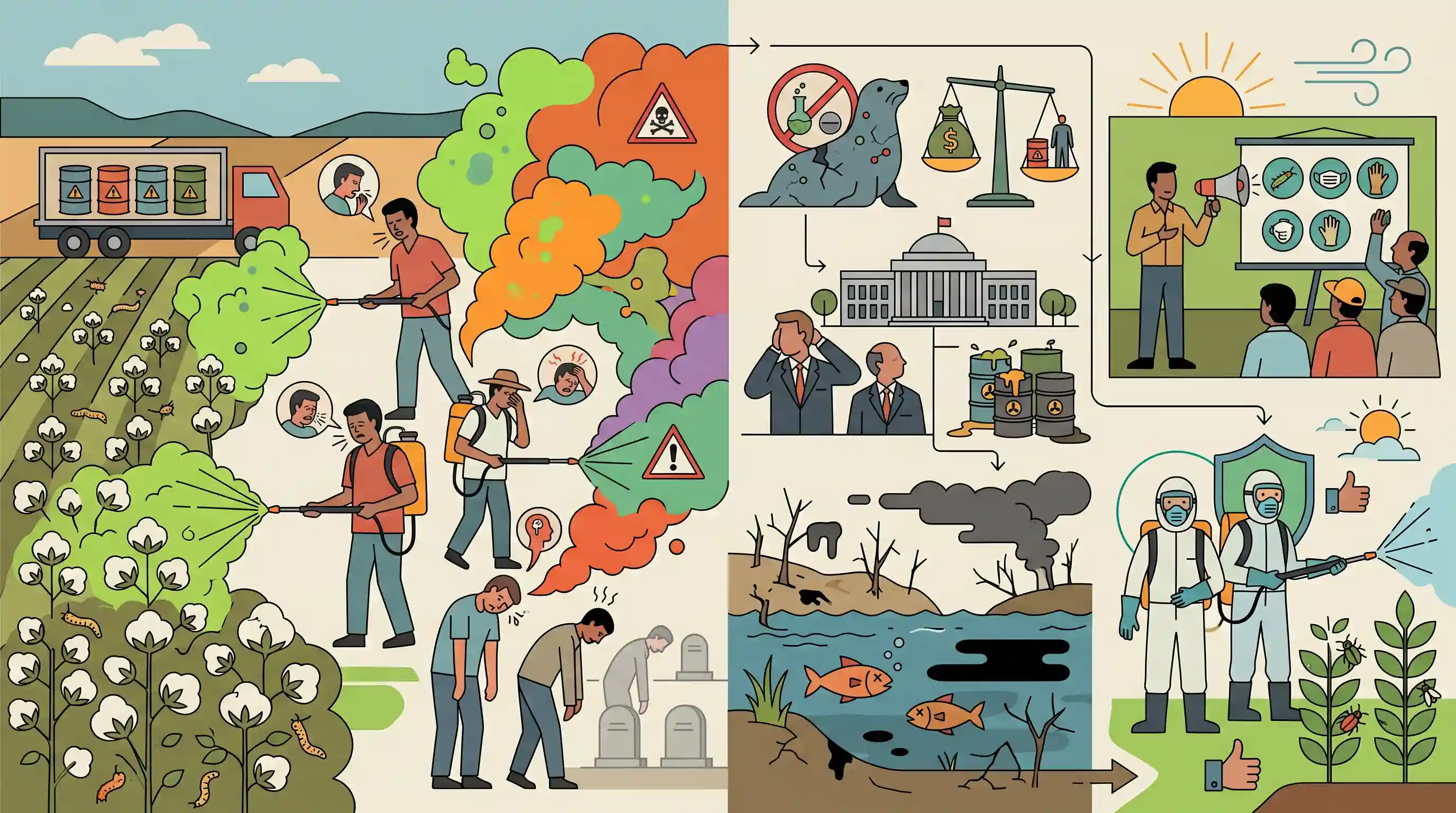
A recent survey highlights that farmers and agricultural laborers in Maharashtra's Yavatmal district continue to suffer severe occupational health hazards due to the prevalent use of highly hazardous pesticides (HHPs). Despite earlier tragedies of pesticide poisoning in the region, workers face prolonged exposure to toxic agrochemicals without adequate personal protective equipment (PPE). The ongoing crisis underscores systemic gaps in enforcing agrochemical regulations, the unintended consequences of certain cropping patterns like Bt cotton, and the urgent need for robust agricultural extension services to ensure farmer safety.
Key Points
- Farmers in Yavatmal continue to experience severe occupational health issues due to exposure to highly hazardous agricultural pesticides.
- A lack of adequate personal protective equipment (PPE) and poor safety awareness significantly compound the health risks faced by agricultural laborers.
- The widespread cultivation of cash crops like Bt cotton has led to intense spraying of toxic chemicals to control secondary pests, exacerbating the exposure.
- The persistent crisis highlights systemic regulatory failures in restricting Highly Hazardous Pesticides (HHPs) and enforcing safety guidelines under the Insecticides Act.
Important Terms
Insecticides Act, 1968

Primary legislation in India regulating the import, manufacture, sale, transport, and use of insecticides to prevent risks to humans and animals.
UPSC context
GS Paper III (Agriculture); essential for understanding the existing legal framework and regulatory challenges in agrochemical safety.
Pesticide Management Bill, 2020
Proposed law to replace the 1968 Act, aiming to ensure pesticide safety, provide compensation for farmers, and promote organic alternatives.
UPSC context
GS Paper III (Agriculture/Governance); crucial for current affairs related to legislative reforms and farmer welfare.
Highly Hazardous Pesticides (HHPs)
WHO/FAO-classified agrochemicals that present particularly high levels of acute or chronic health hazards or environmental toxicity.
UPSC context
GS Paper III (Environmental Pollution); tests knowledge of international safety standards and occupational health in agriculture.
Central Insecticides Board and Registration Committee (CIBRC)
Statutory bodies under the Ministry of Agriculture that advise on chemical safety and manage the mandatory registration of pesticides in India.
UPSC context
GS Paper II (Statutory Bodies); central to the administrative and regulatory process of agrochemical approval.
Pesticide Action Network (PAN) India
A public interest organization working to eliminate hazardous pesticides and promote sustainable, non-chemical alternatives in farming.
UPSC context
GS Paper II (NGOs/Civil Society); illustrates the role of advocacy groups in environmental governance and public health.
Maharashtra State Agriculture Department
The state-level agency responsible for licensing, extension services, and monitoring the use of agrochemicals in Maharashtra.
UPSC context
GS Paper II (Governance); relevant for studying federal implementation of agricultural policies and rural service delivery.
Prelims Trap
Bt Cotton adoption has successfully eliminated pesticide usage by conferring broad-spectrum resistance to all major cotton pests.
Bt Cotton targets specific bollworms. It has led to outbreaks of secondary pests (like whiteflies) and resistant pink bollworms, actually increasing hazardous chemical sprays.
Static Concepts Connected
What is the regulatory framework for pesticides in India?
- CIBRC: Established under the Insecticides Act 1968 (Ministry of Agriculture) to regulate the import, manufacture, sale, and use of insecticides.
- FSSAI: Sets maximum residue limits (MRLs) for pesticides in food products under the Food Safety and Standards Act.
- Anupam Varma Committee: Constituted in 2015 to review 66 highly hazardous pesticides (HHPs) banned in other countries but still heavily used in India.
How does Bt Cotton technology relate to secondary pest outbreaks?
- Cry Toxins: Bt cotton produces Cry1Ac and Cry2Ab proteins toxic to the American bollworm, effectively reducing initial target-pest damage.
- Secondary Pests: Non-target pests like whiteflies and jassids are unaffected by Bt toxins, eventually requiring intensive chemical pesticide applications.
- Pest Resistance: The Pink Bollworm has developed resistance to Bt toxins in regions like Maharashtra, leading to increased hazardous spraying.
Cross-Topic Patterns
GM Crops & Secondary Pest Dilemma
The ecological succession of pests (like whiteflies replacing American bollworms) connects biotechnology (GS3) with chemical pollution and occupational health crises.
Agrochemicals & Unorganized Labor Rights
Yavatmal poisonings link environmental toxicity directly to occupational safety, highlighting gaps in agricultural extension services and unorganized sector labor rights.

Expect a multi-statement question interlinking Bt cotton's pink bollworm resistance, secondary pests, and the statutory role of CIBRC vs FSSAI.
Linked PYQs · 3
Linked PYQs · 3
- 2019PrelimsGS1
In India, the use of carbofuran, methyl parathion, phorate and triazophos is viewed with apprehension. These chemicals are used as
- 2021PrelimsGS1
Bollgard I and Bollgard II technologies are mentioned in the context of
- 2019MainsGS3
How can biotechnology help to improve the living standards of farmers?
