India US Trade Tariffs and Bilateral Relations Timeline
Source:Indian Express ↗
Why It Matters
Bilateral trade dynamics between India and the US form a critical component of India's foreign policy and economic strategy, directly impacting global trade architecture, export competitiveness, and strategic partnership goals.
Summary
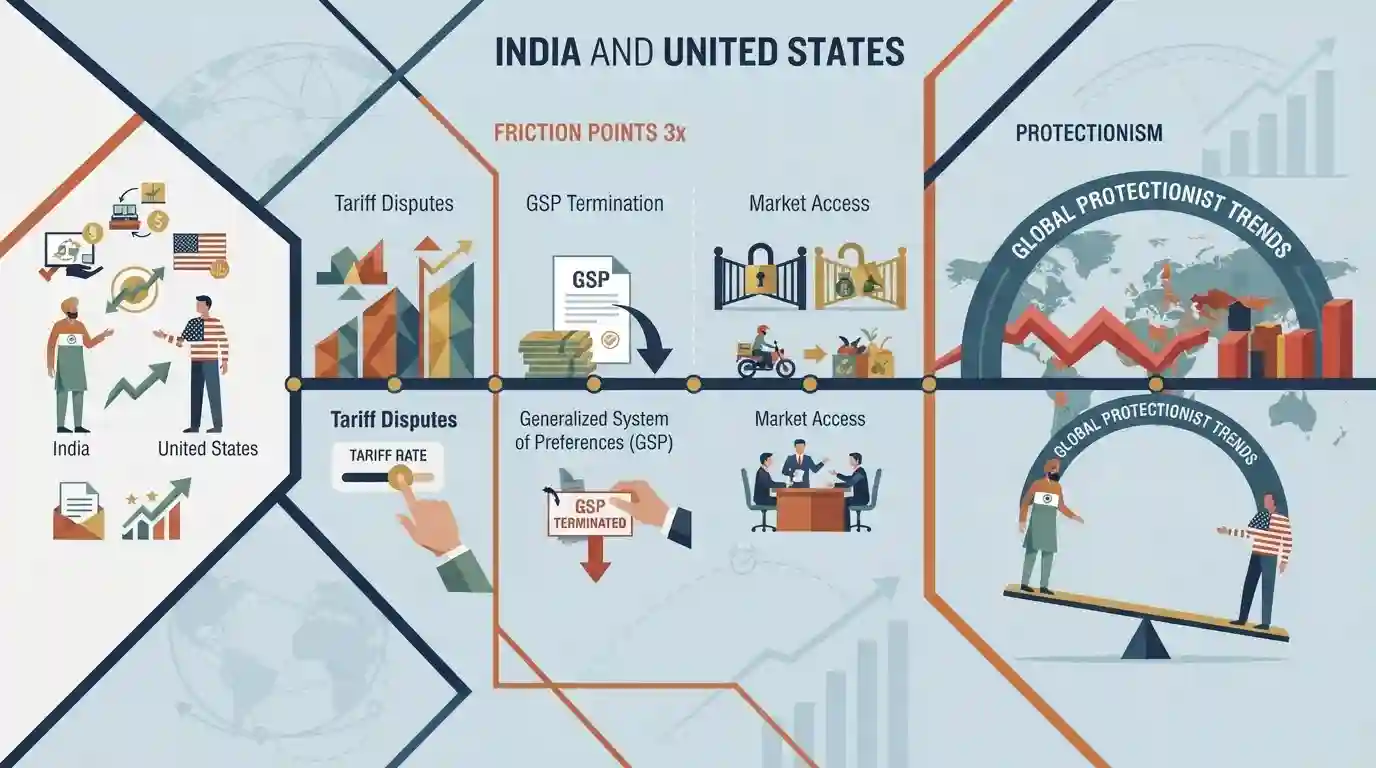
This article outlines the historical timeline and evolution of trade tariffs and disputes between India and the United States. It highlights key friction points, including tariff rates, the termination of India's GSP benefits, market access demands, and the broader implications of rising global protectionism on bilateral economic ties.
Key Points
- India-US trade relations have faced friction due to reciprocal tariff actions and protectionist measures by both nations over the years.
- The US removed India from the Generalized System of Preferences (GSP) program, leading to higher duties on several Indian exports.
- Trade negotiations have frequently stalled over issues like market access for agricultural and dairy products, data localization, and medical device price caps.
- Protectionist trends and bilateral trade disputes underscore the challenges of navigating multilateral trade frameworks like the WTO.
Static Concepts Connected
What is the Generalized System of Preferences (GSP) under international trade law?
- Definition: It is a preferential tariff system allowing developed countries to grant duty-free access to imports from developing nations.
- WTO Basis: Enabling Clause of GATT allows WTO members to provide differential and more favorable treatment to developing countries.
- Eligibility: Beneficiary countries must meet certain criteria including intellectual property protection and worker rights.
Cross-Topic Patterns
GSP termination and unilateral trade concessions
India's removal from the GSP scheme mirrors broader shifts in unilateral trade preferences as developed nations enforce reciprocity.
Digital trade vs. domestic data sovereignty
Data localization friction connects international trade disputes directly with domestic cybersecurity and digital sovereignty frameworks.

US-India trade friction points like GSP, data localization, and WTO dispute resolutions frequently appear in match-the-column prelims.
Linked PYQs · 4
Linked PYQs · 4
- 2018MainsGS2
What are the key areas of reform if the WTO has to survive in the present context of "Trade War', especially keeping in mind the interest of India?
- 2019MainsGS2
‘What introduces friction into the ties between India and the United States is that Washington is still unable to find for India a position in its global strategy, which would satisfy India's national self-esteem and ambitions.’ Explain with suitable examples.
- 2025MainsGS3
What are the challenges before the Indian economy when the world is moving away from free trade and multilateralism to protectionism and bilateralism? How can these challenges be met?
- 2018MainsGS3
How would the recent phenomena of protectionism and currency manipulations in world trade affect macroeconomic stability of India?
