Experts advocate phasing out mercury medical devices in India
Source:The Hindu ↗
Why It Matters
Highlights India's ongoing transition away from toxic medical devices in accordance with international environmental agreements (Minamata Convention). The issue touches upon bio-medical waste management, heavy metal toxicity, and public health, making it highly relevant for GS3 (Environment) and GS2 (Health/Governance).
Summary
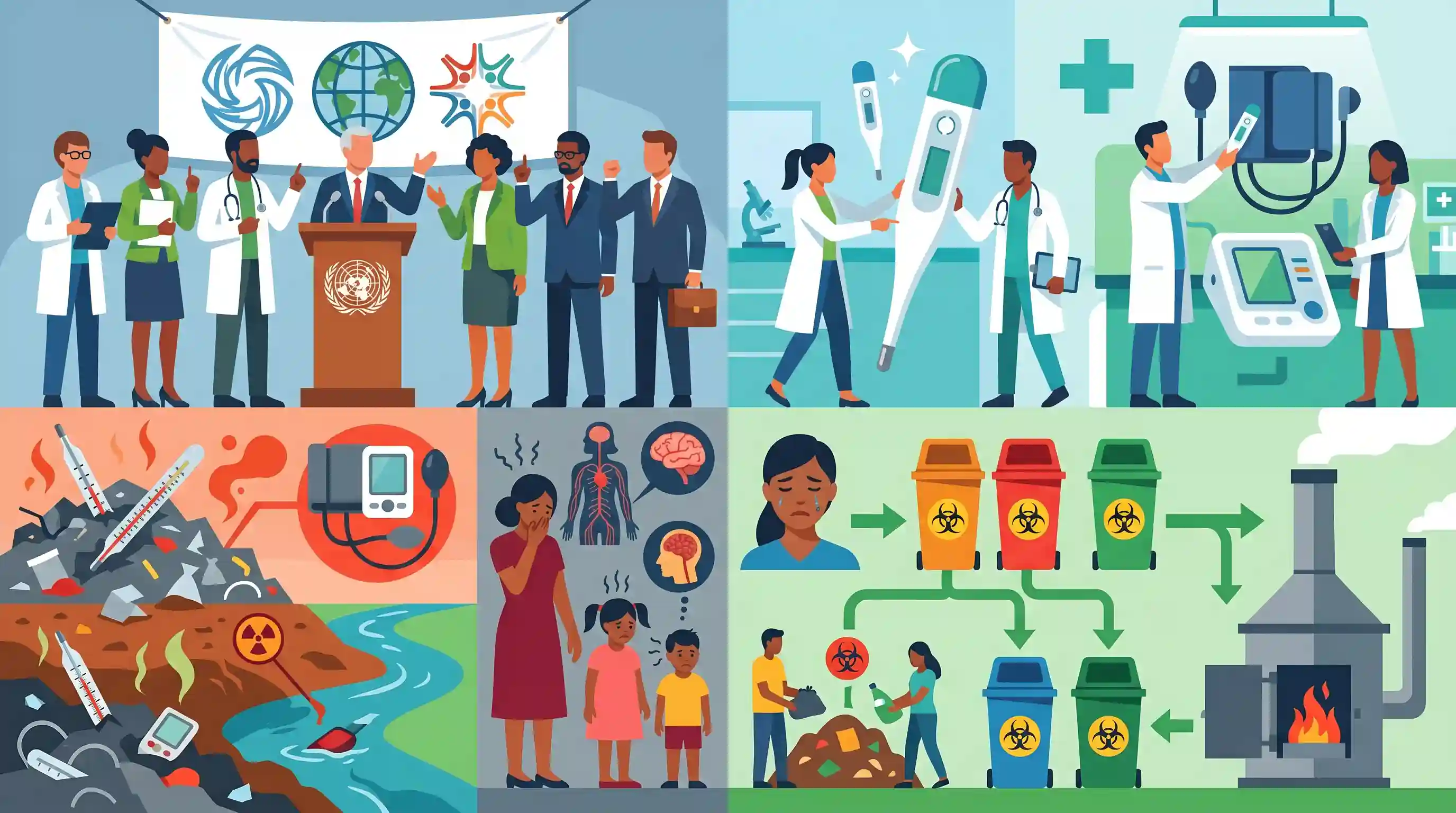
Public health experts, environmental advocates, and government officials gathered in Guwahati to call for the urgent elimination of mercury-containing medical devices in India. Emphasizing India's commitments under the Minamata Convention on Mercury, the experts highlighted the severe health risks—particularly to women and children—and environmental degradation caused by the improper disposal of mercury-based thermometers and sphygmomanometers. They advocated for strict bio-medical waste management protocols and a comprehensive shift toward accurate, mercury-free digital alternatives.
Key Points
- Experts and advocates urge the phase-out of mercury-containing medical devices like thermometers and sphygmomanometers in India to protect human health and the environment.
- The initiative aligns with India's commitments under the UN-backed Minamata Convention on Mercury.
- Mismanaged disposal of medical devices in India historically released an estimated eight tonnes of mercury annually, heavily linked to blood pressure measuring instruments.
- Mercury exposure poses severe, irreversible risks, especially to pregnant women, lactating mothers, and children.
- The healthcare sector and general consumers are advised to transition to accurate and affordable mercury-free digital and aneroid alternatives.
Important Terms
Minamata Convention on Mercury

A global UN treaty (entered into force 2017) designed to protect human health and the environment from anthropogenic emissions and releases of mercury and its compounds. India ratified it in 2018.
UPSC context
GS Paper 3 (Environment); tests knowledge of international environmental treaties and India's obligations regarding hazardous substances.
Assam Pollution Control Board (APCB)
A statutory body in Assam responsible for implementing environmental laws, including the management of bio-medical and hazardous waste, and ensuring compliance with national pollution standards.
UPSC context
GS Paper 2 (Statutory Bodies) and GS Paper 3 (Pollution Control); focuses on the role of state agencies in environmental governance.
Bio-medical Waste Management Rules, 2016
Indian regulations that mandate the scientific segregation, treatment, and disposal of waste generated during medical activities, including specific protocols for hazardous mercury waste.
UPSC context
GS Paper 3 (Environmental Pollution & Degradation); essential for understanding waste management frameworks and health-sector environmental reforms.
Consumer Voice
A New Delhi-based national consumer advocacy organization that focuses on public health, safety standards, and sustainable consumption through policy intervention and awareness campaigns.
UPSC context
GS Paper 2 (Civil Society/NGOs); relevant for topics on the role of pressure groups in public health and consumer protection.
Consumers' Legal Protection Forum, Assam (CLPFA)
A prominent NGO in Assam working to safeguard consumer rights and promote public health awareness, specifically regarding environmental hazards and the phase-out of toxic products.
UPSC context
GS Paper 2 (Development Processes); illustrates the role of regional NGOs in implementing national and international health mandates.
Prelims Trap
Mercury is classified as a Persistent Organic Pollutant (POP) regulated under the Stockholm Convention.
Mercury is a toxic heavy metal, not an organic compound. It is regulated by the Minamata Convention, while the Stockholm Convention targets POPs.
Static Concepts Connected
What is the difference between bioaccumulation and biomagnification of mercury?
- Bioaccumulation: Methylmercury builds up in the tissues of a single aquatic organism over its lifespan because it absorbs the toxin faster than it can be excreted.
- Biomagnification: Mercury concentration multiplies exponentially as it moves up successive trophic levels, severely impacting apex predators and humans consuming fish.
What are India's obligations under the Minamata Convention?
- Legally Binding Treaty: It is a UN-backed, legally binding global treaty to protect human health and the environment from anthropogenic mercury emissions.
- Phased Reductions: India ratified it in 2018, committing to a phased reduction of mercury-added products, coal plant emissions, and artisanal gold mining practices.
- Lifecycle Approach: Regulates the entire lifecycle of mercury, from mining to waste management, overlapping directly with India's Bio-Medical Waste Management Rules 2016.
Cross-Topic Patterns
Mercury in Bio-Medical vs E-Waste Rules
UPSC pairs pollutants with their statutory rules. Mercury features heavily in both Bio-Medical Waste Rules (clinical thermometers, dental amalgam) and E-Waste Rules (fluorescent lamps, CFLs).
Coal power and heavy metal emissions
While medical devices are a direct handling hazard, thermal power plants remain the largest source of atmospheric mercury emissions in India, a recurring prelims theme alongside SOx and NOx.

Expect a multi-statement prelims question linking the Minamata Convention, coal plant emissions, and Bio-Medical Waste Rules 2016.
Linked PYQs · 2
Linked PYQs · 2
- 2023PrelimsGS1
Consider the following statements regarding mercury pollution: 1. Gold mining activity is a source of mercury pollution in the world. 2. Coal-based thermal power plants cause mercury pollution. 3. There is no known safe level of exposure to mercury. How many of the above statements are correct?
- 2018MainsGS3
What are the impediments in disposing the huge quantities of discarded solid wastes which are continuously being generated? How do we remove safely the toxic wastes that have been accumulating in our habitable environment?
