Artificial Intelligence Accountability and Regulatory Frameworks
Source:Indian Express ↗
Why It Matters
Understanding the transition toward AI accountability is essential for UPSC aspirants, as it forms the core of contemporary questions on technology regulation (GS3), governance (GS2), and the ethical implications of automated decision-making (GS4).
Summary
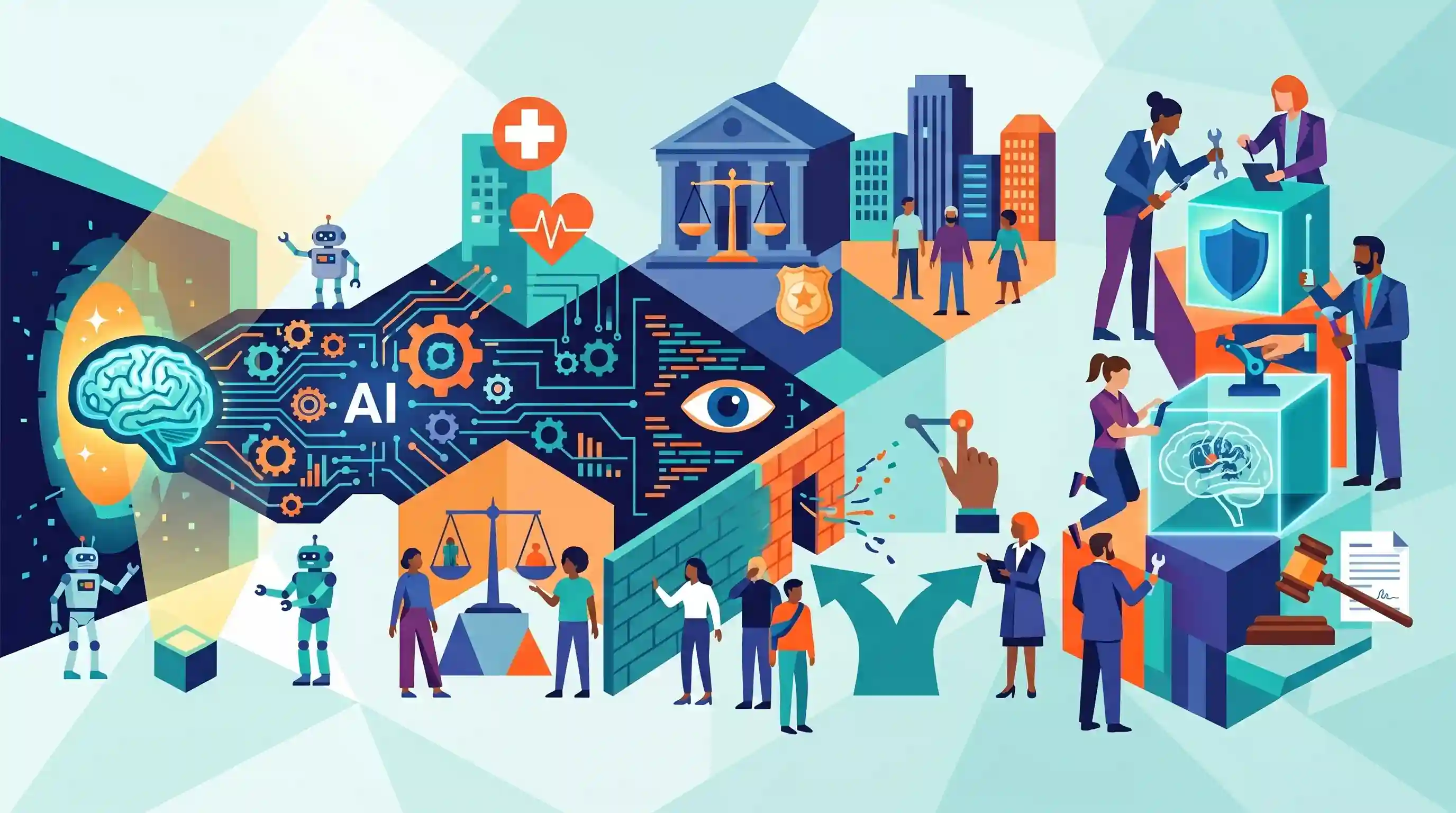
The discourse surrounding Artificial Intelligence (AI) has significantly evolved from an initial fascination with its potential applications to critical debates concerning its accountability and ethical governance. This shift marks a progressive maturation in technology policy, recognizing that as AI becomes deeply integrated into societal systems—such as healthcare, law enforcement, and public administration—issues like algorithmic bias, data privacy, and moral responsibility take center stage. Regulators and tech experts are moving beyond merely promoting AI innovation toward implementing necessary guardrails, ensuring that AI systems remain transparent, fair, and subject to human oversight and legal liability.
Key Points
- The global discourse on Artificial Intelligence has matured, shifting focus from exploring novel use cases to establishing robust accountability and governance frameworks.
- There is a growing emphasis on addressing the ethical challenges of AI, including algorithmic bias, data privacy, and the opacity of 'black box' decision-making systems.
- Policymakers are increasingly prioritizing guardrails and legal liability, ensuring that developers and deployers are held responsible for AI-driven outcomes.
- This transition from unfettered innovation to regulated deployment is viewed as a progressive step necessary to align emerging technologies with human rights and democratic values.
Prelims Trap
"India currently regulates artificial intelligence through a dedicated, comprehensive Artificial Intelligence Act, similar to the European Union."
India does not have a standalone AI statute. It currently relies on existing legislation like the IT Act, 2000, and the DPDP Act, 2023.
Static Concepts Connected
What are the ethical concerns of using AI in public administration?
- Algorithmic Bias: Data skewed by historical inequalities leads to discriminatory outcomes in welfare distribution or predictive policing.
- Black Box Effect: Lack of transparency in how complex algorithms make decisions undermines administrative accountability and citizens' right to know.
- Moral Liability: Diffused responsibility when an AI system makes an error severely challenges traditional frameworks of legal and moral accountability.
What is the 'Black Box' problem in Artificial Intelligence?
- Opaque Logic: Complex machine learning models (like Deep Learning) make decisions through hidden, internal processes that are completely invisible to users.
- Lack of Explainability: Developers and regulators often cannot trace exactly why or how an AI generated a specific output or decision.
- Accountability Gap: It severely hinders legal audits and bias mitigation, as the reasoning cannot be cross-examined by human regulators.
Cross-Topic Patterns
AI Governance + DPDP Act 2023
The shift towards AI accountability directly tests the limits of India's recent data protection law, particularly regarding user consent, data scraping, and the right against automated decision-making.
Bletchley Declaration + Plurilateral Tech Pacts
Like the Christchurch Call, the Bletchley Declaration represents a rising trend of 'soft law' plurilateral agreements bypassing formal, slow-moving UN treaties to quickly govern emerging tech.

Prelims 2026 will likely test the Bletchley Declaration alongside the EU AI Act in a multi-statement question on global tech governance.
Linked PYQs · 3
Linked PYQs · 3
- 2023MainsGS3
Introduce the concept of Artificial Intelligence (AI). How does Al help clinical diagnosis? Do you perceive any threat to privacy of the individual in the use of Al in healthcare?
- 2024MainsGS4
The application of Artificial Intelligence as a dependable source of input for administrative rational decision-making is a debatable issue. Critically examine the statement from the ethical point of view.
- 2020PrelimsGS1
With the present state of development, Artificial Intelligence can effectively do which of the following? 1. Bring down electricity consumption in industrial units 2. Create meaningful short stories and songs 3. Disease diagnosis 4. Text-to-Speech Conversion 5. Wireless transmission of electrical energy Select the correct answer using the code given below:
