Urea Overuse and Health Externalities in Indian Agriculture
Source:The Hindu ↗
Why It Matters
The imbalance in the N:P:K ratio driven by over-reliance on subsidized urea is a persistent issue in Indian agriculture. Understanding the environmental and health externalities of this overuse is critical for topics related to sustainable agriculture, soil conservation policies (like Soil Health Cards and Neem-coated Urea), and food safety.
Summary
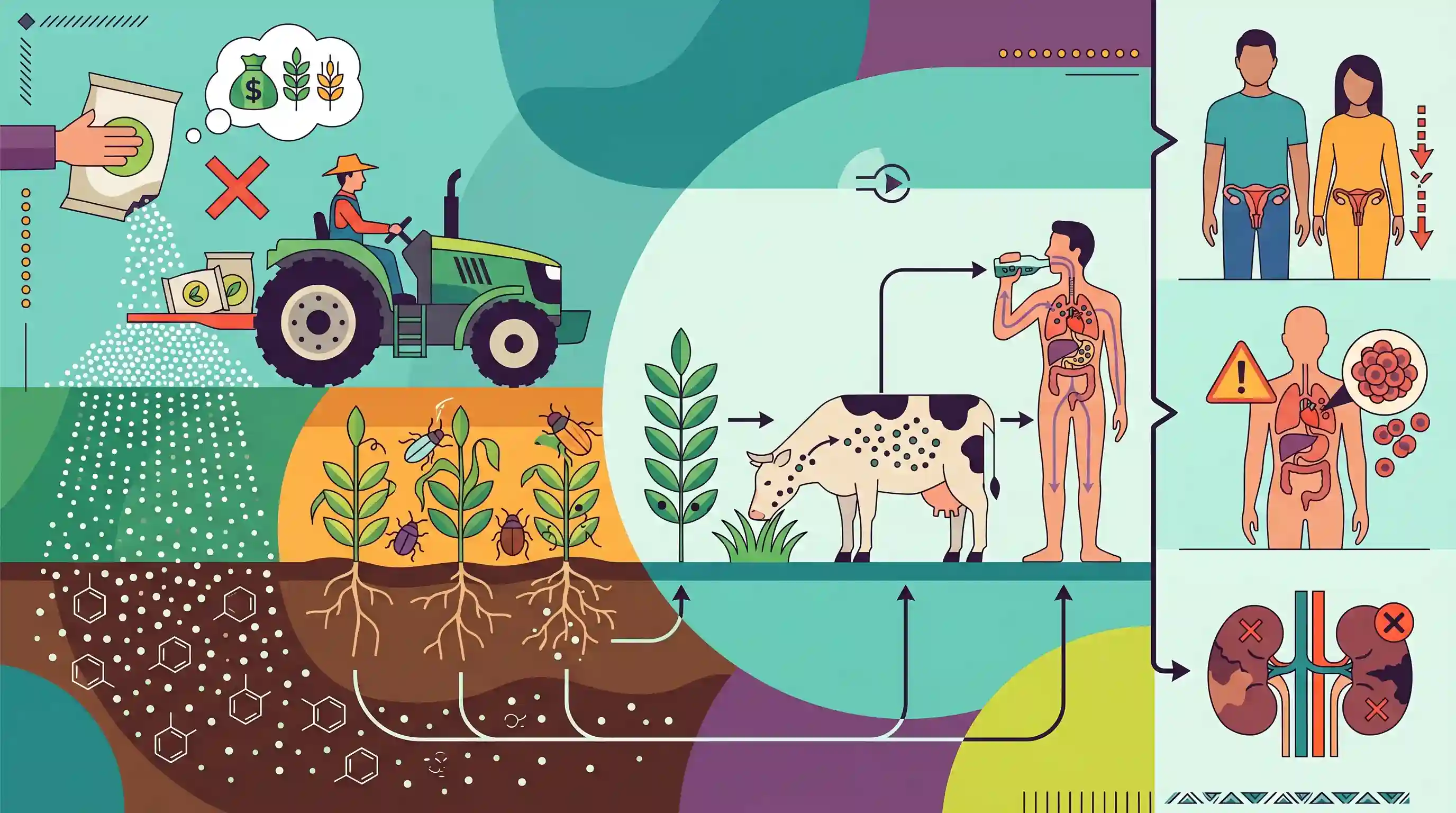
PJTSAU Vice-Chancellor Aldas Janaiah warned against the excessive and indiscriminate use of urea in agriculture, highlighting severe health and environmental repercussions. Driven by the misconception that more fertilizer yields more crop, farmers often apply up to double the recommended amount of urea. This practice causes harmful chemical residues to bioaccumulate in food products and soil, triggering serious health issues such as reduced fertility, cancers, and kidney diseases. Environmentally, it degrades soil nutrient quality and lowers plant immunity against pests, a concern also echoed in the 2022 UNEA report 'Chemical Fertilisers and Health'.
Key Points
- Farmers often use 50% to 100% more urea than the recommended amount due to the misconception that it guarantees higher yields.
- Excess urea degrades soil health, diminishes nutrient availability, and weakens crop resistance to pest attacks.
- Harmful chemical residues bioaccumulate in food chains, posing severe public health risks including reduced human fertility, cancers, and kidney diseases.
- The 2022 United Nations Environment Assembly report 'Chemical Fertilisers and Health' corroborates the global health hazards posed by indiscriminate fertilizer application.
Important Terms
United Nations Environment Assembly (UNEA)

The world's highest-level decision-making body on the environment, serving as the governing body of the UN Environment Programme (UNEP). It meets biennially in Nairobi to set global environmental priorities and law.
UPSC context
GS Paper III: Environmental Governance. Tests knowledge of international bodies and their role in shaping global environmental policy/resolutions.
Bioaccumulation
The gradual buildup of substances, such as pesticides or chemical fertilizers, in an organism. It occurs when a substance is absorbed faster than it can be catabolized or excreted.
UPSC context
GS Paper III: Environment & Pollution. Tests understanding of ecological toxicity, food chain contamination, and the impact of agricultural runoff.
Urea
A nitrogenous chemical fertilizer widely used in India. Due to heavy subsidies and low prices, it is often overused, leading to skewed soil nutrient ratios and environmental pollution.
UPSC context
GS Paper III: Agriculture (Input subsidies). Tests knowledge of fertilizer policy, soil health (NPK ratio), and fiscal/environmental impacts of subsidies.
Professor Jayashankar Telangana State Agricultural University (PJTSAU)
A state agricultural university in Telangana, established in 2014. It leads research and extension activities aimed at improving crop yields, diversification, and soil health management in the region.
UPSC context
GS Paper III: Agriculture. Relevant for institutional roles in agricultural research, extension services, and regional crop diversification policies.
Chemical Fertilisers and Health (UNEA Report)
A 2022 UN report detailing the global health risks of fertilizer overuse, including groundwater nitrate contamination, cancer links, and metabolic disorders caused by chemical residues in food.
UPSC context
GS Paper III: Environment/Public Health. Provides evidence for policy discussions on sustainable farming and the health-environment-agriculture nexus.
Nutrient-Based Subsidy (NBS)
A scheme where subsidies are fixed based on the nutrient content (N, P, K, S) of fertilizers. While most fertilizers are covered, Urea remains under price control, causing consumption imbalances.
UPSC context
GS Paper III: Agricultural Economy. Key for understanding subsidy distortions, soil degradation, and proposed reforms in the fertilizer sector.
Prelims Trap
"Excessive application of nitrogenous fertilizers like urea enhances crop resistance to pest attacks."
While farmers mistakenly believe more fertilizer ensures stronger crops, excessive urea actually degrades soil nutrient balance and lowers plant immunity against pests.
Static Concepts Connected
What are the key benefits of Neem-Coated Urea in Indian agriculture?
- Nitrogen Use Efficiency: Neem acts as a nitrification inhibitor, slowing nitrogen release into the soil and preventing rapid loss, thereby improving crop yields.
- Curbing diversion: Coating prevents the illegal diversion of highly subsidized agricultural urea to non-agricultural industrial uses (e.g., plywood manufacturing).
- Nutrient balance: Promotes a more balanced application of fertilizers, helping to correct the heavily skewed N:P:K nutrient ratio caused by excessive raw urea usage.
How do agricultural chemical residues interact with ecosystems and food chains?
- Bioaccumulation: Toxins (like heavy metals from fertilizers) build up in a single organism's tissues faster than they can be metabolized or excreted.
- Biomagnification: The concentration of toxic residues amplifies as they are passed up to successive, higher trophic levels, ultimately severely impacting human health.
- Eutrophication: Excess nitrogen runoff washes into nearby water bodies, fueling rapid algal blooms that deplete dissolved oxygen and create aquatic dead zones.
Cross-Topic Patterns
Fiscal burden meets ecological crisis
India's massive urea subsidy bill strains the fiscal deficit while directly incentivizing soil degradation and groundwater pollution, interlinking Economy and Environment.
UNEA reports and the One Health approach
The UNEA report 'Chemical Fertilisers and Health' integrates agricultural inputs with human disease patterns, mirroring the "One Health" concept frequently tested by UPSC.

Expect a 2026 Prelims multi-statement question linking distorted NPK ratios, Neem-coated urea's mechanism, and bioaccumulation hazards.
Linked PYQs · 3
Linked PYQs · 3
- 2016PrelimsGS1
Why does the Government of India promote the use of 'Neem-coated Urea' in agriculture?
- 2020PrelimsGS1
With reference to chemical fertilizers in India, consider the following statements : 1. At present, the retail price of chemical fertilizers is market-driven and not administered by the Government. 2. Ammonia, which is an input of urea, is produced from natural gas. 3. Sulphur, which is a raw material for phosphoric acid fertilizer, is a by-product of oil refineries. Which of the statements given above is/are correct?
- 2025PrelimsGS1
Consider the following substances: I. Ethanol II. Nitroglycerine III. Urea Coal gasification technology can be used in the production of how many of them?
