Southern Europe Wildfires Highlight Climate Induced Extreme Heat
Source:The Hindu ↗
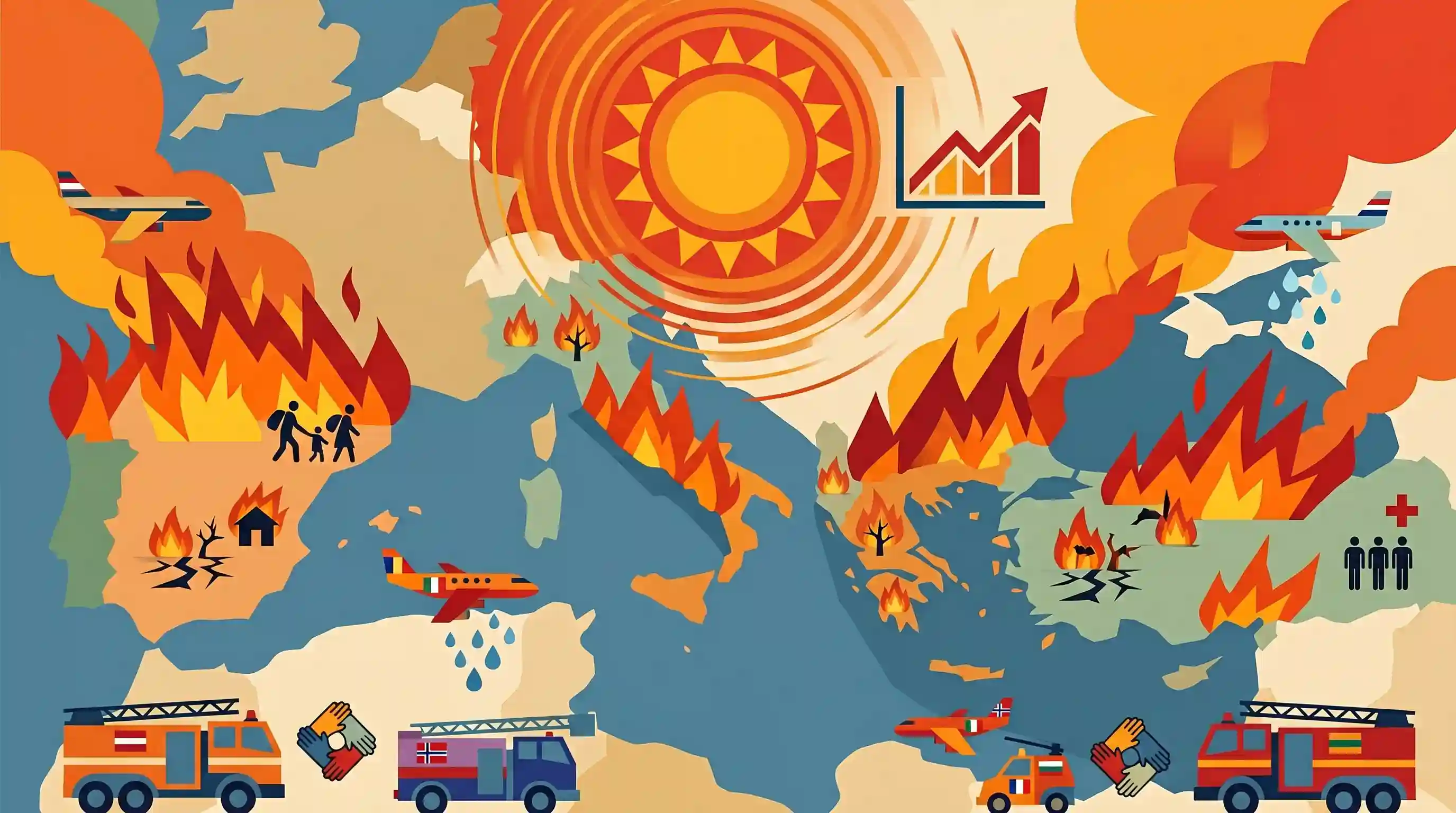
Why It Matters
The increasing frequency of severe wildfires in Mediterranean climates illustrates the tangible impacts of global climate change. For UPSC aspirants, it serves as a critical case study for disaster preparedness, international cooperation in emergency response, and the geographical characteristics that make certain biomes highly vulnerable to climate-induced hazards.
Summary
Severe wildfires driven by extreme heat and climate change are ravaging southern Europe, including Greece, Turkey, Spain, Italy, and Albania. The blazes have claimed at least three lives, displaced thousands, and destroyed properties and agricultural lands. The crisis highlights the increasing vulnerability of the Mediterranean climate zone to prolonged fire seasons and underscores the need for transnational disaster response and climate mitigation strategies.
Key Points
- Prolonged extreme heatwaves, driven by climate change, have created tinderbox conditions across southern Europe, sparking severe wildfires.
- The blazes have resulted in at least three fatalities and forced the evacuation of thousands of residents and tourists from vulnerable areas.
- The Mediterranean region's natural susceptibility to hot, dry summers is being critically exacerbated, leading to widespread destruction of agricultural assets like olive groves.
- The scale of the disaster has prompted cross-border cooperation, with nations like Greece providing emergency firefighting assistance to neighboring Albania.
Prelims Trap
India and Southern Europe share similar peak forest fire seasons driven by July-August summer heatwaves.
India's forest fire season peaks from February to June (pre-monsoon), whereas Southern Europe experiences peak wildfires during July-August due to the characteristic hot, dry summers of the Mediterranean climate.
Static Concepts Connected
What are the core geographical markers of the Mediterranean climate?
- Precipitation pattern: Defined by dry, warm/hot summers and mild, wet winters caused by the seasonal shifting of the westerlies.
- Vegetation type: Dominated by sclerophyllous vegetation—drought-resistant plants with thick, hard leaves (like olives) that survive summer aridity but burn easily.
- Global distribution: Typically located on the western margins of continents between 30° and 45° North and South latitudes.
How does India monitor and respond to domestic forest fire risks?
- Satellite monitoring: The Forest Survey of India (FSI) utilizes MODIS and SNPP-VIIRS satellite sensors to generate near real-time fire alerts and map fire-prone zones.
- Policy framework: The National Action Plan on Forest Fires (NAPFF) focuses on hazard zonation and empowering local communities via Joint Forest Management Committees (JFMCs).
Cross-Topic Patterns
Marine & Terrestrial Heatwave Feedback
Extreme terrestrial heat in Europe triggers marine heatwaves in the Mediterranean Sea, lowering dissolved oxygen and raising evaporation, which in turn intensifies atmospheric warming.
Transnational Disaster Diplomacy
Cross-border firefighting assistance in Europe reflects the growing need for transnational disaster frameworks, conceptually mirroring South Asia's SAARC Disaster Management Centre initiatives.

Expect a multi-statement Prelims question comparing the climatic drivers of Indian pre-monsoon forest fires vs. Mediterranean summer fires.
Linked PYQs · 3
Linked PYQs · 3
- 2010PrelimsGS1
A geographic region has the following distinct characteristics: 1. Warm and dry climate 2. Mild and wet winter 3. Evergreen oak trees The above features are the distinct characteristics of which one of the following regions?
- 2023MainsGS1
Discuss the consequences of climate change on the food security in tropical countries.
- 2020MainsGS3
Discuss the recent measures initiated in disaster management by the Government of India departing from the earlier reactive approach.
