EU and Vietnam Upgrade Ties to Comprehensive Strategic Partnership
Source:Indian Express ↗
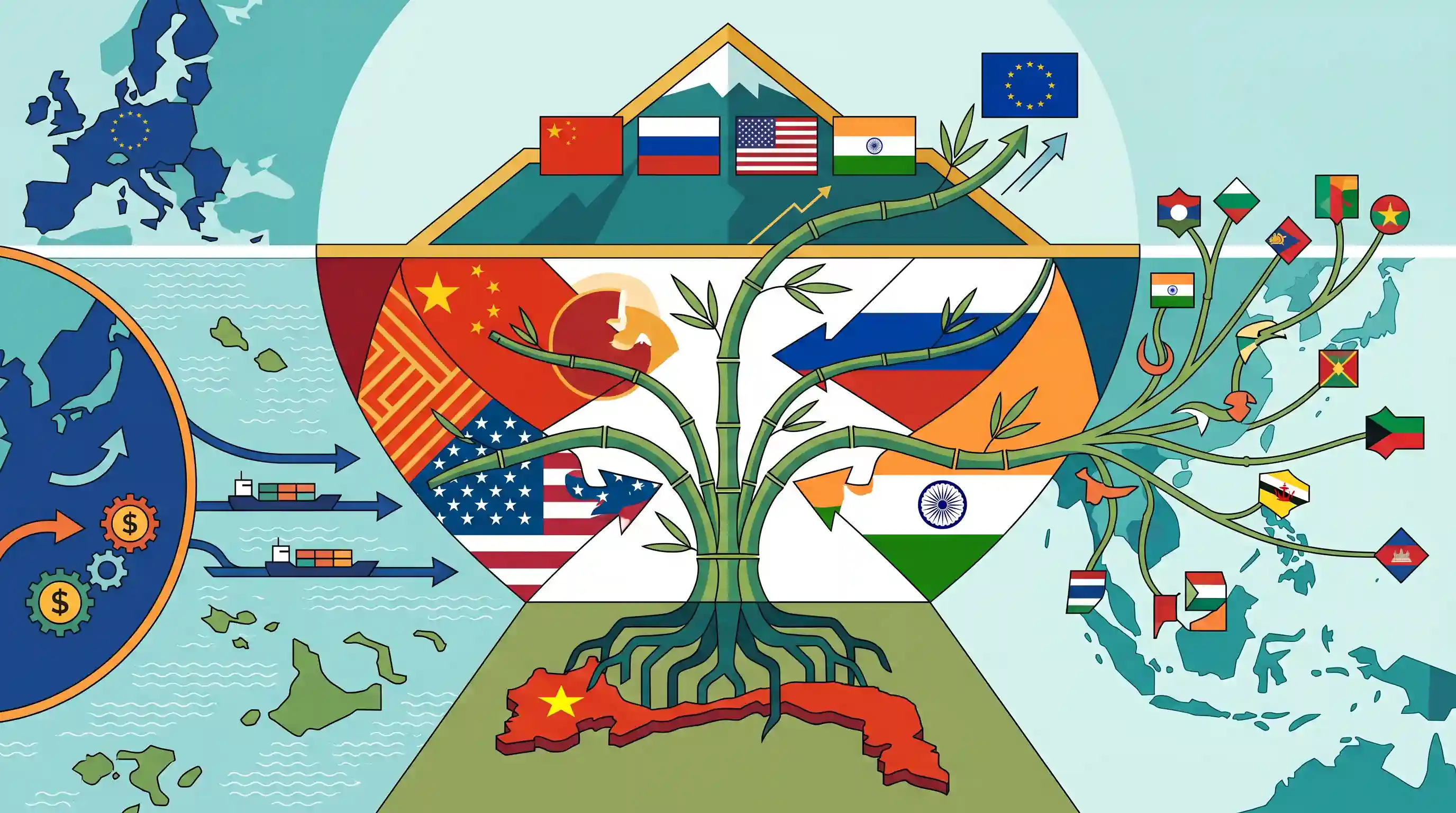
Why It Matters
Vietnam's "Bamboo diplomacy" offers a compelling case study of how middle powers can successfully navigate a polarized world through multi-alignment and strategic hedging. This development is crucial for UPSC aspirants as it illustrates the shifting geopolitical dynamics in the Indo-Pacific, the EU's expanding strategic role in Asia, and the broader context in which India's Act East Policy operates.
Summary
The European Union and Vietnam have officially upgraded their bilateral ties to a Comprehensive Strategic Partnership (CSP), making the EU the latest entity to join Vietnam's highest tier of diplomatic relations alongside nations like China, Russia, the US, and India. During a visit to Hanoi, European Council President Antonio Costa praised Vietnam's "Bamboo diplomacy"—a pragmatic foreign policy characterized by "solid roots and flexible branches" that allows the country to navigate geopolitical rivalries and balance major powers without compromising its sovereignty. The elevation underscores the EU's growing strategic and economic focus on the Indo-Pacific region and Vietnam's successful multi-alignment approach to diversifying its global partnerships.
Key Points
- The European Union and Vietnam have elevated their bilateral relations to a Comprehensive Strategic Partnership (CSP), Vietnam's highest diplomatic tier.
- During his visit to Hanoi, European Council President Antonio Costa commended Vietnam's "Bamboo diplomacy," a strategy that balances relations with major global powers (like the US, China, Russia, and the EU) while maintaining strategic autonomy.
- The CSP reflects the EU's strategic push to deepen its footprint in the Indo-Pacific and diversify its supply chains away from over-reliance on China (China-plus-one strategy).
- For Vietnam, the partnership reinforces its multi-alignment strategy, securing crucial European investments, high-technology transfers, and support for its green energy transition.
Important Terms
Bamboo Diplomacy

A Vietnamese foreign policy approach characterized by 'strong roots' (national interests) and 'flexible branches' (pragmatic adaptation), allowing the nation to maintain autonomy while balancing relations with competing major powers.
UPSC context
GS Paper II (International Relations). Tests knowledge of strategic autonomy and power-balancing strategies in the Indo-Pacific region.
Comprehensive Strategic Partnership (CSP)
The highest tier of bilateral diplomatic relationship established by countries like Vietnam or India, signifying deep, long-term cooperation across political, economic, security, and cultural dimensions.
UPSC context
GS Paper II (Bilateral Groupings). Tests understanding of diplomatic hierarchies and the depth of India's engagements with global partners.
Indo-Pacific
A geostrategic region spanning the Indian and Pacific Oceans, central to global trade and security where major powers seek a 'free, open, and inclusive' international order.
UPSC context
GS Paper II (Regional Geopolitics). Tests awareness of the strategic convergence between India and partners like the EU/ASEAN.
European Council
The EU institution comprising heads of state or government of member states, responsible for defining the Union's overall political direction and strategic priorities.
UPSC context
GS Paper II (Global Groupings). Tests knowledge of international institutional structures and their role in global governance.
Multi-alignment
A foreign policy strategy of maintaining robust, interest-based ties with multiple, often competing, global powers simultaneously to maximize national interest and strategic flexibility.
UPSC context
GS Paper II (Effect of Policies). Tests understanding of modern shifts in diplomacy from traditional non-alignment to pragmatic, multi-polar engagement.
Prelims Trap
"Bamboo Diplomacy is a term associated with China's soft power strategy or an ASEAN green energy initiative."
It specifically refers to Vietnam's pragmatic foreign policy of balancing rival superpowers (solid roots, flexible branches). It is not Chinese soft power or an environmental pact.
Static Concepts Connected
What distinguishes Multi-Alignment from traditional Non-Alignment?
- Non-Alignment: Historically focused on maintaining neutrality and staying aloof from Cold War bloc politics to preserve sovereignty.
- Multi-Alignment: Involves proactive, parallel engagement with competing global powers (e.g., US, Russia, China) to maximize economic and security interests.
What defines a Comprehensive Strategic Partnership (CSP)?
- Strategic Partnership: A formalized diplomatic relationship prioritizing long-term security, defense, and economic cooperation over transactional diplomacy.
- Comprehensive Tier: Often the highest echelon of bilateral ties, institutionalizing cooperation across all sectors including high-tech, green transitions, and regional security.
Cross-Topic Patterns
Vietnam's Bamboo vs India's Autonomy
Vietnam's "solid roots, flexible branches" perfectly mirrors India's "multi-alignment" doctrine. Both actively engage rival blocs (US, EU, Russia, China) to extract technology and investment while avoiding military alliances.
China-Plus-One & Supply Chain Resilience
The EU's strategic pivot to Vietnam highlights the global China-Plus-One strategy. This ties directly into the Supply Chain Resilience Initiative (SCRI), where nations like India and Vietnam compete as alternative manufacturing hubs.

Expect a Prelims pair on diplomatic doctrines (Bamboo: Vietnam) or a 2026 Mains Q comparing Indian and Vietnamese multi-alignment.
Linked PYQs · 3
Linked PYQs · 3
- 2016MainsGS2
Evaluate the economic and strategic dimensions of India's Look East Policy in the context of the post Cold War international scenario.
- 2021MainsGS2
The newly tri-nation partnership AUKUS is aimed at countering China's ambitions in the Indo-Pacific region. Is it going to supersede the existing partnerships in the region? Discuss the strength and impact of AUKUS in the present scenario.
- 2023MainsGS2
‘The expansion and strengthening of NATO and a stronger US-Europe strategic partnership works well for India.’ What is your opinion about this statement ? Give reasons and examples to support your answer.
