Transatlantic Trade Tensions and EU US Tariff Negotiations
Source:The Hindu ↗
Why It Matters
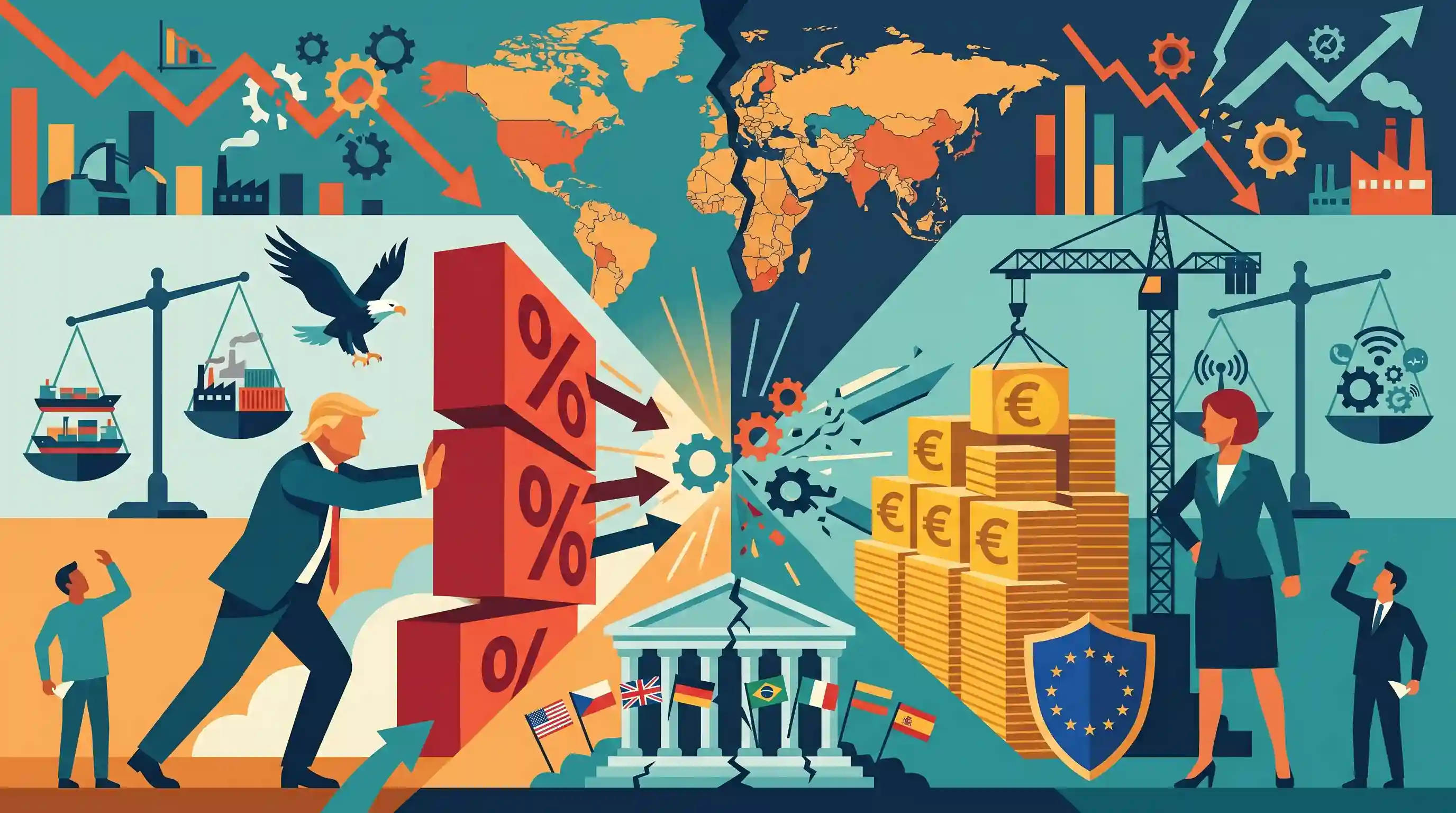
A looming trade war between the US and the EU—two of the world's largest economic blocs—signals a broader global shift away from multilateral free trade toward bilateralism, protectionism, and sovereign nationalism. This directly impacts global supply chains, international economic stability, and poses challenges for developing nations like India navigating a fragmenting global trade architecture.
Summary
The article details escalating trade tensions between the European Union and the United States following President Donald Trump's proposal to impose a 30% tariff on European goods. In response, European Commission President Ursula von der Leyen stated that while the EU seeks a mutually beneficial trade agreement, it is actively preparing retaliatory measures. These countermeasures could impact up to €93 billion in US goods and potentially utilize the EU's anti-coercion instrument to target the US services sector. The friction stems from differing views on trade balances, with the US focusing on its merchandise deficit and the EU highlighting the US surplus in services. The European Central Bank has warned that such a trade war would severely impact output growth and economic stability.
Key Points
- US President Donald Trump proposed imposing a blanket 30% tariff on European goods starting August 1, sparking fears of a transatlantic trade war.
- European Commission President Ursula von der Leyen emphasized the EU's desire for a negotiated trade deal but confirmed readiness to deploy countermeasures if provoked.
- The EU is preparing retaliatory packages targeting up to €93 billion of US goods and considering leveraging its novel 'anti-coercion instrument' to restrict US services.
- The dispute highlights differing trade metrics: Trump focuses on the US merchandise trade deficit of $235 billion with the EU, while EU officials point out the large US surplus in services.
- The European Central Bank warned that severe tariffs could drastically curb European output growth and stoke inflation, undermining global economic stability.
Important Terms
Anti-coercion instrument (ACI)

An EU legal framework enabling the bloc to retaliate with tariffs or quotas against non-EU countries that use economic pressure to interfere with the sovereign policy choices of member states.
UPSC context
GS-2 International Relations; tests knowledge of 'Strategic Autonomy' and trade defense mechanisms in a multipolar world.
European Commission
The executive arm of the European Union that proposes legislation, implements decisions, and represents the entire 27-member bloc in international trade negotiations and treaty-making.
UPSC context
GS-2 Global Groupings; essential for distinguishing between various EU institutions and their roles in international governance.
European Central Bank (ECB)
The central bank for the Eurozone, responsible for managing the Euro, setting key interest rates, and maintaining price stability across the 20 EU nations that use the single currency.
UPSC context
GS-3 Indian/Global Economy; tests understanding of global monetary authorities and their impact on global financial stability and growth.
Merchandise Deficit vs. Services Surplus
A trade scenario where a country imports more physical goods (merchandise) than it exports, while simultaneously exporting more intangible services (tech, intellectual property) than it imports.
UPSC context
GS-3 External Sector; analyzes structural trade imbalances and the root causes of bilateral trade friction.
Prelims Trap
"The Anti-Coercion Instrument (ACI) is a dispute resolution mechanism authorized by the World Trade Organization."
The ACI is a unilateral European Union framework adopted in 2023. It is not governed by the WTO; rather, it empowers the EU to retaliate independently against economic blackmail.
Static Concepts Connected
What constitutes the Current Account in the Balance of Payments?
- Trade in Goods: The visible trade balance encompassing physical merchandise exports and imports. This is the metric driving US tariff threats against the EU.
- Trade in Services: The invisible trade balance including software, consulting, financial services, and tourism. The EU highlights the US surplus in this domain.
- Income & Transfers: Net investment income (interest, dividends) and unilateral transfers like remittances and foreign aid.
How does imported inflation occur in an economy?
- Currency Depreciation: When a country's currency depreciates against trading partners, buying the same volume of foreign goods costs more in domestic currency, raising domestic price levels.
- Cost-Push Factors: Retaliatory tariffs or sudden spikes in global commodity prices (like crude oil) directly increase the cost of imported raw materials and consumer goods.
- Monetary Policy Challenge: Central banks like the ECB may struggle to control imported inflation using domestic interest rate hikes, as the price pressure originates externally.
Cross-Topic Patterns
EU unilateralism: ACI and CBAM
The EU's Anti-Coercion Instrument (ACI) and Carbon Border Adjustment Mechanism (CBAM) reflect a systemic shift toward unilateral geoeconomic tools, increasingly utilized to bypass the paralyzed WTO Appellate Body.
Mirroring India's external trade profile
The US-EU friction over goods deficit vs. services surplus perfectly mirrors India's macroeconomic structure, where massive merchandise trade deficits are partially offset by robust IT and professional services surpluses.

Expect a Prelims matching question on EU's unilateral tools (ACI, CBAM) or a Mains question on the decline of WTO rules-based trade.
Linked PYQs · 4
Linked PYQs · 4
- 2025MainsGS2
"With the waning of globalization, post-Cold War world is becoming a site of sovereign nationalism.” Elucidate.
- 2018MainsGS2
What are the key areas of reform if the WTO has to survive in the present context of "Trade War', especially keeping in mind the interest of India?
- 2025MainsGS3
What are the challenges before the Indian economy when the world is moving away from free trade and multilateralism to protectionism and bilateralism? How can these challenges be met?
- 2023PrelimsGS1
Consider the following statements: Statement-I: Recently, the United States of America (USA) and the European Union (EU) have launched the 'Trade and Technology Council'. Statement-II: The USA and the EU claim that through this they are trying to bring technological progress and physical productivity under their control. Which one of the following is correct in respect of the above statements?
