Global Trade Tariffs and Retaliatory Measures by EU and China
Source:Indian Express ↗
Why It Matters
The shift from multilateralism and free trade toward bilateralism and protectionist tariffs is a critical theme for UPSC. Understanding the mechanics of trade wars (e.g., targeting services and agricultural goods) helps aspirants evaluate the broader impact on global supply chains and formulate strategies for the Indian economy to navigate these disruptions.
Summary
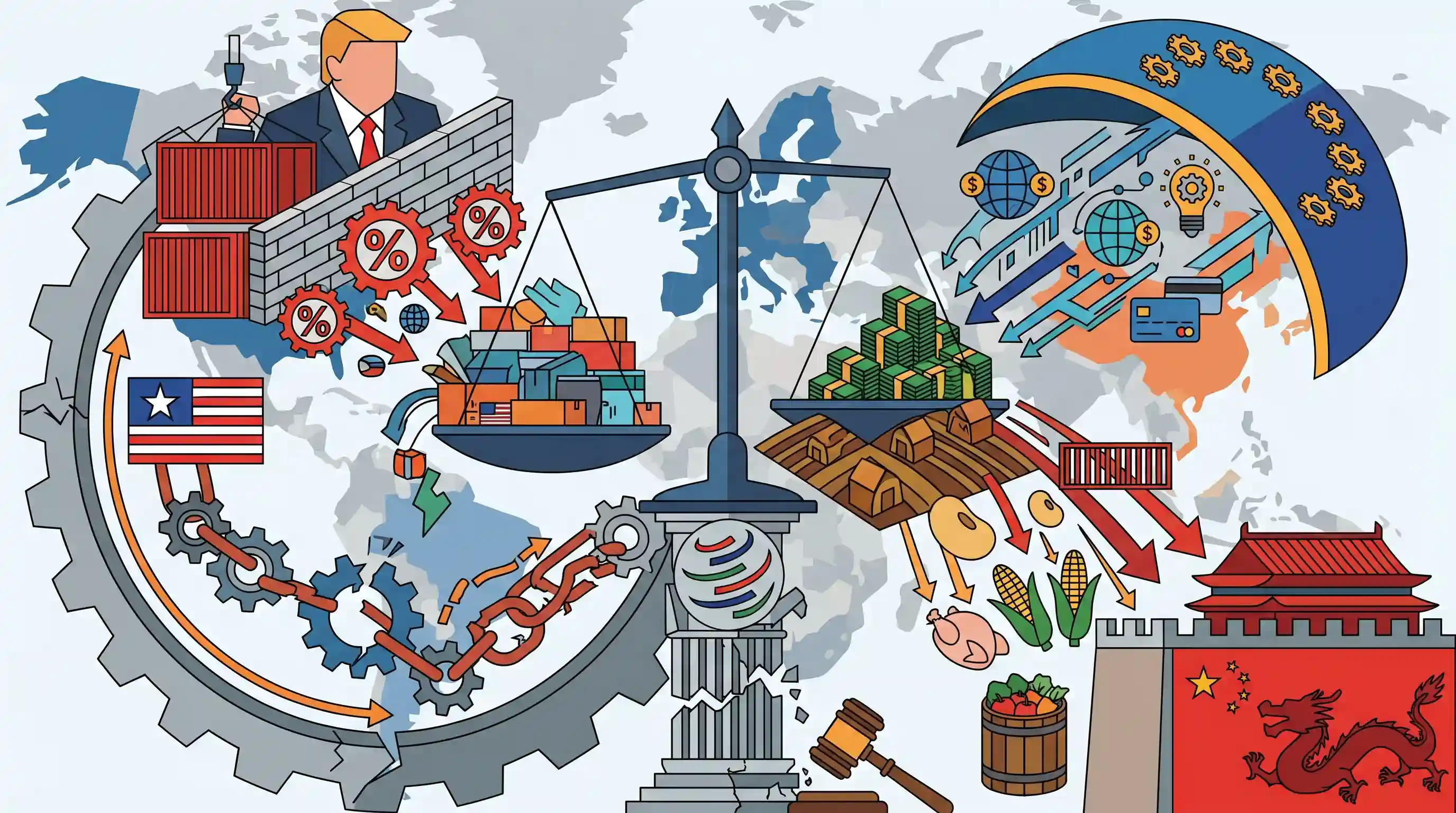
The article analyzes the potential retaliatory trade measures by the European Union and China following the imposition of sweeping 'Liberation Day' tariffs by US President Donald Trump. While the US focuses on restricting incoming goods, both the EU and China are exploring strategic vulnerabilities to counter the move. The EU is likely to target the US services sector—where the US runs a substantial surplus—while China is expected to focus its retaliation on US agricultural and farm goods. This escalating tit-for-tat protectionism signals a further shift away from multilateral free trade, posing significant challenges to global supply chains, the World Trade Organization's framework, and the broader global economy.
Key Points
- The US administration under Donald Trump has initiated 'Liberation Day' tariffs, adopting a hardline protectionist stance on global trade.
- The EU is considering retaliatory measures targeting the US services sector, an area where the US traditionally maintains a significant trade surplus.
- China is likely to counter by targeting US agricultural exports (farm goods), a sector that is politically sensitive and vital to the US economy.
- This escalating cycle of retaliatory tariffs threatens global supply chains, could stoke inflation, and further undermines the multilateral trading system upheld by the WTO.
Important Terms
World Trade Organization (WTO)

The only global international organization (est. 1995) dealing with trade rules between nations. It provides a forum for negotiating agreements and a legal mechanism for resolving trade disputes.
UPSC context
GS Paper 2: International Organizations. Tests knowledge of global governance, trade disputes, and India's advocacy for a rules-based order.
European Union (EU)
A supranational political and economic union of 27 European nations. It operates a single market allowing free movement of goods, services, and capital, and manages collective global trade negotiations.
UPSC context
GS Paper 2: International Relations. Relevant for analyzing India-EU trade partnerships and models of regional economic integration.
Protectionism
Government policies, including tariffs and quotas, designed to restrict imports and shield domestic industries from foreign competition. It is the opposite of free trade.
UPSC context
GS Paper 3: Economy. Tests understanding of trade barriers, global supply chain disruptions, and the impact of 'economic nationalism.'
Multilateralism
A system of international cooperation where three or more nations work together based on shared rules and institutions to address global issues like trade and security.
UPSC context
GS Paper 2: International Relations. Important for evaluating the shift from global cooperation to bilateral or unilateral trade actions.
Tariffs
A tax or duty imposed by a government on imported goods. It increases the price of foreign products to encourage consumers to buy domestically produced alternatives.
UPSC context
GS Paper 3: Economy. A basic tool for understanding trade wars, fiscal revenue, and protectionist economic measures.
Trade Surplus
An economic condition where the value of a country's exports exceeds its imports, representing a positive balance of trade and often strengthening the national currency.
UPSC context
GS Paper 3: Economy. Essential for analyzing the Balance of Payments (BoP) and the underlying causes of international trade friction.
Prelims Trap
"The United States runs a chronic trade deficit in both merchandise goods and commercial services."
Aspirants confuse the overall US trade deficit with its components. The US runs a massive goods deficit but maintains a substantial surplus in commercial services.
Static Concepts Connected
What is 'Cross-Retaliation' under WTO rules?
- Definition: Retaliating in a completely different sector or agreement than the one where the original trade violation occurred.
- WTO Legality: Allowed under the Dispute Settlement Understanding (DSU) if retaliating in the same sector is not practicable or effective.
- Strategic Application: The EU targeting the US services sector for a dispute originating in goods tariffs is a classic example of cross-sectoral retaliation.
What are the components of the Current Account?
- Visible Trade: Trade in physical merchandise and farm goods. This is where the US runs a massive deficit, and what China is targeting.
- Invisible Trade: Trade in commercial services (IT, finance), income, and transfers. The US services surplus makes it a vulnerable target for the EU.
Cross-Topic Patterns
Tariffs, imported inflation & RBI Policy
Tit-for-tat protectionism causes cost-push inflation in the West, keeping US rates high. This limits RBI's room to cut rates to prevent capital flight and rupee depreciation.
Weaponization of agricultural vote banks
China strategically targets US agriculture to exploit domestic rural vote banks. This links international trade diplomacy directly to the domestic electoral vulnerabilities of democratic nations.

Expect a 2026 Prelims question testing WTO's cross-retaliation rules alongside the components of the US/India trade balance.
Linked PYQs · 3
Linked PYQs · 3
- 2018MainsGS2
What are the key areas of reform if the WTO has to survive in the present context of "Trade War', especially keeping in mind the interest of India?
- 2021MainsGS2
“The USA is facing an existential threat in the form of a China, that is much more challenging than the erstwhile Soviet Union.” Explain.
- 2025MainsGS3
What are the challenges before the Indian economy when the world is moving away from free trade and multilateralism to protectionism and bilateralism? How can these challenges be met?
