Ethanol Blending Feedstock Dynamics and Food Security Concerns
Source:The Hindu ↗
ఇది ఎందుకు ముఖ్యం
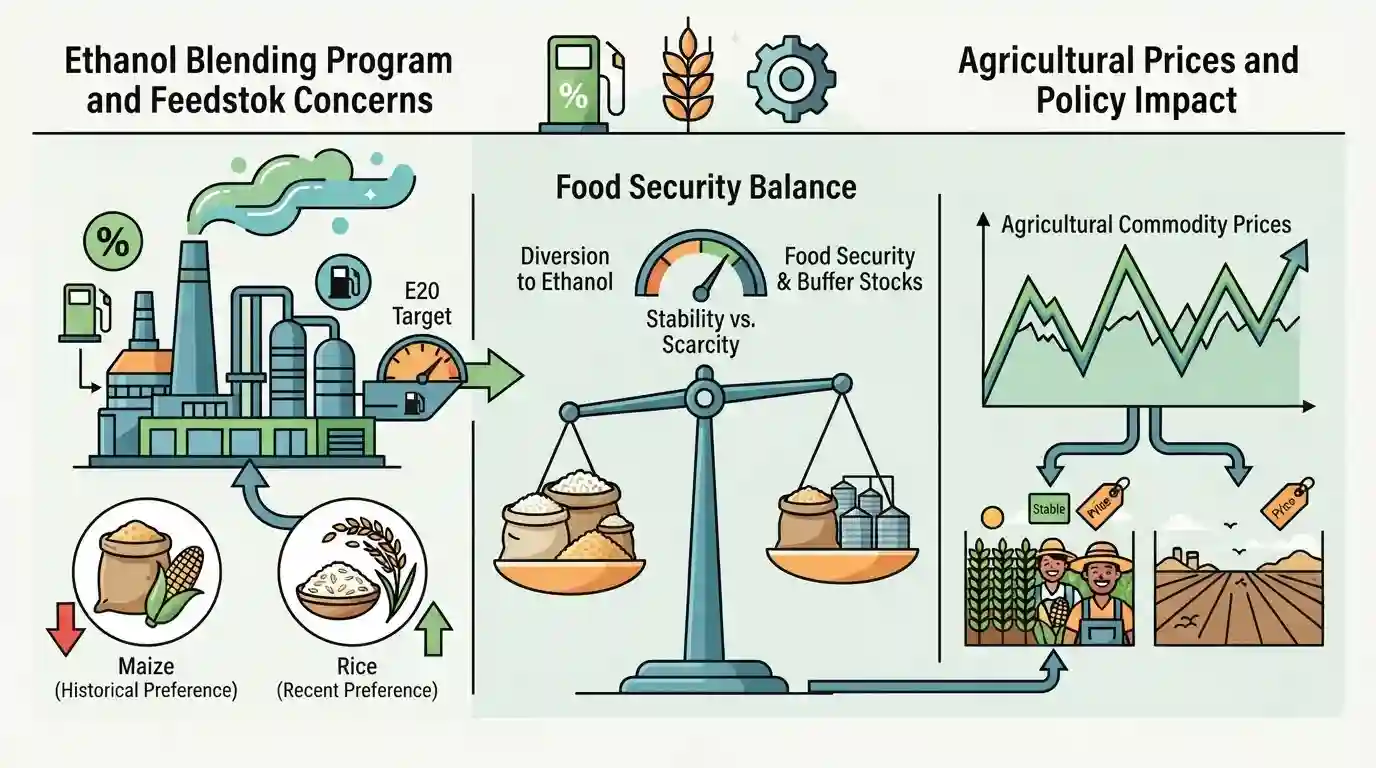
It highlights the policy trade-offs between utilizing food grains for green energy (ethanol) versus ensuring food security and managing buffer stocks in India.
సారాంశం
The article discusses the emerging feedstock concerns in India's ethanol blending program as rice gains preference over maize in recent tenders. This dynamic brings to the fore the delicate balance between achieving green energy/fuel blending targets and maintaining domestic food security, buffer stocks, and stable agricultural prices.
ముఖ్య అంశాలు
- Recent ethanol tenders have sparked feedstock concerns as rice gains ground over maize, creating a debate between energy security and food security.
- The pivot towards utilizing rice (including surplus FCI rice) as a feedstock for ethanol production raises questions regarding food inflation, grain allocation, and sustainable cropping patterns.
- Balancing India's ambitious green energy targets (such as ethanol blending mandates) with agricultural resource management is critical for policymakers.
ముఖ్యమైన పదాలు
Ethanol Blending Programme (EBP)

An initiative by the Government of India to blend biofuels with petrol, aiming to reduce crude oil imports, save foreign exchange, and lower carbon emissions through grain and sugarcane feedstocks.
UPSC context
UPSC Paper III (Economy/Energy Security/Environment): Tests the intersection of agricultural policy, renewable energy targets, and fiscal subsidies.
Food Corporation of India (FCI)
A statutory body under the Ministry of Consumer Affairs, Food and Public Distribution responsible for procuring food grains, maintaining buffer stocks, and distributing them for the Public Distribution System (PDS).
UPSC context
UPSC Paper III (Agriculture/Food Security): Important for questions on buffer stock management, minimum support price (MSP), and food inflation.
అనుసంధానమైన స్థిర భావనలు
What are the key pillars and environmental objectives of the Ethanol Blending Programme (EBP) in India?
- Blending Target: Target 20% ethanol blending in petrol (E20) by 2025-26 to reduce crude oil import dependency and save foreign exchange.
- Feedstock Variety: Utilizes diverse feedstocks including sugarcane (molasses/juice), surplus foodgrains (FCI rice, maize), and damaged food grains.
- Emission Reduction: Helps lower vehicular greenhouse gas emissions while providing an alternative revenue stream for farmers.
అంతర-అంశ నమూనాలు
Ethanol Blending vs Food Security Trade-off
Aggressive biofuel blending targets directly compete with NFSA grain entitlements, forcing policymakers to weigh clean energy transition against rural food inflation and buffer stock norms.
Agri-Pricing Policy and Groundwater Depletion
Shifting MSP incentives toward maize or surplus paddy for industrial ethanol alters regional crop water footprints, testing groundwater sustainability in northwestern states.

Expect a multi-statement Prelims question on the Ethanol Blending Programme combining feedstock sources (FCI rice vs maize) and food security.
అనుసంధాన PYQలు · 3
అనుసంధాన PYQలు · 3
- 2024MainsGS3
Elucidate the importance of buffer stocks for stabilizing agricultural prices in India. What are the challenges associated with the storage of buffer stock? Discuss.
- 2025PrelimsGS1
Consider the following statements : Statement I: Of the two major ethanol producers in the world, i.e., Brazil and the United States of America, the former produces more ethanol than the latter. Statement II: Unlike in the United States of America where corn is the principal feedstock for ethanol production, sugarcane is the principal feedstock for ethanol production in Brazil. Which one of the following is correct in respect of the above statements?
- 2019PrelimsGS1
The economic cost of food grains to the Food Corporation of India is Minimum Support Price and bonus (if any) paid to the farmers plus
