Gender pay gap in India and workforce equal opportunity challenges
Source:The Hindu ↗
हे का महत्त्वाचे आहे
It highlights the limitations of focusing narrowly on wage parity without addressing structural barriers to women's entry, retention, and progression in the workforce.
सारांश
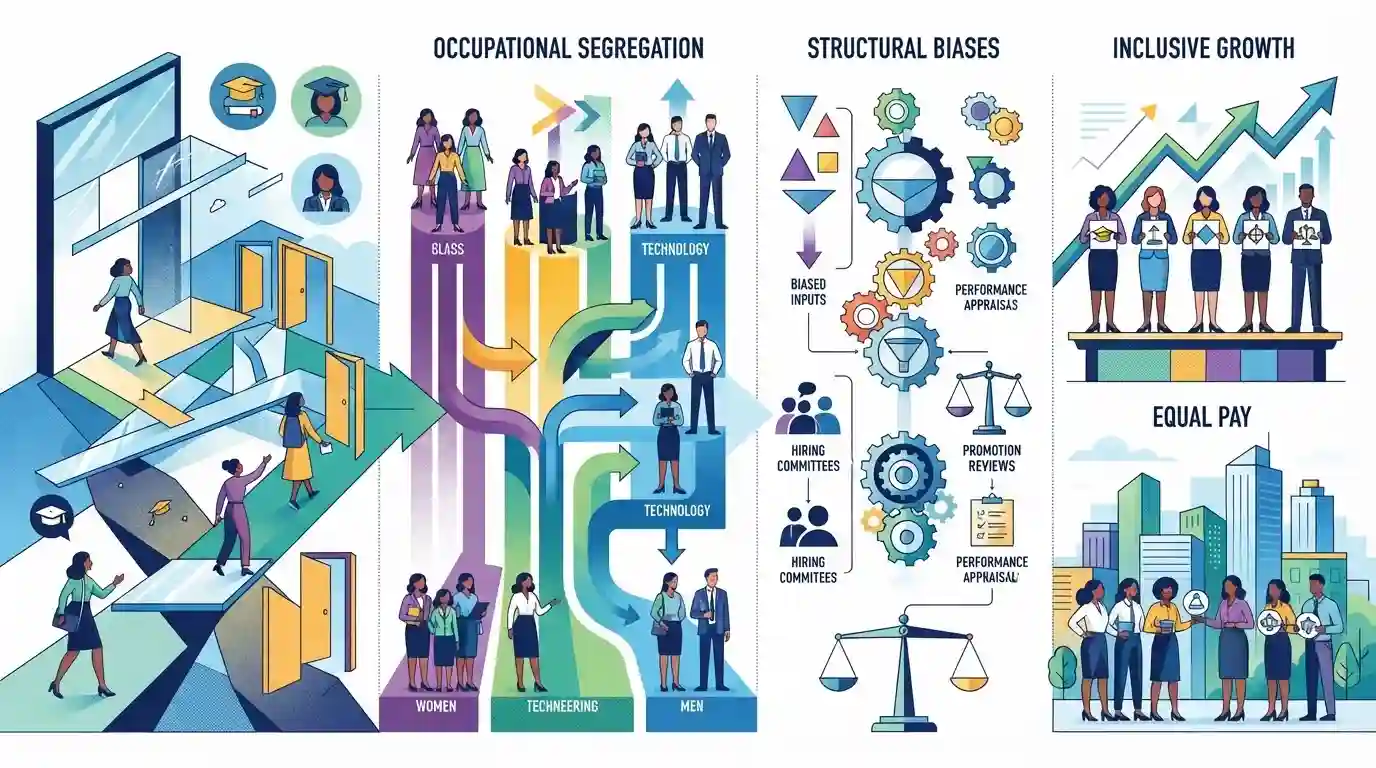
The article discusses how achieving equal pay for women requires addressing broader systemic issues of equal opportunity, occupational segregation, and structural biases throughout the employment lifecycle.
मुख्य मुद्दे
- Equal pay for equal work cannot be viewed in isolation from equal opportunity across employment stages, from recruitment to career progression.
- Systemic gender biases, occupational segregation, and lack of support structures contribute to the persistent gender pay gap in the workforce.
- Addressing structural inequalities requires holistic policy interventions that ensure workplace safety, equitable division of domestic care work, and equal access to leadership roles.
महत्त्वाच्या संज्ञा
Equal Remuneration Act

A 1976 Indian statute designed to ensure equal pay for men and women workers for the same work or work of similar nature, now subsumed under the Code on Wages, 2019.
UPSC context
GS Paper I (Social Empowerment) and GS Paper II (Social Justice/Labour Laws); crucial for questions on women rights and gender parity.
संबंधित स्थिर संकल्पना
What is the constitutional and statutory framework for equal pay and gender equality in India?
- DPSP Article 39(d):: Directs the State to secure equal pay for equal work for both men and women.
- Equal Remuneration Act 1976:: Statutory framework providing for equal remuneration and prevention of discrimination in recruitment and service conditions.
- Fundamental Rights:: Guarantees equality before law and prohibits discrimination on grounds of sex (Articles 14 and 15).
आंतर-विषय नमुने
Gender Pay Gap + Labor Codes + PLFS Data
The gender pay gap is deeply tied to informalization; Code on Wages implementation intersects with PLFS data on female labor force participation.

DPSP Article 39(d) vs statutory Equal Remuneration Act (now Code on Wages) is a classic statement trap in Prelims.
संबंधित PYQ · 3
संबंधित PYQ · 3
- 2025MainsGS2
Women's social capital complements in advancing empowerment and gender equity. Explain.
- 2024MainsGS1
Distinguish between gender equality, gender equity and women's empowerment. Why is it important to take gender concerns into account in programme design and implementation?
- 2021MainsGS1
Examine the role of 'Gig Economy' in the process of empowerment of women in India.
