ICMR NIN Study Links Environmental Lead Exposure to Neuronal Damage
Source:The Hindu ↗
Why It Matters
This research provides critical molecular-level evidence linking environmental heavy metal pollution to the exacerbation of neurodegenerative disorders like Alzheimer's. It underscores the urgent public health and regulatory necessity of addressing environmental lead exposure to protect neurological health in an aging population.
Summary
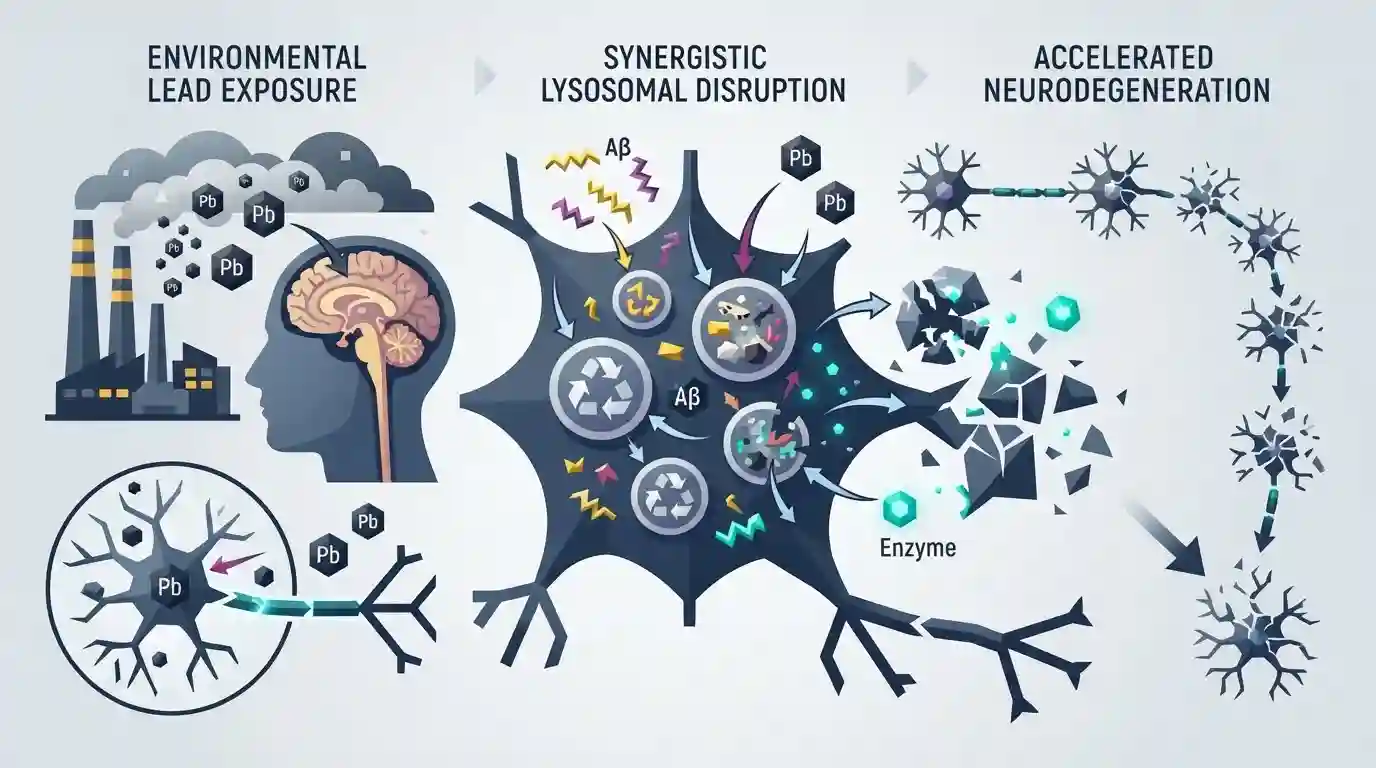
A study by the ICMR-National Institute of Nutrition (ICMR-NIN), Hyderabad, has established that environmental lead exposure can severely amplify neuronal damage associated with Alzheimer's disease. The research shows that lead and amyloid-beta (Aβ) peptides synergistically disrupt lysosomes—the cells' waste-disposal and recycling units. This combined exposure destabilizes lysosomal membranes, making them leaky and releasing harmful enzymes into the nerve cells, ultimately leading to reduced cell survival and accelerated neurodegeneration.
Key Points
- Scientists at ICMR-NIN, Hyderabad, studied the combined effect of lead (environmental pollutant) and amyloid-beta (Aβ) peptides (protein fragments associated with Alzheimer's disease) on human nerve cells.
- Nerve cells depend on lysosomes, which act as the internal waste-clearing and recycling systems, to degrade damaged proteins and maintain cellular health.
- While exposure to either lead or amyloid-beta alone impairs lysosomal function, their combined exposure causes a synergistic, significantly greater disruption.
- The combined exposure leads to reduced cell survival, disruption of the lysosome's vital acidic environment, and structural damage to lysosomal membranes.
- Damaged lysosomal membranes become unstable and leaky, allowing harmful degradation enzymes to escape into the cytoplasm, causing cellular injury and death.
- The findings indicate that environmental lead exposure amplifies the cellular stress associated with Alzheimer's disease, highlighting the severe public health impacts of heavy metal pollution on brain health.
Important Terms
Indian Council of Medical Research (ICMR)

India's apex body for the formulation, coordination, and promotion of biomedical research, operating under the Ministry of Health and Family Welfare.
UPSC context
GS Paper II/III; tests knowledge of key national scientific and medical research organizations.
ICMR-National Institute of Nutrition (ICMR-NIN)
A premier public health, nutrition, and translational research center in Hyderabad, acting as the largest institute under the Indian Council of Medical Research.
UPSC context
GS Paper II/III; tests awareness of major health, nutrition, and food-policy research institutions.
Lead Poisoning
A toxic accumulation of lead, a heavy metal, in the body over time, primarily affecting the nervous system, cognitive health, and development.
UPSC context
GS Paper III (Environment/S&T); tests understanding of heavy metal toxicity and public health challenges.
Lysosomes
Membrane-bound cell organelles containing hydrolytic enzymes that function as the cell's waste-disposal and recycling unit, degrading foreign and worn-out substances.
UPSC context
GS Paper III (Biology); tests fundamental cell biology concepts and their connection to human disease.
Amyloid-beta (Aβ) peptides
Protein fragments that can abnormally aggregate into neurotoxic plaques between neurons, serving as a hallmark cause of cognitive decline in Alzheimer's disease.
UPSC context
GS Paper III (S&T/Health); tests awareness of major neurodegenerative disorders and medical advancements.
Prelims Trap
Lysosomes are double-membrane bound organelles, and WHO establishes a safe blood-lead threshold below which no toxicity occurs.
Lysosomes are single-membrane bound. Furthermore, WHO maintains that there is no known safe blood lead concentration, meaning no "safe threshold" exists.
Static Concepts Connected
What are lysosomes, and how do they function as cellular waste disposal units?
- Structure and pH: Single-membrane bound vesicular organelles containing hydrolytic enzymes active under acidic conditions (pH 4.5-5.0).
- Primary Functions: Degrades extracellular debris via heterophagy, and recycles damaged cellular organelles through autophagy.
- Role in Cell Death: Lysosomal membrane destabilization releases acidic enzymes into the cytoplasm, triggering programmed cell death (apoptosis).
What makes Lead (Pb) a severe environmental and biological toxin?
- Bioaccumulation: It is a persistent heavy metal that does not degrade, bioaccumulating in bone, brain, and soft tissues over time.
- Mechanism of Toxicity: Mimics calcium to cross the blood-brain barrier, disrupting neurotransmitter release and causing irreversible cognitive impairment.
- Major Sources: Leaded paints, informal lead-acid battery recycling, contaminated pipes, e-waste, and traditional cosmetics.
Cross-Topic Patterns
Heavy metals and geriatric health burden
Connects environmental toxicology (GS3) with India's rising geriatric healthcare challenges (GS2), showing how heavy metal accumulation accelerates neurodegenerative diseases beyond traditional genetic factors.
E-waste recycling and occupational hazards
Links waste management regulations (GS3) with labor welfare (GS2), highlighting how unregulated informal lead-acid battery recycling disproportionately exposes vulnerable populations to irreversible neurodegenerative pathways.

Expect a GS3 question combining lysosomal biology with heavy metal pathways, contrasting Lead, Mercury, and Cadmium toxicity profiles.
Linked PYQs · 3
Linked PYQs · 3
- 2017PrelimsGS1
Consider the following pairs: Commonly used / consumed materials Unwanted or controversial chemicals likely to be found in them 1. Lipstick - Lead 2. Soft drinks - Brominated vegetable oils 3. Chinese fast food - Monosodium glutamate Which of the pairs given above is/are correctly matched?
- 2023PrelimsGS1
Consider the following statements regarding mercury pollution: 1. Gold mining activity is a source of mercury pollution in the world. 2. Coal-based thermal power plants cause mercury pollution. 3. There is no known safe level of exposure to mercury. How many of the above statements are correct?
- 2021PrelimsGS1
Why is there a concern about copper smelting plants? 1. They may release lethal quantities of carbon monoxide into environment. 2. The copper slag can cause the leaching of some heavy metals into environment. 3. They may release sulphur dioxide as a pollutant. Select the correct answer using the code given below.
