Enhanced CAR T Therapy Targets Solid Tumours
Source:The Hindu ↗
Why It Matters
With the growing burden of cancer, advancements in biotechnology like enhanced CAR-T cell therapy represent a major leap in modern medicine. Overcoming the limitation of solid tumors expands personalized immunotherapy, which is highly relevant for GS3 Science and Technology questions concerning applied biotechnology.
Summary
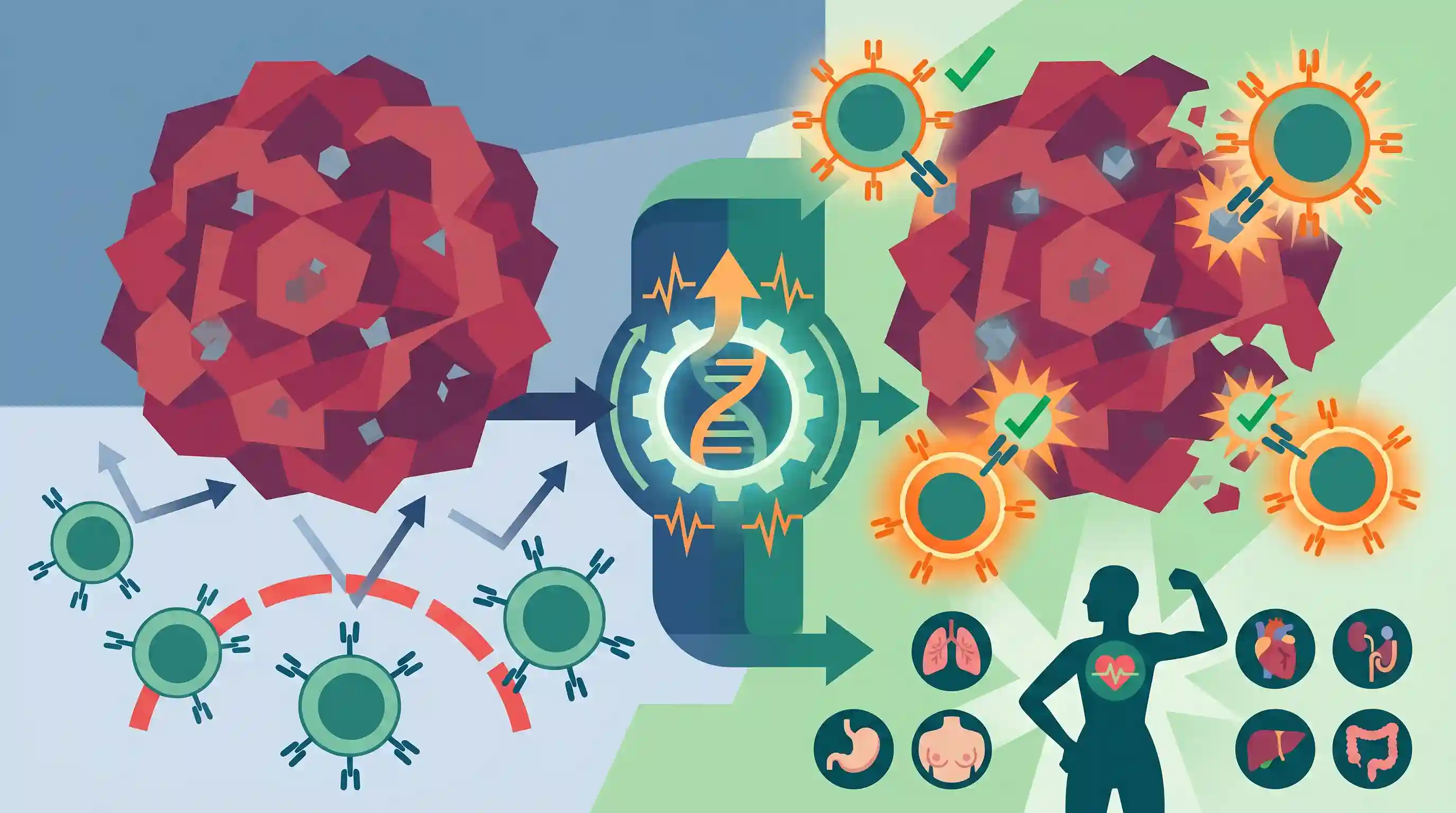
CAR-T cell therapy, a revolutionary immunotherapy that genetically modifies a patient's immune cells to fight cancer, has historically struggled to treat solid tumors. This limitation occurs because solid tumors often have a low density of targetable antigens, presenting as "faint targets" that standard CAR-T cells fail to recognize. Recent biotechnological advancements have enhanced the sensitivity of CAR-T cells, enabling them to detect and effectively clear solid tumors by identifying these faint targets. This breakthrough significantly expands the potential of CAR-T therapy, moving it beyond blood cancers and paving the way for advanced treatments for a broader spectrum of oncological diseases.
Key Points
- CAR-T (Chimeric Antigen Receptor T-cell) therapy is a form of immunotherapy where a patient's own T-cells are genetically engineered to attack cancer cells.
- Historically, CAR-T therapy has been highly successful against 'liquid' blood cancers (like leukemia and lymphoma) but ineffective against solid tumors.
- Solid tumors often present 'faint targets'—meaning they have a low density of the specific antigens that standard CAR-T cells use to identify and attack them.
- Recent enhancements to the therapy improve the sensitivity of these engineered cells, allowing them to successfully recognize, bind to, and clear solid tumors even with low antigen expression.
- This scientific advancement holds significant potential for broadening the application of personalized immunotherapy to a much wider array of cancer types.
Prelims Trap
Standard CAR-T cell therapy is highly effective in eradicating both liquid blood cancers and solid tumors.
Standard CAR-T historically failed against solid tumors due to low antigen density ('faint targets'). Only recently have enhanced versions allowed solid tumor targeting.
Static Concepts Connected
How does CAR-T therapy differ from traditional cancer treatments?
- Living drug: Uses the patient's own genetically modified T-cells (autologous transfer) rather than external chemical drugs or generalized radiation.
- Precision targeting: Engineered to express synthetic receptors (CARs) that bind exclusively to specific cancer cell proteins, sparing healthy tissues.
- Immunological memory: Unlike chemotherapy, CAR-T cells can persist in the body post-treatment, potentially providing long-term immunity against cancer recurrence.
What is NexCAR19 and why is it significant for India?
- Indigenous innovation: India's first indigenously developed CAR-T therapy, created by IIT Bombay, Tata Memorial Centre, and ImmunoACT.
- CD19 Target: Specifically designed to target the CD19 biomarker found on B-cell lymphomas and leukemias (blood cancers).
- Cost disruption: Priced at roughly one-tenth the cost of global alternatives, making advanced immunotherapy accessible in developing nations.
Cross-Topic Patterns
Indigenous Biotech & Health Equity
NexCAR19's affordability bridges high-end biotechnology with India's public health equity goals, mirroring the trajectory of India's low-cost vaccine success and "Make in India" pharmaceutical push.
Biomarkers & Cellular Receptors in Prelims
UPSC repeatedly tests specific cell receptors (like ACE2 for COVID). Expect 'CD19' (blood cancers) or 'CD70' (solid tumors) to appear as matching pairs in biotechnology questions.

Expect a 2026 multi-statement question testing CAR-T's historical limit on solid tumors, paired with India's NexCAR19.
Linked PYQs · 2
Linked PYQs · 2
- 2019PrelimsGS1
'RNA interference (RNAi)' technology has gained popularity in the last few years. Why? 1. It is used in developing gene silencing therapies. 2. It can be used in developing therapies for the treatment of cancer. 3. It can be used to develop hormone replacement therapies. 4. It can be used to produce crop plants that are resistant to viral pathogens. Select the correct answer using the code given below.
- 2021MainsGS3
What are the research and developmental achievements in applied biotechnology? How will these achievements help to uplift the poorer sections of the society?
