Heat Storms Driver Impacts and Climate Adaptation
Source:The Hindu ↗
ఇది ఎందుకు ముఖ్యం
As global temperatures rise, extreme weather events like heat storms are becoming more frequent and severe, directly threatening public health, food security, and power infrastructure, making it a critical topic for GS3 Environment and Disaster Management.
సారాంశం
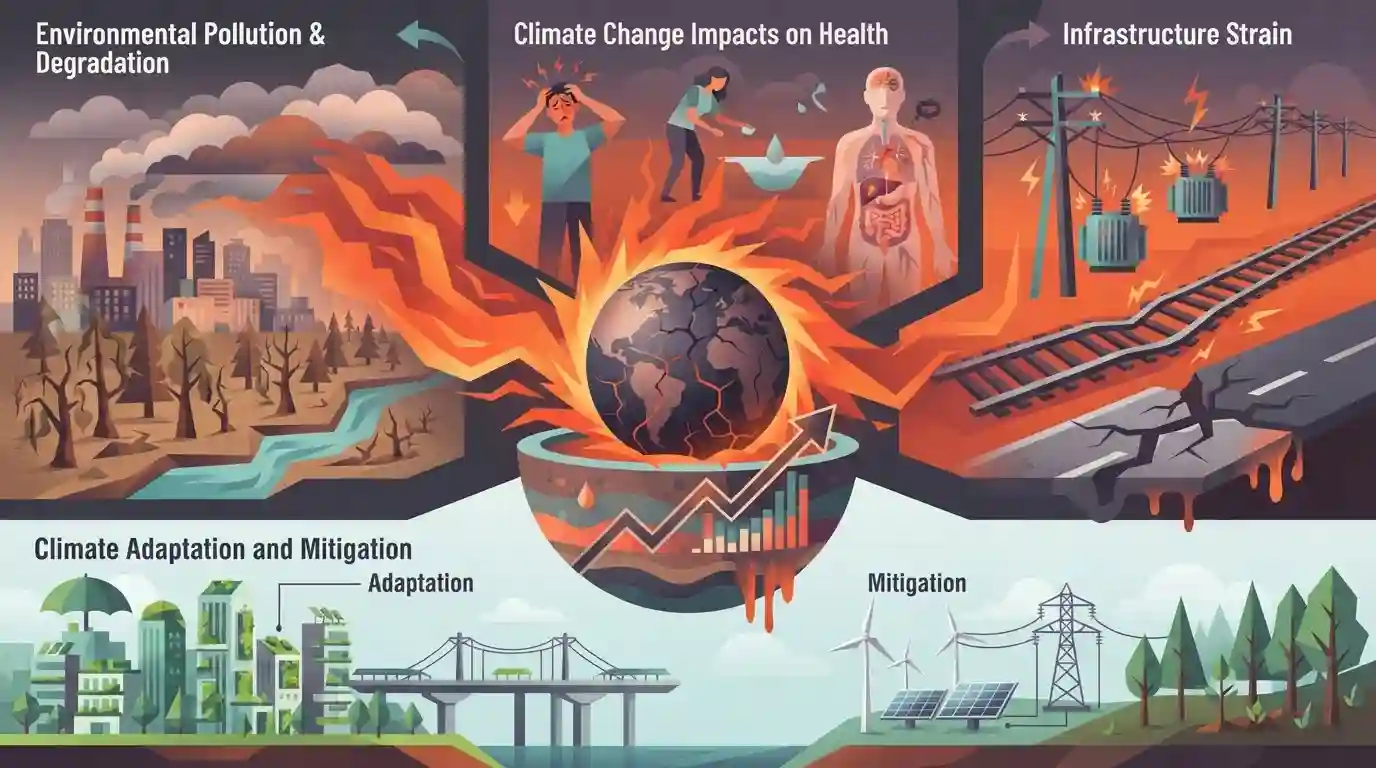
The article explores the concept of 'heat storms', defining them as intense, prolonged, and hazardous episodes of extreme heat fueled by climate change and atmospheric dynamics. It discusses their severe impacts on human health, infrastructure, and ecosystems, underlining the growing urgency for climate adaptation and mitigation strategies.
ముఖ్య అంశాలు
- Heat storms refer to extreme, prolonged, and severe heatwave events driven by climate change and atmospheric phenomena like blocking highs.
- They pose severe health risks, including extreme physiological stress, elevated wet-bulb temperatures, and increased mortality.
- They impact energy grids, agriculture, and water availability, compounding the vulnerability of developing nations like India.
ముఖ్యమైన పదాలు
Paris Agreement

An international treaty adopted in 2015 aiming to limit global temperature rise to well below 2°C above pre-industrial levels, while pursuing efforts to limit it to 1.5°C.
UPSC context
UPSC GS Paper III: Environment, Climate Change mitigation targets, and international climate diplomacy.
Intergovernmental Panel on Climate Change (IPCC)
The United Nations body for assessing the science related to climate change, providing regular scientific assessments on climate change impacts and future risks.
UPSC context
UPSC GS Paper III: Conservation, Environmental Pollution and Degradation, and scientific basis of climate phenomena.
World Meteorological Organization (WMO)
A specialized agency of the United Nations responsible for promoting international cooperation on atmospheric science, climatology, and operational weather hazards.
UPSC context
UPSC GS Paper I/III: Climatology, extreme weather monitoring, disaster management, and global environmental governance.
అనుసంధానమైన స్థిర భావనలు
What is a wet-bulb temperature and why is 35°C critical for human survival?
- Definition: Combined measure of temperature and humidity reflecting how hard it is for the human body to cool down via sweat evaporation.
- Survival Threshold: At 35°C wet-bulb temperature with 100% humidity, air can no longer absorb moisture, halting human evaporative cooling entirely within hours.
- Health Impact: Prolonged exposure above this critical threshold leads to hyperthermia and organ failure, even for healthy resting individuals in the shade.
How do atmospheric blocking systems cause prolonged heatwaves?
- Mechanism: High-pressure systems stall over a specific geographic region, diverting jet streams and trapping hot air masses underneath a dome.
- Amplification: Clear skies and intense solar radiation amplify surface heating day after day, preventing cooler maritime or frontal air from entering.
- Climate Link: These quasi-stationary planetary wave patterns are increasingly frequent and persistent due to disrupted Arctic amplification and climate change.
అంతర-అంశ నమూనాలు
Extreme Heat + Energy Transition Infrastructure
Heat storms trigger massive electricity demand spikes, directly testing urban grid resilience, coal supply logistics, and the integration of decentralized renewable energy storage under peak load.
Climate Extremes + Vulnerable Demographics & Social Protection
Severe heatwaves disproportionately impact informal urban workers and rural agrarian communities, testing states' social protection floors, MGNREGA adjustments, and disaster management funding allocation.

Wet-bulb temperature thresholds + atmospheric blocking mechanisms are high-yield areas for UPSC Prelims science & environment statements.
అనుసంధాన PYQలు · 2
అనుసంధాన PYQలు · 2
- 2017MainsGS3
'Climate change' is a global problem. How India will be affected by climate change? How Himalayan and coastal states of India will be affected by climate change?
- 2025PrelimsGS1
The World Bank warned that India could become one of the first places where wet-bulb temperatures routinely exceed 35 °C. Which of the following statements best reflect(s) the implication of the above-said report? I. Peninsular India will most likely suffer from flooding, tropical cyclones and droughts. II. The survival of animals including humans will be affected as shedding of their body heat through perspiration becomes difficult. Select the correct answer using the code given below.
