Ecological Impacts of Stray Dogs on Native Wildlife Conservation
Source:The Hindu ↗
Why It Matters
The ecological footprint of domestic and feral dogs is a rising concern in environmental conservation. For UPSC aspirants, it highlights the complex friction between animal rights policies and wildlife protection laws, while demonstrating how an unchecked domestic species can become a potent invasive threat to native biodiversity.
Summary
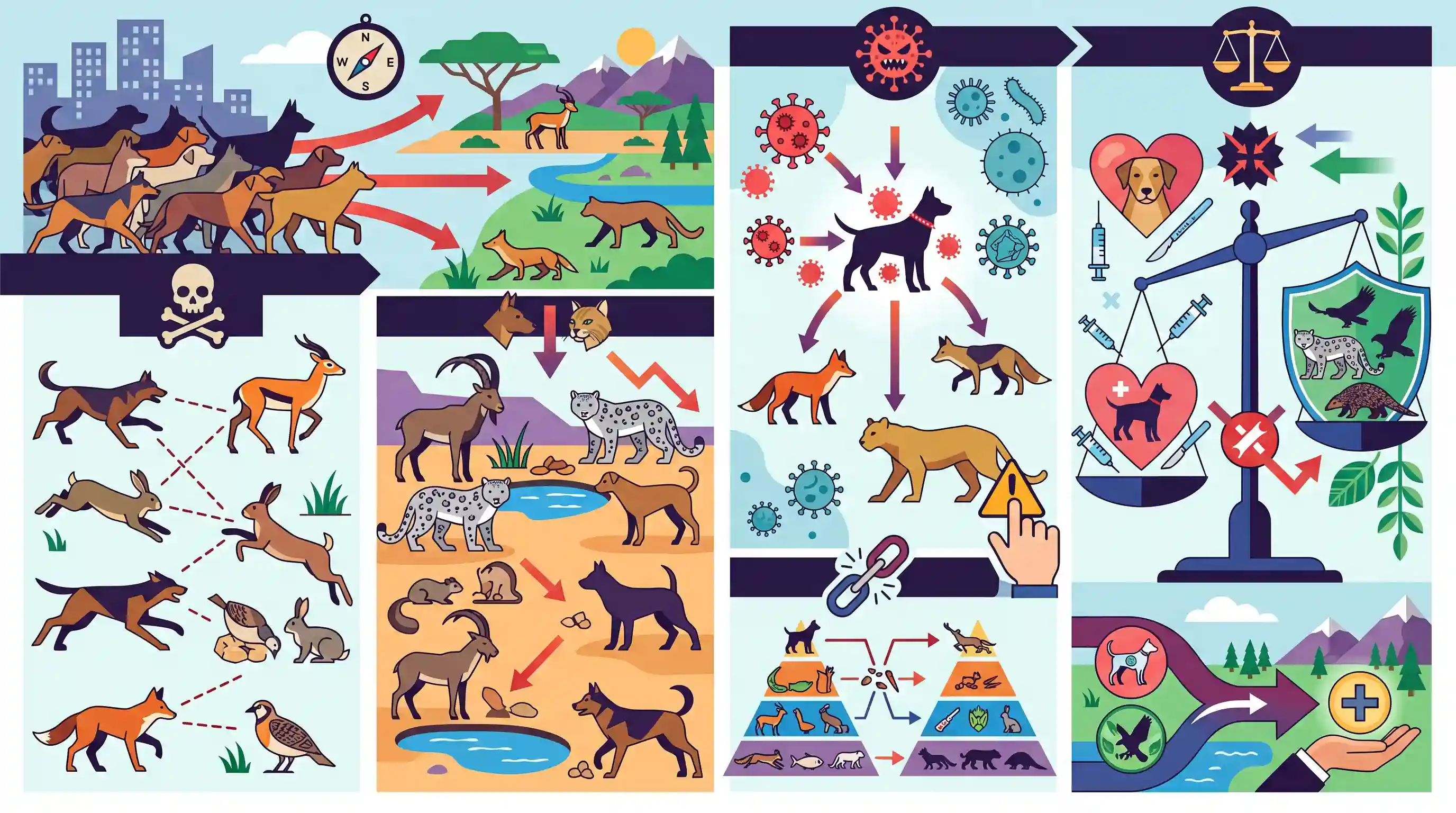
The article highlights the severe, yet often overlooked, ecological consequences of India's massive stray dog population. Beyond urban public health concerns, free-ranging dogs act as invasive predators in sensitive ecosystems, threatening native biodiversity through active predation, competition for resources, and the transmission of deadly zoonotic diseases like Canine Distemper Virus (CDV) and rabies. In regions such as Ladakh and Spiti, feral dog packs hunt endangered wildlife and disrupt native food chains. The situation underscores a critical policy conflict between animal welfare mandates, such as the Animal Birth Control (ABC) Rules, and the imperative to protect threatened species, necessitating a balanced and integrated wildlife management strategy.
Key Points
- Free-ranging stray dogs act as invasive predators in ecologically sensitive habitats, hunting wild birds, small mammals, and ungulates.
- Stray dogs serve as a reservoir for lethal zoonotic diseases like Rabies and Canine Distemper Virus (CDV), which frequently spill over to wild carnivores such as leopards and tigers.
- Feral dog populations actively compete with native scavengers and predators for resources, disrupting the natural food web.
- There is an ongoing policy tension between animal welfare frameworks (like the ABC Rules) that protect street dogs and the pressing need for wildlife conservation.
- In high-altitude ecosystems like Ladakh and Spiti, packs of feral dogs pose a critical threat to the survival of native species like the Snow Leopard and Blue Sheep.
Important Terms
Wildlife Protection Act 1972

India's primary legal framework for protecting plant and animal species. It establishes protected areas like National Parks and Sanctuaries and categorizes wildlife into schedules to determine the level of legal protection and penalties.
UPSC context
GS Paper III: Environment and Biodiversity; essential for understanding conservation laws, protected area management, and species categorization schedules.
Animal Birth Control (ABC) Rules 2023
Notified under the Prevention of Cruelty to Animals Act, 1960, these rules mandate a catch-neuter-vaccinate-return (CNVR) strategy for managing stray dogs, classifying them as 'community animals' to prevent relocation.
UPSC context
GS Paper III: Animal Husbandry and GS Paper II: Public Health; relevant for discussing human-wildlife conflict and local governance.
International Union for Conservation of Nature (IUCN)
A global environmental network that serves as the authority on the status of the natural world. It is best known for the 'Red List' which assesses the extinction risk of species worldwide.
UPSC context
GS Paper III: Biodiversity and International Organizations; tests knowledge of global conservation standards and species threat levels.
Animal Welfare Board of India (AWBI)
A statutory advisory body established in 1962 under the Prevention of Cruelty to Animals Act, 1960. It advises the government on animal welfare laws, provides grants, and promotes humane treatment.
UPSC context
GS Paper III: Environment and Ethics; tests understanding of statutory bodies and the legal framework for animal rights in India.
Prelims Trap
Feral dogs are officially designated as "Invasive Alien Species" under Schedule I of the Wildlife Protection Act, 1972.
Stray dogs are domestic species. They are governed by the Prevention of Cruelty to Animals Act (ABC Rules), causing a jurisdictional clash with forest departments protecting WPA-listed species.
Static Concepts Connected
What is Canine Distemper Virus (CDV) and how does it impact wildlife?
- Viral disease: A highly contagious, fatal viral disease that primarily affects domestic dogs, who serve as the main reservoir for the virus.
- Spillover effect: CDV frequently 'spills over' to wild carnivores, causing devastating historical outbreaks among Asiatic lions in Gir and tigers in Ranthambore.
- Management: Since it is incurable in the wild, management relies heavily on creating buffer zones by mass-vaccinating stray dogs around protected areas.
How do India's animal welfare and wildlife laws conflict over stray dogs?
- ABC Rules 2023: Notified under the Prevention of Cruelty to Animals Act, 1960, these rules mandate catch-neuter-vaccinate-release, strictly prohibiting the culling or relocation of stray dogs.
- WPA 1972: Mandates the protection of wild animals and their habitats, but forest departments lack legal jurisdiction to permanently remove or cull domestic dogs entering sanctuaries.
- Policy paralysis: This creates a policy paralysis where the welfare of individual domestic street dogs supersedes the conservation of endangered wildlife species being hunted by them.
Cross-Topic Patterns
Vulture extinction and ecological cascades
The diclofenac-induced crash of India's vulture population removed natural scavengers, leading to a massive spike in feral dog numbers feeding on carcasses, which amplified rabies and wildlife predation risk.
Feral dogs in high-altitude ecosystems
In Ladakh and Spiti, feral dog packs hunt blue sheep and outcompete snow leopards. This mirrors how introduced feral pigs and goats devastate sensitive island ecosystems like the Andamans.

A multi-statement question contrasting the statutory backing of ABC Rules (PCA Act) against the WPA 1972 is probable in 2026.
Linked PYQs · 2
Linked PYQs · 2
- 2012PrelimsGS1
Which of the following can be threats to the biodiversity of a geographical area? 1. Global warming 2. Fragmentation of habitat 3. Invasion of alien species 4. Promotion of vegetarianism Select the correct answer using the codes given below:
- 2023PrelimsGS1
'Invasive Species Specialist Group' (that develops Global Invasive Species Database) belongs to which one of the following organizations?
