Anthropogenic Pressures and Habitat Threats Facing Elephants in Assam
Source:The Hindu ↗
આ શા માટે મહત્વનું છે
Human-wildlife conflict and the protection of megafauna like elephants are central to biodiversity conservation and sustainable development policies in India, making it a recurring theme for GS Paper III.
સારાંશ
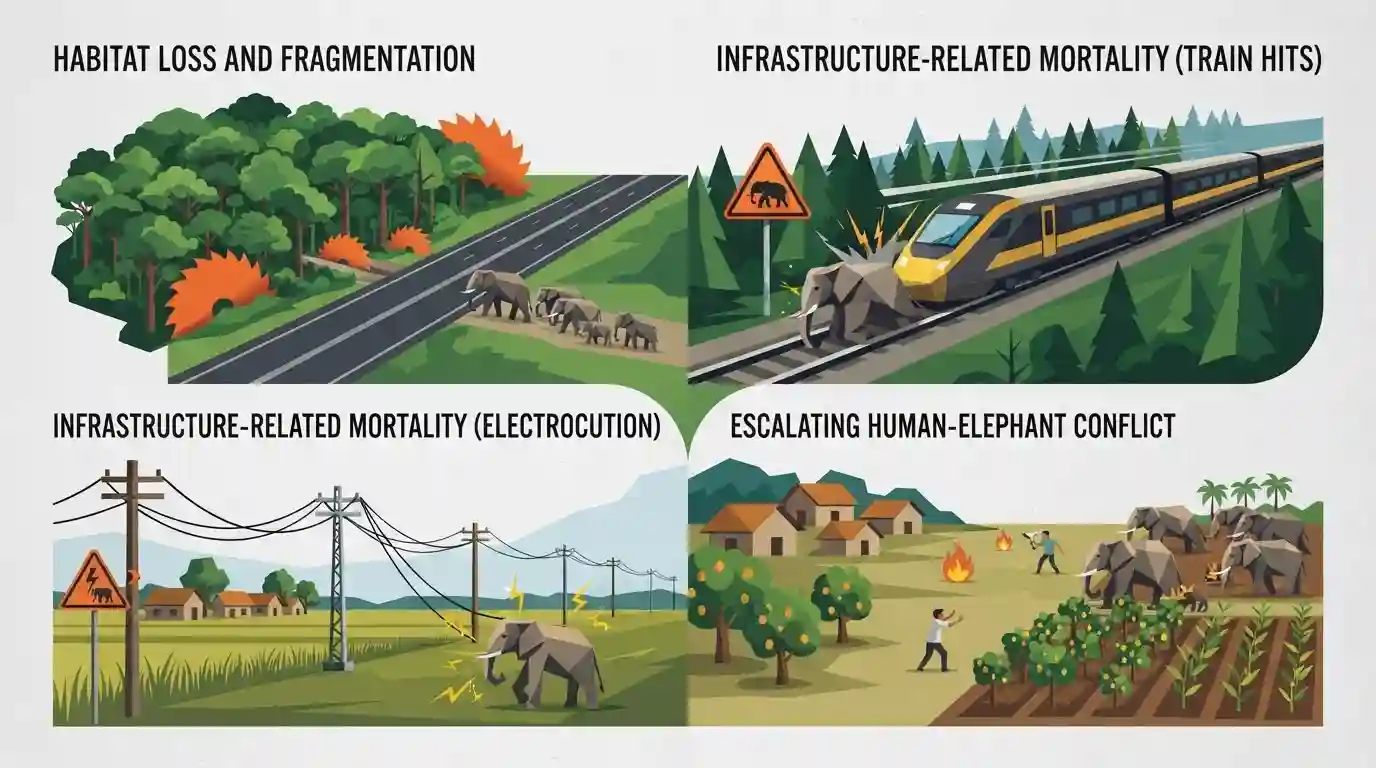
The article highlights the increasing anthropogenic hazards faced by wild elephants in Assam, driven by habitat loss, fragmentation of traditional corridors, infrastructure-related mortality (such as train hits and electrocution), and escalating human-elephant conflict.
મુખ્ય મુદ્દા
- Elephants in Assam face severe anthropogenic threats, including habitat fragmentation, railway and road hits, electrocution, and retaliatory killings due to human-elephant conflict.
- Rapid infrastructural expansion and deforestation have blocked traditional elephant corridors, forcing herds into human settlements.
- Mitigation requires concerted efforts involving stricter enforcement of wildlife corridors protection, technological interventions like early warning systems, and community participation.
મહત્વપૂર્ણ શબ્દો
Project Elephant

A centrally sponsored scheme launched in 1992 by the Ministry of Environment, Forest and Climate Change to protect Asian elephants, restore their habitats, secure migration corridors, and mitigate human-elephant conflict.
UPSC context
Important for GS Paper III (Environment, Biodiversity and Protected Areas, Wildlife Conservation Schemes).
Forest Department
The state authority responsible for wildlife protection, forest management, anti-poaching operations, and implementing measures to mitigate human-elephant conflict within Assam's vulnerable habitats.
UPSC context
Important for GS Paper III (Environmental Governance, Conservation Implementation, and Human-Wildlife Conflict Management).
સંલગ્ન સ્થિર ખ્યાલો
What are the legal status, international conventions, and key management frameworks for the Asian Elephant in India?
- Global Status: Asian elephants are classified as Endangered on the IUCN Red List and listed under Appendix I of CITES.
- Domestic Law: Protected under Schedule I of the Wildlife Protection Act, 1972, granting the highest degree of legal protection against hunting or trade.
- Project Elephant: Launched in 1992 as a Centrally Sponsored Scheme; now merged with Project Tiger under the administrative wing of NTCA/MoEFCC.
- Regional Concentration: Assam hosts over 80% of its elephant population across five designated Elephant Reserves, notably Kaziranga-Karbi Anglong and Chirang-Ripu.
આંતર-વિષય પેટર્ન
Linear Infrastructure vs. Wildlife Corridors
Expansions in Assam's tea gardens and rail networks intersect with Schedule I wildlife protection mandates, testing the limits of compensatory afforestation and linear infrastructure clearances under EIA norms.
Community-Based Conservation & CAMPA Funds
Integrating local communities into early warning systems operationalizes decentralized conservation governance akin to Tiger Conservation Plans and CAMPA fund allocations.

Expect match-the-following or statement-based questions on Schedule status, IUCN categories, and Project Elephant's administrative merger.
સંલગ્ન PYQ · 2
સંલગ્ન PYQ · 2
- 2017PrelimsGS1
From the ecological point of view, which one of the following assumes importance in being a good link between the Eastern Ghats and the Western Ghats?
- 2026PrelimsGS1
In a multi-ethnic district where both economic competition and historical grievances frequently led to community tensions, a flashpoint has arisen with a Government decision to allocate land for a waste management facility near a tribal hamlet, sparking protests by the tribal community, which claimed that the land was sacred and critical to their cultural identity. At the same time, urban residents and local industries supported the project, citing severe solid waste challenges and health concerns due to lack of a proper disposal site. The conflict has escalated with road blockades, social media campaigns, and allegations of police excesses. As a responsible Government official, you are tasked with resolving the situation through mediation, ensuring a sustainable outcome that balances environmental needs, tribal rights, and urban public health. Consider the following statements with reference to the above : 1. A successful conflict resolution process must begin with acknowledging the cultural concerns of the protesting tribal community before discussing technical alternatives. 2. The Government should move ahead with the project without delay to address urban health concerns, which outweigh the sentiments of a small group. 3. Creating a multi-stakeholder dialogue platform — including tribal leaders, environmental experts, and municipal representatives — to build mutual understanding and help de-escalate tensions. 4. Conducting an independent Environmental and Social Impact Assessment (ESIA) and sharing findings transparently with both sides to facilitate evidence-based decision-making. Which of the statements given above would contribute to the resolution process ?
