Uniform GST Rate and Universal Basic Income Reform Proposal
Source:The Hindu ↗
Why It Matters
This article presents a critical conceptual framework combining tax simplification with welfare economics. It contrasts India's current equity-focused, multi-slab GST regime with an alternative flat-tax model paired with universal cash transfers. Understanding this interplay between indirect taxation, revenue collection efficiency, and Direct Benefit Transfers (DBT) is crucial for GS-3 answers on fiscal policy, subsidy reforms, and inclusive growth.
Summary
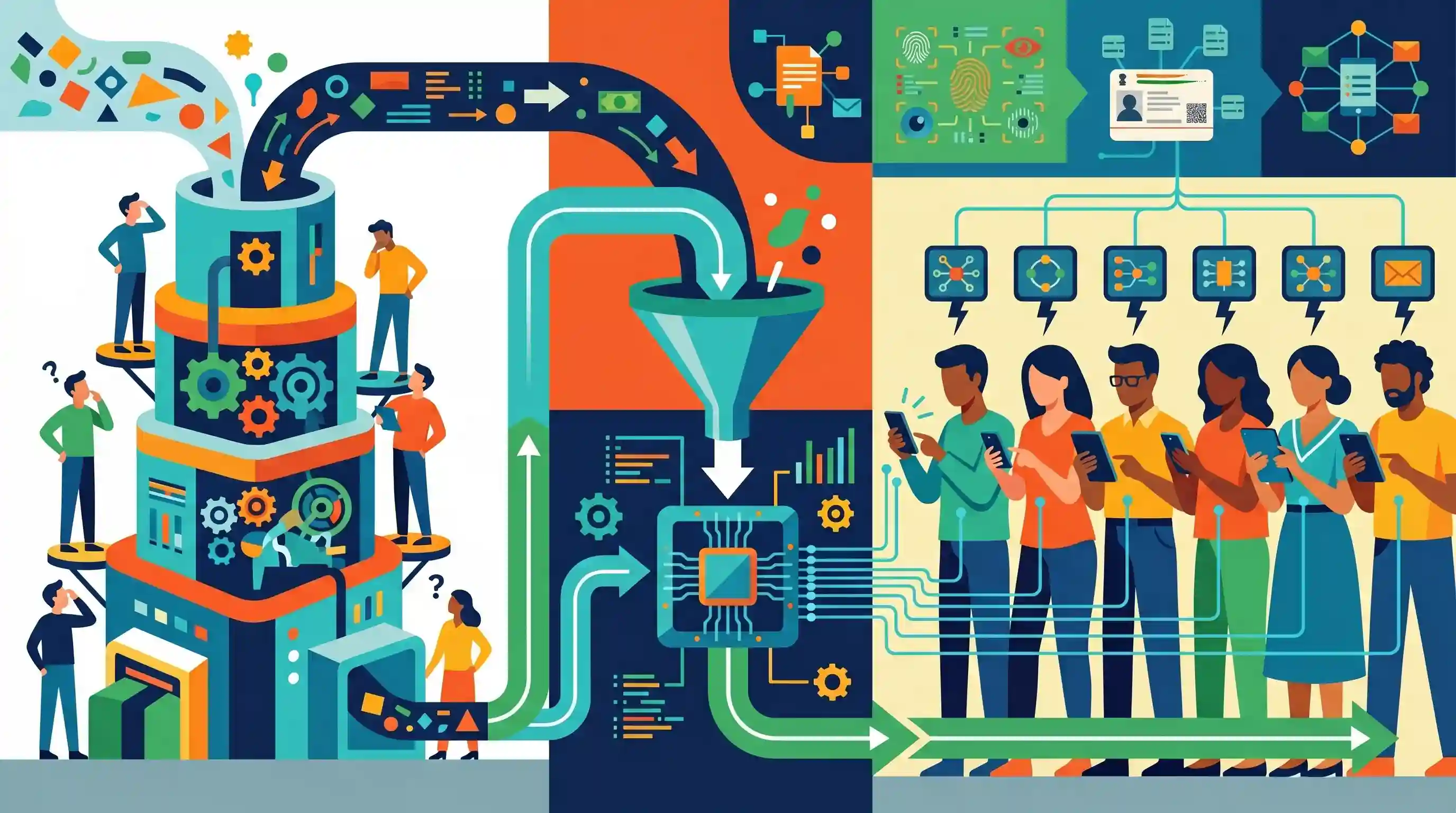
Former IMF Fiscal Affairs Director Vito Tanzi has proposed a radical reform to India's Goods and Services Tax (GST) system. Speaking at an event by the Centre for Development Studies (CDS), he recommended replacing the current multi-slab GST structure with a single, uniform rate applied to all domestic consumption. Rather than embedding equity measures into complex tax slabs, Tanzi suggested that the government should achieve wealth redistribution on the spending side. He proposed that the entire GST revenue collected be returned equally to all citizens through per capita digital transfers via Aadhaar-linked bank accounts. This approach essentially creates a framework similar to Universal Basic Income (UBI), simplifying tax collection while ensuring equitable wealth distribution through Direct Benefit Transfers (DBT).
Key Points
- Former IMF Fiscal Affairs Director Vito Tanzi recommended replacing India's current multi-slab GST system with a single, uniform tax rate applied to all domestic consumption.
- He argued against complicating the tax structure to ensure equity, suggesting instead that redistribution is better handled on the expenditure side.
- Tanzi proposed that the entire GST revenue collected should be redistributed equally to all citizens as a per capita digital transfer.
- This redistribution would be facilitated seamlessly through direct benefit transfers (DBT) into Aadhaar-linked bank accounts.
- The concept bridges indirect tax reform with a framework resembling Universal Basic Income (UBI), prioritising both tax efficiency and wealth redistribution.
Important Terms
Goods and Services Tax (GST)

A comprehensive, destination-based indirect tax on the supply of goods and services, introduced via the 101st Constitutional Amendment Act to create a unified national market.
UPSC context
GS Paper 3 (Economy); crucial for indirect tax reforms, fiscal federalism (GST Council), and domestic resource mobilization.
Direct Benefit Transfer (DBT)
A mechanism to transfer subsidies and welfare benefits directly into the bank accounts of beneficiaries using the JAM (Jan Dhan-Aadhaar-Mobile) trinity to minimize leakages and intermediaries.
UPSC context
GS Paper 2 & 3; tests knowledge of governance reforms, public service delivery, and reducing fiscal leakages.
Universal Basic Income (UBI)
A social welfare proposal where the government provides all citizens with a periodic, unconditional cash transfer to ensure a basic income floor and reduce poverty.
UPSC context
GS Paper 3 (Economy); relevant for inclusive growth, social safety nets, and debates on fiscal sustainability versus poverty alleviation.
Aadhaar
A 12-digit unique identification number issued by the UIDAI based on biometric and demographic data, acting as a primary identifier for government welfare delivery.
UPSC context
GS Paper 2 (Governance); fundamental to e-governance, digital identity, and the legal/privacy implications of mandatory biometric authentication.
International Monetary Fund (IMF)
An international organization of 190 countries that fosters global monetary cooperation, secures financial stability, facilitates international trade, and provides balance-of-payments support.
UPSC context
GS Paper 2 (International Institutions); crucial for understanding global economic governance and the role of Bretton Woods institutions.
Prelims Trap
"Implementing a single uniform GST rate inherently creates a progressive taxation system."
Indirect taxes are inherently regressive. A single rate worsens this. Tanzi's model relies entirely on the expenditure side (DBT redistribution) to achieve equity, not the tax collection side.
Static Concepts Connected
What is an Inverted Duty Structure under the GST regime?
- Definition: Occurs when the tax rate on raw materials/inputs is higher than the tax rate on the final outward supplies.
- Impact: Causes accumulation of unutilized Input Tax Credit (ITC), which blocks the working capital of manufacturers and triggers complex refund claims.
- Structural Fix: Moving towards a uniform, single GST rate across all goods inherently eliminates this classification mismatch.
What are the three core principles of Universal Basic Income (UBI)?
- Universality: Provided to all citizens without targeting, eliminating exclusion errors common in BPL-based schemes.
- Unconditionality: Cash is transferred with no stipulations on labor market participation, education, or specific spending.
- Agency: Direct cash transfers respect the recipient's choice, empowering them to allocate funds according to their own needs.
Cross-Topic Patterns
JAM Trinity enabling UBI
The feasibility of large-scale, leak-proof per capita digital transfers relies heavily on the Jan Dhan-Aadhaar-Mobile (JAM) infrastructure, seamlessly linking tech governance with macro-fiscal redistribution.
Regressive Taxation + Progressive Expenditure
Modern fiscal theory increasingly separates revenue generation (favoring efficiency via flat indirect taxes) from equity/redistribution (favoring progressive Direct Benefit Transfers on the expenditure side).

Expect a Mains Q asking to evaluate the feasibility of substituting India's multi-slab GST and targeted subsidies with a single-rate+UBI model.
Linked PYQs · 3
Linked PYQs · 3
- 2019MainsGS3
Enumerate the indirect taxes which have been subsumed in the Goods and Services Tax (GST) in India. Also, comment on the revenue implications of the GST introduced in India since July 2017.
- 2015MainsGS3
In what way could replacement of price subsidy with Direct Benefit Transfer (DBT) change the scenario of subsidies in India ? Discuss.
- 2013MainsGS3
Discuss the rationale for introducing Goods and Services Tax (GST) in India. Bring out critically the reasons for the delay in roll out for its regime.
