AP Deputy CM Outlines Measures to Curb Human Wildlife Conflict
Source:theprint ↗
Why It Matters
Human-wildlife conflict is a critical environmental and governance challenge in Andhra Pradesh, intersecting with forest management, agricultural protection, and state policy implementation relevant for APPSC aspirants.
Summary
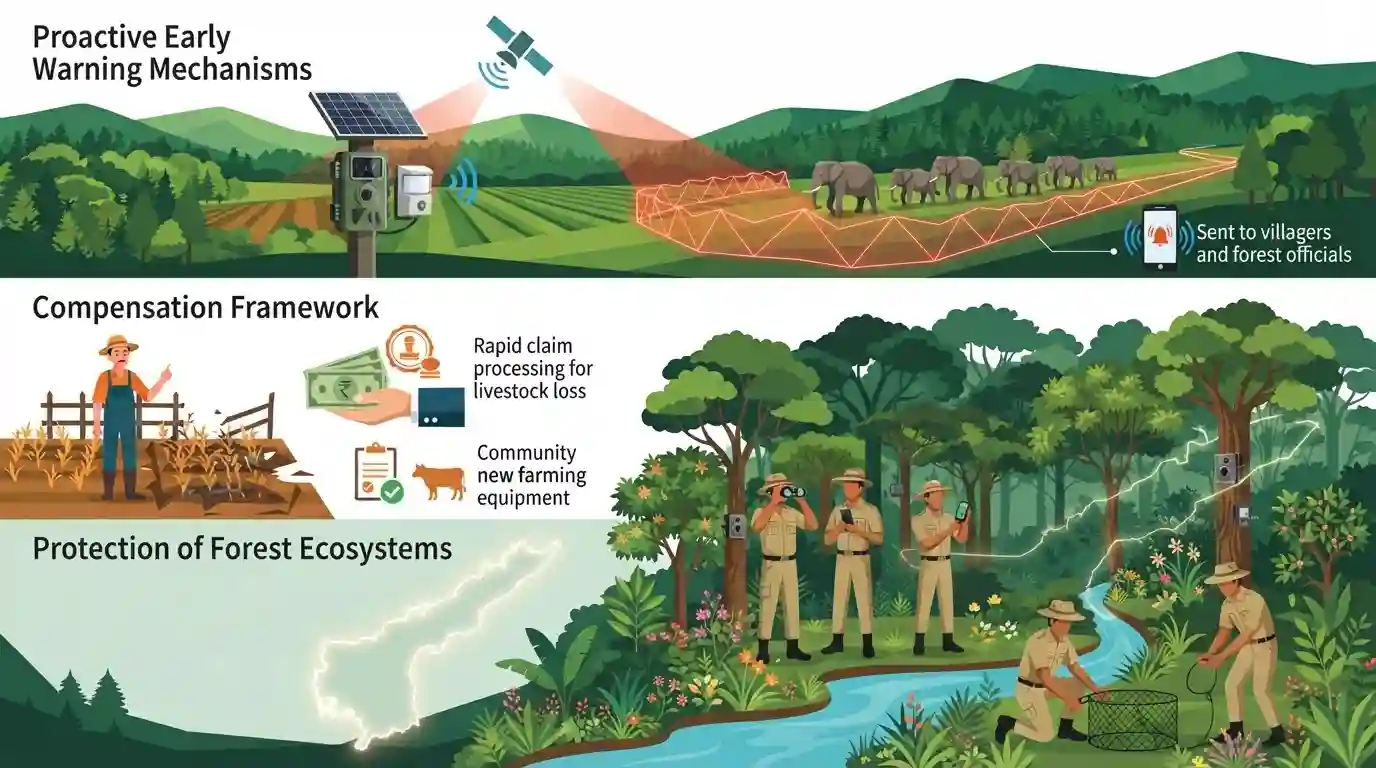
Andhra Pradesh Deputy Chief Minister Pawan Kalyan highlighted administrative and mitigation measures undertaken by the state government to curb human-wildlife conflicts, focusing on proactive early warning mechanisms, compensation frameworks, and protection of forest ecosystems.
Key Points
- Andhra Pradesh Deputy Chief Minister Pawan Kalyan reviewed and highlighted strategic measures to mitigate human-wildlife conflict in the state.
- Key focus areas include strengthening early warning systems, compensating farmers and villagers affected by crop/property damage, and deploying dedicated tracking teams.
- Measures address habitat encroachment, fragmentation, and expanding forest-human interfaces, particularly concerning elephant movements from neighboring states.
Important Terms
Project HANUMAN

An innovative state-level technological and administrative initiative launched in Andhra Pradesh to monitor, aid, and nurse wildlife while mitigating human-wildlife conflicts using specialized rapid response vehicles and rescue centers.
UPSC context
Important for APPSC Group 1/2 (Environment Conservation, State Governance and Welfare Schemes). Tests knowledge of contemporary biodiversity management in AP.
Kumki Elephants
Trained captive elephants deployed in forest-fringe regions to safely drive wild elephants back into forests, significantly reducing human casualties and crop destruction.
UPSC context
Important for APPSC General Studies (Biodiversity and Wildlife Management). Tests understanding of applied conservation techniques for mitigating human-elephant conflict.
Static Concepts Connected
What are the key legal provisions and administrative mechanisms for wildlife management in India?
- Wildlife Protection Act:: Apex statute enacted in 1972 providing for protected areas, schedule-based species protection, and state wildlife boards.
- Project Elephant:: Centrally sponsored scheme launched in 1992 to protect elephants, their habitats, and corridors, addressing man-elephant conflict.
- Eco-Sensitive Zones:: Legal buffer zones around National Parks and Sanctuaries regulated under Eco-Sensitive Zone (ESZ) guidelines to restrict commercial activities.
Cross-Topic Patterns
Interstate Wildlife Corridors & Federal Co-ordination
AP's elephant migration corridor issues link wildlife management with inter-state coordination challenges under the Interstate Council framework.
Human-Wildlife Conflict & Agrarian Distress Relief
Crop damage compensation mechanisms tie environmental administration directly to rural livelihood security and disaster relief frameworks.

APPSC frequently tests specific wildlife corridors and state-specific mitigation schemes under environment and regional governance.
Linked PYQs · 2
Linked PYQs · 2
- 2024APPSC_PRELIMSGS1
Match the following : | List-I (Wildlife Sanctuary in Andhra Pradesh) | List-II (Region) | |---|---| | A. Coringa | I. Kurnool | | B. Gundla Brahmeswaram | II. Kadapa | | C. Rollapadu | III. East Godavari | | D. Sri Lankamalleswara | IV. Kurnool and Prakasam | Choose the correct answer using the codes given below : Code: A B C D
- 2023APPSC_PRELIMSGS1
According to the Indian Forest Act, 1927, which of the following is the most appropriate sequence which shows the degree of protection between different forest types ?
