US Foreign Policy Posture On Iran Protests And Regime Crackdown
Source:Indian Express ↗
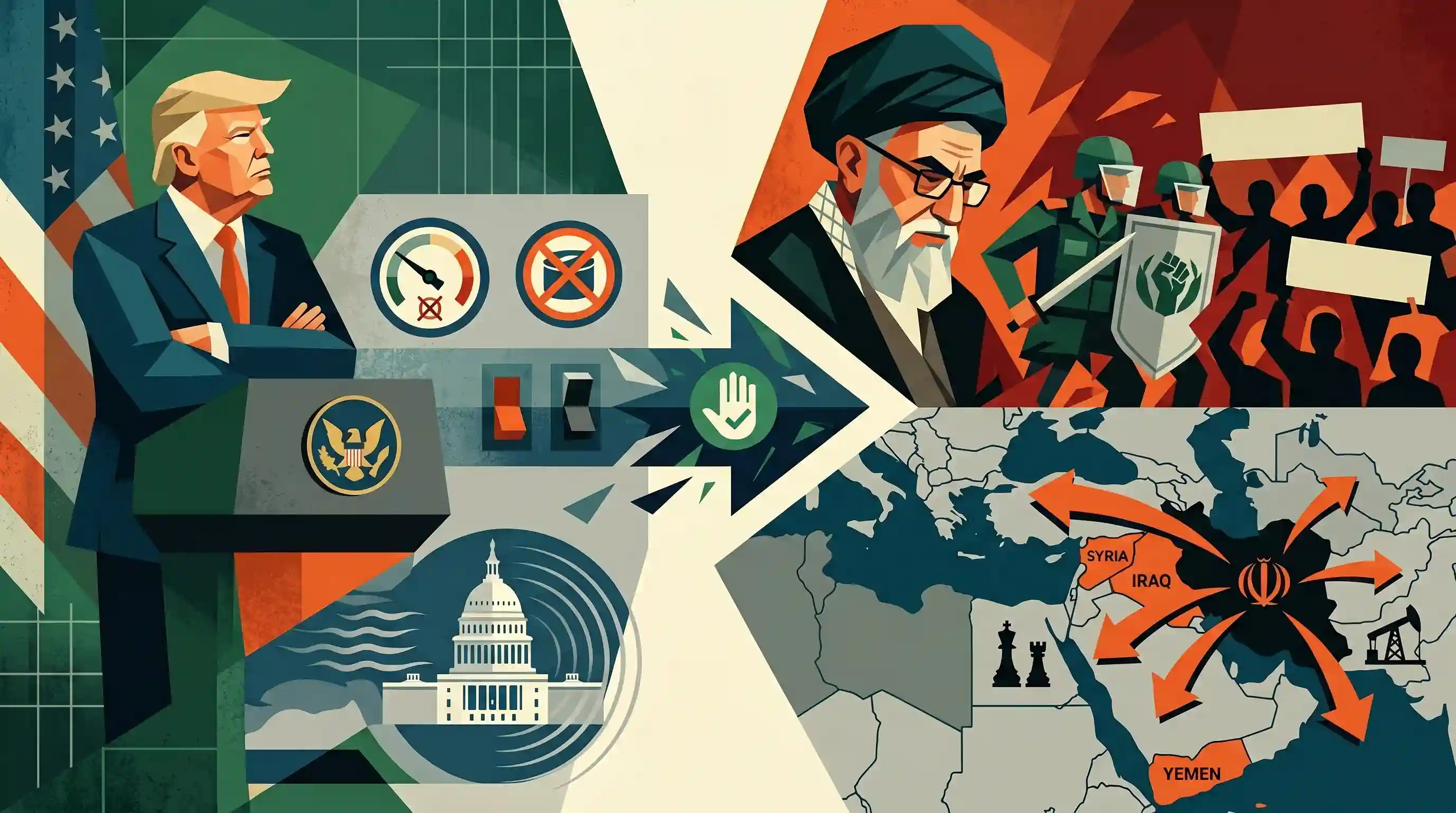
Why It Matters
Shifts in US posture towards Iran heavily influence Middle Eastern regional stability, which directly affects global energy security, oil prices, and India's strategic investments in the region, such as the Chabahar Port and the INSTC.
Summary
The article analyzes the potential consequences of US foreign policy under Donald Trump towards Iran, focusing on the regime's harsh crackdown on domestic protests led by the IRGC and Ayatollah Khamenei. It argues that a lack of American intervention or pressure would signal impunity to the Iranian leadership, thereby exacerbating human rights abuses and emboldening the regime in the Middle East.
Key Points
- The article examines the potential trajectory of US foreign policy towards Iran under a Donald Trump administration.
- It highlights the internal unrest in Iran, marked by civilian protests, and the severe crackdowns orchestrated by the regime, including the IRGC and Ayatollah Khamenei.
- The author argues that if the US adopts a non-interventionist stance or fails to hold the Iranian leadership accountable, it will embolden the regime with a sense of impunity.
- The situation underscores the complex intersection of domestic human rights violations in Iran and broader geopolitical dynamics in the Middle East.
Important Terms
Islamic Revolutionary Guard Corps (IRGC)

A multi-service primary branch of Iran's Armed Forces, established to protect the country's Islamic system. It wields significant political and economic power and reports directly to the Supreme Leader.
UPSC context
GS Paper-II: International Relations. Important for understanding West Asian geopolitics, proxy warfare, and India-Iran-US trilateral dynamics.
Supreme Leader (Iran)
The highest-ranking political and religious authority in Iran, serving as head of state and commander-in-chief. The office holds ultimate power over the military, judiciary, and foreign policy.
UPSC context
GS Paper-II: Comparative Politics and International Relations. Relevant for analyzing Iran's unique theocratic structure (Velayat-e Faqih).
Maximum Pressure Policy
The Trump administration's foreign policy strategy of using comprehensive economic sanctions and diplomatic isolation to compel Iran to renegotiate its nuclear and regional policies.
UPSC context
GS Paper-II: International Relations. Tests understanding of US-Iran tensions and their impact on global energy security and India's strategic interests.
Joint Comprehensive Plan of Action (JCPOA)
The 2015 landmark agreement between Iran and the P5+1 powers (plus EU) to limit Iran's nuclear program in exchange for relief from international sanctions.
UPSC context
GS Paper-II: Bilateral and Multilateral Agreements. A frequent topic regarding nuclear non-proliferation and West Asian stability.
Axis of Resistance
An informal anti-Western and anti-Israeli political and military alliance led by Iran, comprising various state and non-state actors like Hezbollah, Hamas, and the Houthi movement.
UPSC context
GS Paper-II: International Relations. Essential for analyzing regional conflicts and Iran's influence across the Middle East.
Theocracy
A system of government in which religious leaders rule in the name of God. Iran's 1979 Constitution established this based on the principle of 'Guardianship of the Jurist'.
UPSC context
GS Paper-II: International Relations and Political Systems. relevant for understanding ideological drivers in West Asian diplomacy.
Prelims Trap
"US sanctions against Iran universally prohibit India's development of the Chabahar Port."
India historically secured a US sanctions exemption for Chabahar due to its role in aiding Afghanistan's reconstruction, separating it from broader oil and financial embargoes.
Static Concepts Connected
What is the strategic distinction between Chabahar Port and the INSTC?
- Chabahar Port: A bilateral/trilateral maritime and land node (India-Iran-Afghanistan) designed to bypass Pakistan for direct access to Central Asia.
- INSTC: A multi-nation 7,200-km multi-mode network linking India, Iran, Azerbaijan, and Russia via ship, rail, and road.
Who are the P5+1 members in the JCPOA?
- The P5: The US, UK, France, Russia, and China (the permanent veto-wielding members of the UN Security Council).
- The Plus One: Germany, included because of its status as a key economic and trading partner in the nuclear negotiations.
- Core Objective: Lifting crippling economic sanctions in exchange for strict, verifiable limits on Iran's nuclear enrichment program.
Cross-Topic Patterns
Sanctions & Strategic Autonomy
US postures on Iran directly affect India's energy security and CAATSA calculations, mirroring how S-400 purchases from Russia continually test Indian diplomatic balancing.
Human Rights vs Realpolitik in IR
Western responses to the IRGC's domestic crackdowns highlight the recurring clash between UN human rights mechanisms and transactional geopolitical alignments in the Middle East.

Expect a 2026 Prelims question linking US CAATSA sanctions, India's Chabahar port exemptions, and the broader INSTC transit route.
Linked PYQs · 3
Linked PYQs · 3
- 2025MainsGS2
"Energy security constitutes the dominant kingpin of India's foreign policy, and is linked with India's overarching influence in Middle Eastern countries.” How would you integrate energy security with India's foreign policy trajectories in the coming years?
- 2025PrelimsGS1
India is one of the founding members of the International North-South Transport Corridor (INSTC), a multimodal transportation corridor, which will connect
- 2015PrelimsGS1
The area known as 'Golan Heights' sometimes appears in the news in the context of the events related to
