रूस से तेल खरीद को लेकर US की भारत पर टैरिफ बढ़ाने की धमकी
स्रोत:इंडियन एक्सप्रेस ↗
क्यों मायने रखता है
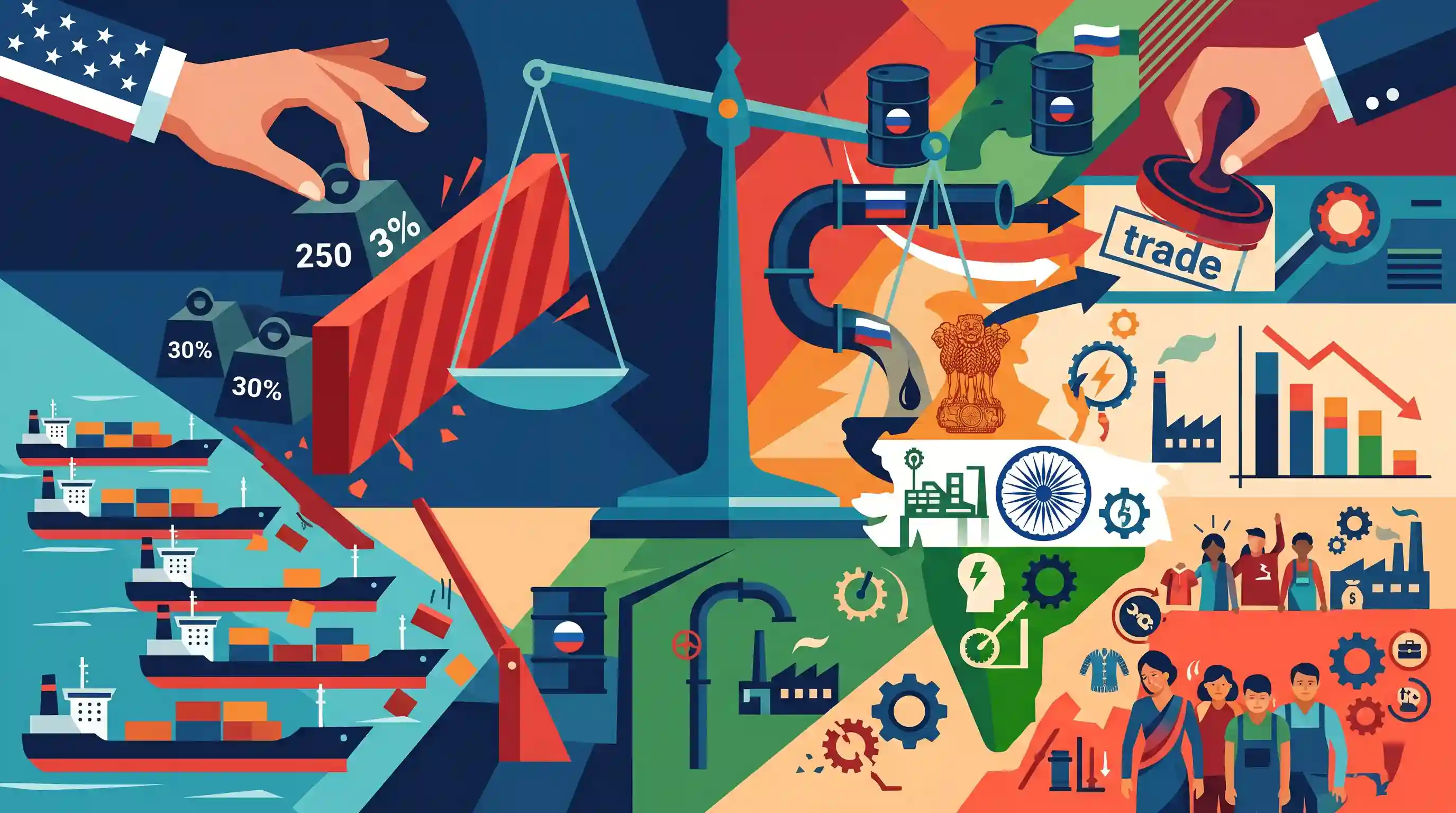
The article is critical for understanding the intersection of geopolitics and trade. It highlights how India's strategic pursuit of energy security (via Russian oil) creates friction with the US, manifesting as trade protectionism that threatens India's export-driven economic growth and employment.
सारांश
US President Donald Trump has warned that the United States could raise tariffs on Indian goods if New Delhi fails to cooperate in reducing its Russian oil imports. This comes after the US previously imposed steep tariffs of up to 50% on various Indian exports in 2025. Trade analysts project that further tariff escalations could severely impact India's export competitiveness, potentially shrinking merchandise shipments by up to 45% and threatening jobs in labour-intensive sectors. The development underscores the ongoing tension between India's pursuit of energy security through discounted Russian crude and US geopolitical efforts to isolate Moscow.
मुख्य बिंदु
- US President Donald Trump threatened to raise tariffs on Indian exports if India does not reduce its purchases of Russian oil.
- 2025 में, अमेरिका ने रूसी तेल और रक्षा उपकरणों की भारत द्वारा निरंतर खरीद का हवाला देते हुए कई भारतीय वस्तुओं पर 50% तक का टैरिफ पहले ही लगा दिया है।
- Trade analysts estimate that higher tariffs could reduce India's merchandise shipments to the US by 40-45% in 2025-26, threatening job security in labour-intensive sectors like textiles, gems, and seafood.
- The development highlights the ongoing friction between India's strategic autonomy in energy security (importing discounted Russian crude) and US geopolitical objectives.
महत्वपूर्ण शब्द
सामान्यीकृत वरीयता प्रणाली (GSP)

A trade scheme where developed nations provide non-reciprocal, preferential (reduced or zero) tariffs on imports from developing countries to promote their economic growth and industrialization.
UPSC context
GS पेपर 2 और 3: व्यापार बाधाओं और भारत के निर्यात-आधारित विकास को प्रभावित करने वाली अमेरिका की एकपक्षीय व्यापार नीति की समझ का परीक्षण करता है।
Trade Protectionism
Economic policies, such as high tariffs, import quotas, or subsidies, used by a government to shield domestic industries and workers from foreign competition.
UPSC context
GS Paper 3 (Economy): Relevant for analyzing global trade wars and their impact on India’s manufacturing and export competitiveness.
Strategic Autonomy
A foreign policy doctrine where a nation makes independent decisions based on its own national interests, avoiding being coerced by other states or formal military alliances.
UPSC context
GS Paper 2 (International Relations): Central to India's multi-alignment strategy and balancing relations with rival major powers.
धारा 301 (1974 का व्यापार अधिनियम)
यह एक अमेरिकी कानूनी उपकरण है जो राष्ट्रपति को उन विदेशी व्यापार प्रथाओं के खिलाफ जवाबी शुल्क (retaliatory tariffs) सहित एकपक्षीय कार्रवाई करने के लिए अधिकृत करता है, जिन्हें अमेरिकी वाणिज्य के प्रति अनुचित, तर्कहीन या भेदभावपूर्ण माना जाता है।
UPSC context
GS Paper 2: अमेरिकी व्यापार कानूनों और द्विपक्षीय संबंधों तथा भारत की 'Make in India' पहल पर उनके प्रभाव के ज्ञान का परीक्षण करता है।
ऊर्जा सुरक्षा
The uninterrupted availability of energy sources at an affordable price, ensuring that a country's economic development and essential functions remain unaffected by geopolitical disruptions.
UPSC context
GS पेपर 3: भारत की ईंधन आयात निर्भरता और आपूर्ति स्रोतों के विविधीकरण से जुड़े जोखिमों को समझने के लिए महत्वपूर्ण।
Secondary Sanctions
Sanctions applied by one country against a third-party entity for engaging in trade with a primary sanctioned nation (e.g., targeting Indian companies for buying Russian oil).
UPSC context
GS Paper 2: Crucial for understanding the extraterritorial reach of US laws and their impact on India's strategic autonomy.
प्रारंभिक ट्रैप
"The US utilizes CAATSA provisions to penalize India's imports of Russian crude oil."
CAATSA विशेष रूप से रूसी रक्षा और खुफिया क्षेत्रों के साथ लेनदेन (जैसे S-400 सौदा) को लक्षित करता है। कच्चे तेल को टैरिफ की धमकियों और G7 प्राइस कैप्स का सामना करना पड़ता है, CAATSA प्रतिबंधों का नहीं।
संबंधित अवधारणाएँ
अमेरिका की एकतरफा टैरिफ बढ़ोतरी WTO के नियमों के साथ कैसे इंटरैक्ट करती है?
- MFN उल्लंघन: विशिष्ट देशों के खिलाफ एकपक्षीय बढ़ोतरी सामान्यतः WTO के मोस्ट-फेवर्ड-नेशन (MFN) सिद्धांत का उल्लंघन करती है, जिसमें समान टैरिफ व्यवहार की आवश्यकता होती है।
- Security Exception: देश अक्सर सहमत WTO बाइंडिंग्स के दायरे से बाहर एकतरफा टैरिफ को न्यायोचित ठहराने के लिए GATT अनुच्छेद XXI (राष्ट्रीय सुरक्षा अपवाद) का हवाला देते हैं।
- Appellate Paralysis: Affected nations can file WTO disputes, but the prolonged US blockade of the Appellate Body restricts effective enforcement.
What are the mechanics of CAATSA?
- Core Objective: अमेरिकी संघीय कानून जिसका उद्देश्य तीसरे पक्ष के देशों पर द्वितीयक प्रतिबंध (secondary sanctions) लगाकर विरोधियों (रूस, ईरान, उत्तर कोरिया) का मुकाबला करना है।
- Target Sectors: Regarding Russia, it explicitly targets significant transactions with defense and intelligence sectors, distinct from general merchandise or energy trade.
- राष्ट्रपतीय छूट: अमेरिकी राष्ट्रपति के पास छूट प्रदान करने का वैधानिक अधिकार सुरक्षित है, यदि यह अमेरिका के महत्वपूर्ण राष्ट्रीय सुरक्षा हितों के अनुरूप हो।
अंतर-विषय पैटर्न
ऊर्जा सुरक्षा + रुपये का अंतर्राष्ट्रीयकरण
India's massive shift to discounted Russian crude necessitated the RBI's push for Special Rupee Vostro Accounts to bypass SWIFT and manage trade without dollar reliance.
US Protectionism + FTA Diversification
भारत के सबसे बड़े बाजार को होने वाले निर्यात में 45% के संकुचन का खतरा, अपने व्यापार पोर्टफोलियो में विविधता लाने के लिए UK और EU के साथ लंबित FTAs को अंतिम रूप देने की नई दिल्ली की तत्परता को और तेज करता है।

Expect a 2026 Prelims question distinguishing between CAATSA provisions, UN sanctions, and unilateral G7 oil price caps on Russian trade.
संबद्ध PYQ · 3
संबद्ध PYQ · 3
- 2012MainsGS2
Discuss the likely negative impact of the protectionist measures proposed by the US on India's software industry.
- 2025MainsGS2
"Energy security constitutes the dominant kingpin of India's foreign policy, and is linked with India's overarching influence in Middle Eastern countries.” How would you integrate energy security with India's foreign policy trajectories in the coming years?
- 2023PrelimsGS1
Consider the following statements: Statement-I: India accounts for 3.2% of global export of goods. Statement-II: Many local companies and some foreign companies operating in India have taken advantage of India's 'Production-linked Incentive' scheme. Which one of the following is correct in respect of the above statements?
