US Tariffs on Indian Exports and Protectionism Impact
Source:The Hindu ↗
Why It Matters
This development directly relates to global trade protectionism, US-India bilateral trade relations, and the resilience of Indian exports under changing international economic policies.
Summary
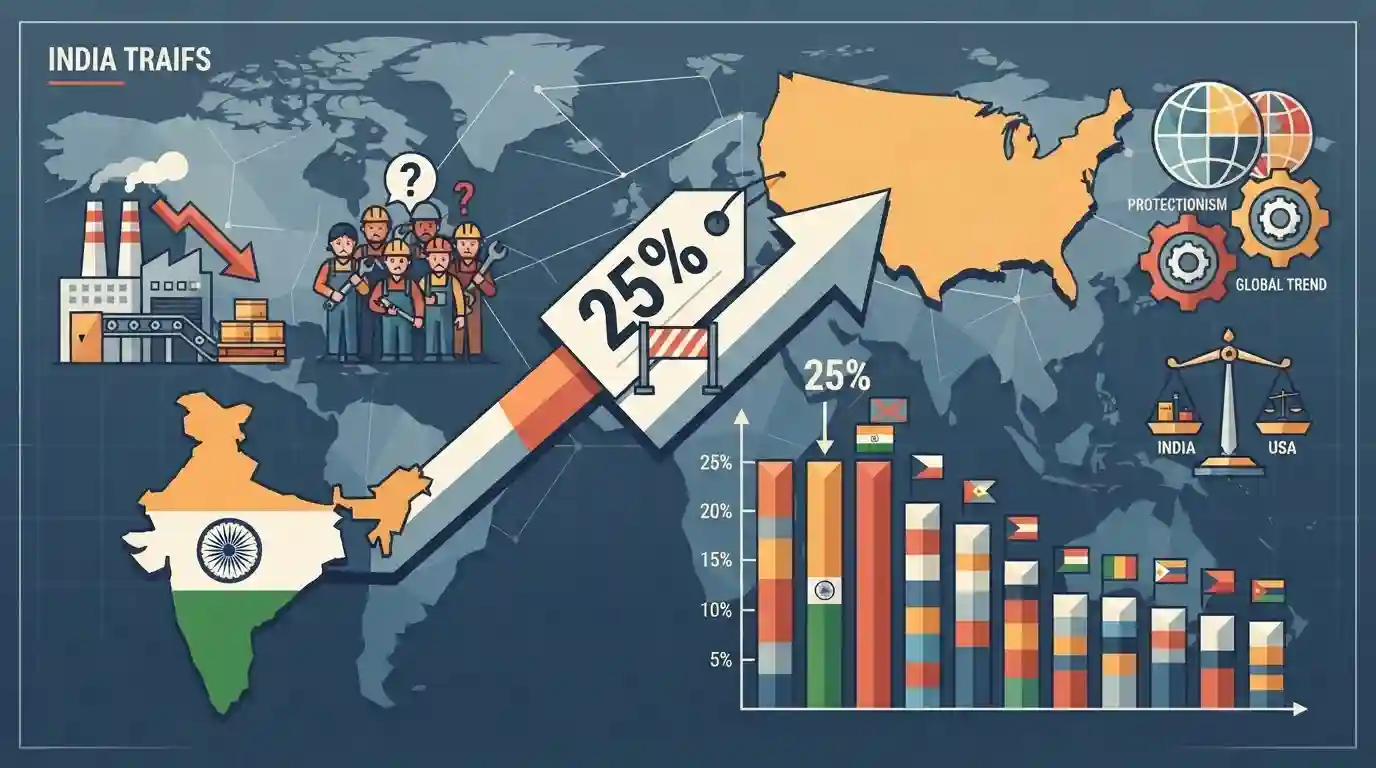
The United States has announced a 25% tariff on Indian imports, marking the second-highest levy among 14 nations targeted by recent U.S. trade actions. This move underscores growing global protectionist trends and poses implications for bilateral economic relations and Indian export competitiveness.
Key Points
- The United States announced a new 25% tariff on imports from India, representing the second-highest tariff rate among the 14 targeted countries.
- The development highlights rising global protectionism, trade unilateralism, and shifting trade dynamics between key economic partners.
- The move carries significant implications for Indian export competitiveness, manufacturing sectors, and bilateral economic relations.
Important Terms
U.S. Tariffs

Taxes imposed by a government on imported goods, used by the U.S. under trade laws like Section 301 to protect domestic industries and counter perceived foreign trade distortions.
UPSC context
GS Paper II (International Relations - Bilateral ties) and GS Paper III (Economy - External Sector and Trade Policy). Tests understanding of global protectionism.
Section 301
A provision of the U.S. Trade Act of 1974 empowering the U.S. Trade Representative to investigate and retaliate against foreign trade practices that burden U.S. commerce.
UPSC context
GS Paper II (International Relations) and GS Paper III (Indian Economy). Important for examining unilateral trade measures and WTO compliance.
Protectionist Trends
A global economic phenomenon where countries increasingly adopt restrictive trade policies, import duties, and subsidies to shield domestic manufacturing from foreign competition.
UPSC context
GS Paper III (Economy - Liberalization, Growth & Development). Tests the impact of global trade fragmentation on export-led growth strategies.
Export Competitiveness
The capacity of domestic industries to produce goods and services that successfully compete in international markets against foreign alternatives, influenced by tariffs, input costs, and policies.
UPSC context
GS Paper III (Indian Economy - Industrial Growth, Exports, and Employment). Crucial for evaluating Make in India and export promotion frameworks.
Prelims Trap
U.S. tariffs on Indian imports are automatically authorized under WTO dispute settlement frameworks.
Aspirants often assume all U.S. tariffs are imposed through WTO-authorized anti-dumping or countervailing duties, whereas unilateral trade actions often bypass multilateral rules.
Static Concepts Connected
What are the major trade remedy instruments permitted under WTO agreements?
- Anti-Dumping Duty: Duties imposed on foreign imports priced below their normal domestic value to protect domestic industry.
- Countervailing Duty: Tariffs applied to offset foreign government subsidies that unfairly benefit exported goods.
- Safeguard Duty: Temporary trade restrictions imposed when a sudden surge in imports causes serious injury to domestic producers.
Cross-Topic Patterns
Tariffs vs WTO Dispute Settlement Breakdown
U.S. tariff actions outside WTO frameworks illustrate the steady erosion of multilateral dispute settlement mechanisms and the rise of unilateral economic nationalism.
US Protectionism vs India's Export-Led Growth
New export levies directly challenge India's Make in India and PLI targets by raising landed costs in its single largest goods export market.

Unilateral tariff actions by major economies will likely be tested via conceptual statements on WTO rules and protectionism.
Linked PYQs · 2
Linked PYQs · 2
- 2025MainsGS3
What are the challenges before the Indian economy when the world is moving away from free trade and multilateralism to protectionism and bilateralism? How can these challenges be met?
- 2018MainsGS3
How would the recent phenomena of protectionism and currency manipulations in world trade affect macroeconomic stability of India?
