US Executive Order Imposing Tariffs on Nations Trading with Iran
Source:The Hindu ↗
Why It Matters
The article highlights the increasing use of tariffs and economic sanctions as foreign policy tools (weaponization of trade). For UPSC, it is vital to understand how secondary sanctions impact India's strategic autonomy, energy security, and bilateral relations in the Middle East, as well as the broader implications for WTO frameworks and global multilateralism.
Summary
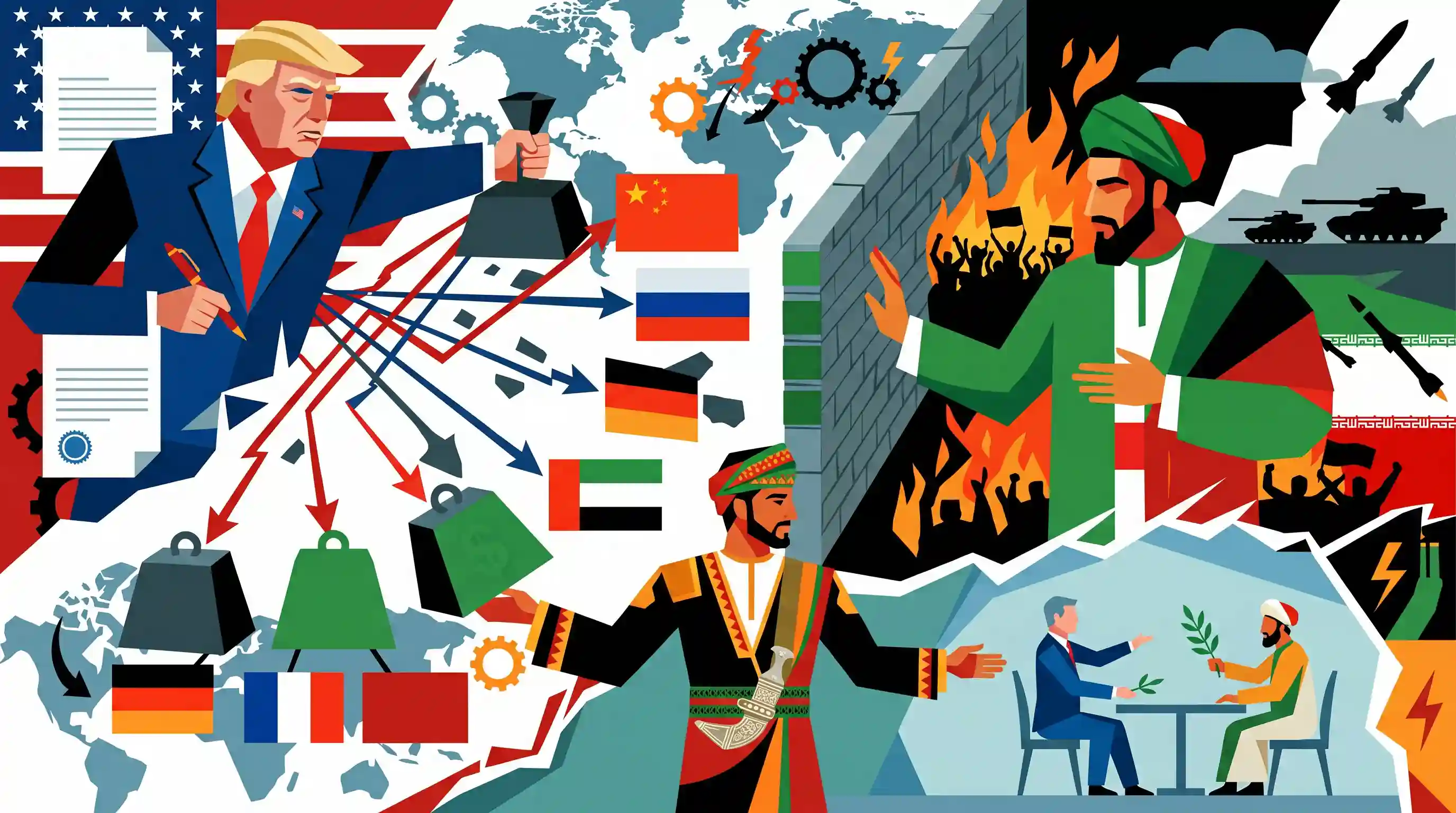
U.S. President Donald Trump has escalated economic pressure on Iran by signing an executive order to impose up to 25% tariffs on nations doing business with Tehran. The unilateral move threatens major trade partners such as China, Russia, the UAE, and several European nations, linking U.S. trade policy with its Middle East geopolitical strategy. Paradoxically, this aggressive posturing coincides with rare U.S.-Iran diplomatic talks mediated by Oman. The development reflects a broader trend of leveraging economic protectionism for strategic foreign policy goals, impacting global supply chains and multilateral trade norms while Iran faces intense domestic protests and regional military conflicts.
Key Points
- U.S. President Donald Trump signed an executive order preparing to impose tariffs of up to 25% on countries that conduct business directly or indirectly with Iran.
- The policy effectively weaponizes U.S. trade to enforce secondary sanctions, disproportionately impacting major Iranian trade partners like China, Russia, Germany, Turkey, and the UAE.
- Despite the aggressive economic measures, the U.S. and Iran engaged in rare diplomatic talks mediated by Oman in Muscat, following direct U.S. involvement in strikes on Iranian nuclear sites.
- Iran continues to face severe domestic turmoil and an internet blackout, with human rights organizations reporting over 6,500 protesters killed during government crackdowns.
Important Terms
Secondary Sanctions

Economic penalties imposed on third-party nations or entities to deter them from trading with a primary sanctioned target. They leverage the dominant country's financial system to enforce compliance globally.
UPSC context
GS Paper II: International Relations; tests knowledge of extraterritorial jurisdiction and impacts on India's strategic autonomy.
World Trade Organization (WTO)
The primary global body regulating international trade rules. It aims to ensure trade flows smoothly and predictably through negotiated agreements and a structured dispute settlement mechanism.
UPSC context
GS Paper II & III: International Institutions; relevant for trade disputes and challenges to multilateralism.
Protectionism
An economic policy of shielding domestic industries from foreign competition through barriers like tariffs, quotas, and subsidies. It is often used as a tool for strategic foreign policy.
UPSC context
GS Paper III: Indian Economy; tests the impact of global trade shifts on India’s macroeconomic stability.
Human Rights Activists News Agency (HRANA)
A U.S.-based non-governmental organization that monitors and reports on human rights violations in Iran. It provides critical data on domestic protests, arrests, and executions within the country.
UPSC context
GS Paper II: International Relations; relevant for human rights issues and regional stability in West Asia.
Oman’s Diplomatic Role
Commonly known as the 'Switzerland of the Middle East,' Oman maintains a neutral, pragmatic foreign policy, frequently acting as a primary mediator for indirect diplomatic talks between the U.S. and Iran.
UPSC context
GS Paper II: International Relations; focuses on West Asian geopolitics and regional conflict resolution mechanisms.
Prelims Trap
Secondary sanctions on nations trading with Iran are authorized by the UN Security Council.
These are US unilateral secondary sanctions. The UN lifted many sanctions post-JCPOA (2015), and current US measures bypass international multilateral bodies like the UNSC.
Static Concepts Connected
What is the difference between primary and secondary economic sanctions?
- Primary sanctions: Prohibit citizens, companies, and banks of the sanctioning country from doing business with the target nation.
- Secondary sanctions: Target third-country entities, threatening to cut them off from the sanctioning nation's financial and trade system if they trade with the target.
Which WTO provision is often invoked to justify unilateral tariffs for geopolitical reasons?
- Article XXI (GATT): The Security Exception in GATT allows WTO members to breach trade obligations to protect their "essential security interests."
- WTO Dispute Status: While traditionally treated as self-judging by the US, recent WTO dispute panels assert the authority to review if a genuine national security emergency exists.
Cross-Topic Patterns
Chabahar Port vs. US Secondary Sanctions
India's operations at Iran's Chabahar port, vital for the INSTC, face constant threats from US secondary sanctions, requiring precarious diplomatic carve-outs to maintain strategic autonomy.
Oman as West Asia's neutral mediator
Oman's Ibadi majority and non-interventionist foreign policy uniquely position it to mediate between the US, Iran, and Arab states, similar to its foundational role in the 2015 JCPOA talks.

Expect a multi-statement Prelims question testing the distinction between UN-mandated sanctions and unilateral US secondary sanctions.
Linked PYQs · 4
Linked PYQs · 4
- 2012MainsGS2
How have the US sanctions against Iran affected India's bilateral relations with Iran?
- 2018MainsGS2
In what ways would the ongoing US-Iran Nuclear Pact Controversy affect the national interest of India? How should India respond to this situation?
- 2025MainsGS3
What are the challenges before the Indian economy when the world is moving away from free trade and multilateralism to protectionism and bilateralism? How can these challenges be met?
- 2025MainsGS2
"Energy security constitutes the dominant kingpin of India's foreign policy, and is linked with India's overarching influence in Middle Eastern countries.” How would you integrate energy security with India's foreign policy trajectories in the coming years?
