US and Iran signal progress on peace deal amid Strait tensions
Source:The Hindu ↗
Why It Matters
The conflict and potential peace deal in West Asia directly impact global energy security, maritime trade routes (Strait of Hormuz), and international diplomacy. Understanding these dynamics is crucial for UPSC aspirants, as it connects to India's energy needs, its balancing act in West Asia, and broader themes of nuclear non-proliferation and global supply chain vulnerabilities.
Summary
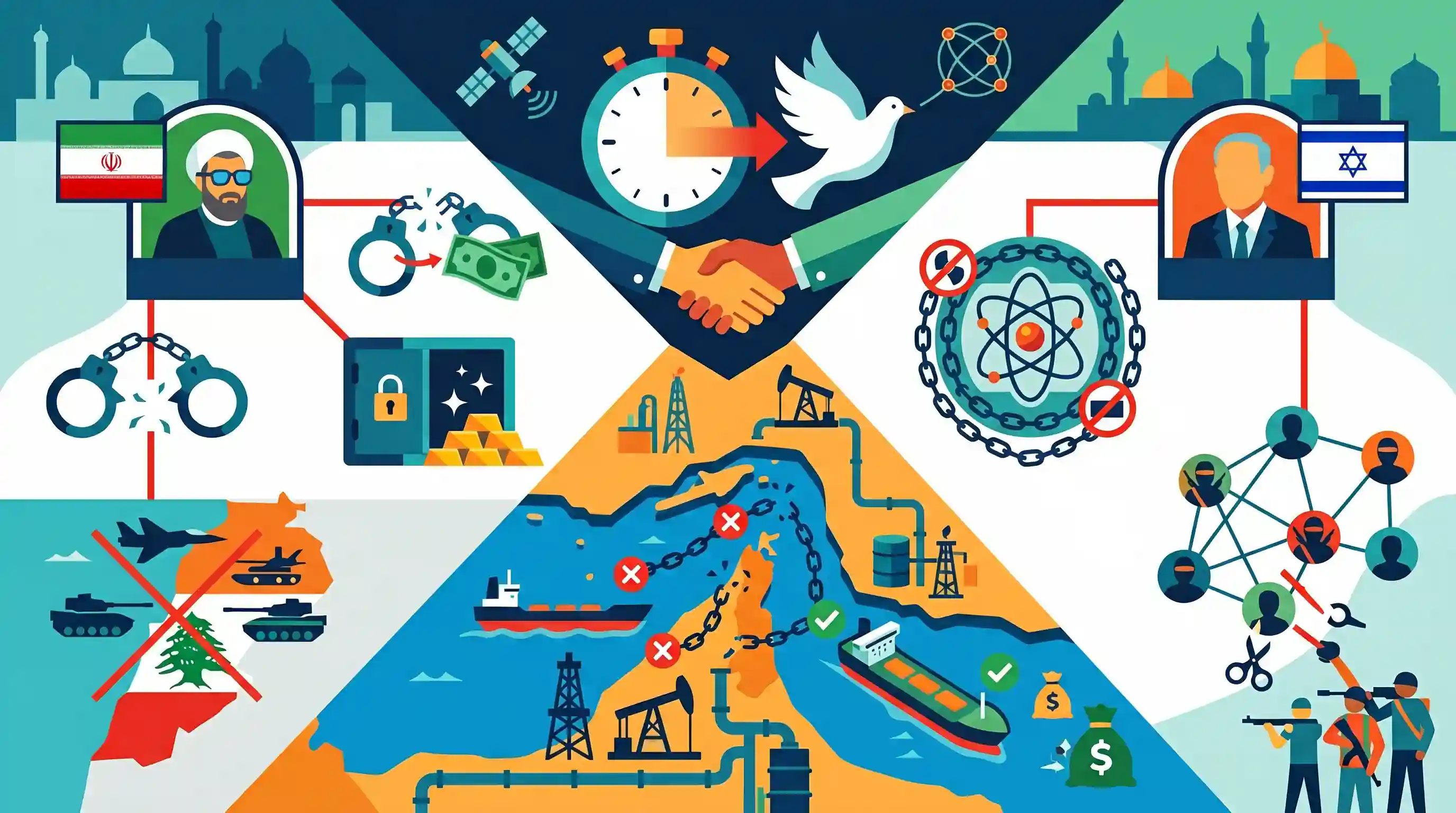
Former US President Donald Trump announced that a peace deal with Iran is close to being finalized, potentially ending a three-month conflict that has severely impacted global energy prices by disrupting shipping through the Strait of Hormuz. While Iran acknowledged progress, it emphasized adherence to its 'red lines', demanding the lifting of international sanctions, the release of frozen assets, and an end to Israeli military actions in Lebanon. Concurrently, Israel seeks stringent restrictions on Iran's nuclear capabilities and proxy networks. The situation highlights the strategic importance of maritime chokepoints and the complex geopolitical dynamics of West Asia.
Key Points
- Former US President Donald Trump claimed a peace deal with Iran is close, aiming to end a three-month conflict that has disrupted shipping and spiked global energy prices.
- The conflict has highlighted the strategic vulnerability of the Strait of Hormuz, a critical maritime chokepoint for global oil shipments.
- Iran's 'red lines' for a deal include the lifting of international sanctions, unfreezing of its assets, recognition of its control over the Strait of Hormuz, and an end to Israeli strikes in Lebanon.
- Israel demands strict curbs on Iran's nuclear program, including the removal of enriched material and dismantling of infrastructure, alongside an end to Iranian support for regional proxy groups.
- The ongoing tensions underscore the volatile geopolitical landscape of West Asia and its direct implications for global energy security and maritime trade.
Important Terms
Strait of Hormuz

A narrow, strategic waterway connecting the Persian Gulf to the Gulf of Oman, through which approximately 20% of the world's total oil consumption passes daily.
UPSC context
GS-I (Geography) and GS-II (International Relations); critical for understanding maritime chokepoints and global energy trade routes.
Iran Nuclear Deal (JCPOA)
Officially the Joint Comprehensive Plan of Action (JCPOA), this 2015 agreement between Iran and world powers limited Iran's nuclear program in exchange for economic sanctions relief.
UPSC context
GS-II (International Relations); tests knowledge of global nuclear non-proliferation efforts and major international diplomatic agreements.
International Sanctions
Economic and trade penalties imposed by the US, UN, and EU to pressure the Iranian regime to halt nuclear enrichment and curb regional proxy activities.
UPSC context
GS-II (Effect of policies of developed countries); important for understanding how global economic pressure affects India’s energy imports.
Hezbollah
A Lebanese Shia political and militant organization supported by Iran, which serves as a significant non-state actor and deterrent in the conflict with Israel.
UPSC context
GS-II (International Relations); vital for analyzing regional security threats and the role of non-state actors in West Asia.
West Asia Geopolitics
The shifting power dynamics and competition for influence in the Middle East involving major states (Iran, Saudi Arabia, Israel, USA) and various non-state proxies.
UPSC context
GS-II (International Relations); central to India’s 'Look West' policy and regional stability assessments.
Energy Security
The uninterrupted availability of energy sources at an affordable price; for India, this involves safeguarding oil and gas imports from the volatile Persian Gulf region.
UPSC context
GS-III (Economy and Infrastructure); tests strategies for resource diversification and the impact of global supply shocks.
Prelims Trap
"Vessels traveling from India to Chabahar Port must pass through the Strait of Hormuz."
Chabahar is strategically located on the Gulf of Oman, strictly outside the Persian Gulf. This allows Indian vessels to access it without transiting the vulnerable Strait of Hormuz.
Static Concepts Connected
What are the strategic maritime chokepoints in the Middle East?
- Strait of Hormuz: Connects the Persian Gulf to the Gulf of Oman and Arabian Sea. Bordered by Iran, Oman, and the UAE. Critical for global oil transit.
- Bab-el-Mandeb: Connects the Red Sea to the Gulf of Aden and Arabian Sea. Bordered by Yemen, Djibouti, and Eritrea. Vital for Suez Canal traffic.
How does an oil supply shock impact India's macroeconomic indicators?
- Widening CAD: Higher crude oil import bills directly widen the CAD, as India imports over 80% of its crude requirements, increasing the outflow of foreign exchange.
- Imported Inflation: Elevated global oil prices translate to higher domestic fuel costs, which cascade into transport and manufacturing sectors, driving up headline retail inflation.
- Currency Depreciation: A rising import bill increases the demand for US Dollars to settle payments, leading to the depreciation of the Indian Rupee.
Cross-Topic Patterns
INSTC as a chokepoint bypass
Disruptions in the Strait of Hormuz directly bolster the strategic rationale for the International North-South Transport Corridor (INSTC), as it provides an alternative route bypassing traditional maritime chokepoints.
Geopolitical volatility + Strategic Petroleum Reserves
Recurrent West Asian instability emphasizes India's urgency to expand its Strategic Petroleum Reserves (ISPRL) and diversify crude sourcing (e.g., discounted Russian oil) to insulate the economy from supply shocks.

Expect a hybrid Prelims question pairing West Asian straits (Hormuz, Bab-el-Mandeb) with macroeconomic impacts like imported inflation.
Linked PYQs · 3
Linked PYQs · 3
- 2018MainsGS2
In what ways would the ongoing US-Iran Nuclear Pact Controversy affect the national interest of India? How should India respond to this situation?
- 2024PrelimsGS1
Consider the following statements : Statement-I : Sumed pipeline is a strategic route for Persian Gulf oil and natural gas shipments to Europe. Statement-II : Sumed pipeline connects the Red Sea with the Mediterranean Sea. Which one of the following is correct in respect of the above statements?
- 2018MainsGS2
“India’s relations with Israel have, of late, acquired a depth and diversity, which cannot be rolled back.” Discuss.
