US Iran Standoff and Strait of Hormuz Energy Security
Source:Indian Express ↗
Why It Matters
The geopolitical standoff between the US and Iran directly impacts global energy markets due to the strategic importance of the Strait of Hormuz. For India, tensions in the Persian Gulf affect energy security, diaspora safety, and regional connectivity projects like the Chabahar port. Understanding the diplomatic deadlock and the role of regional mediators is crucial for International Relations.
Summary
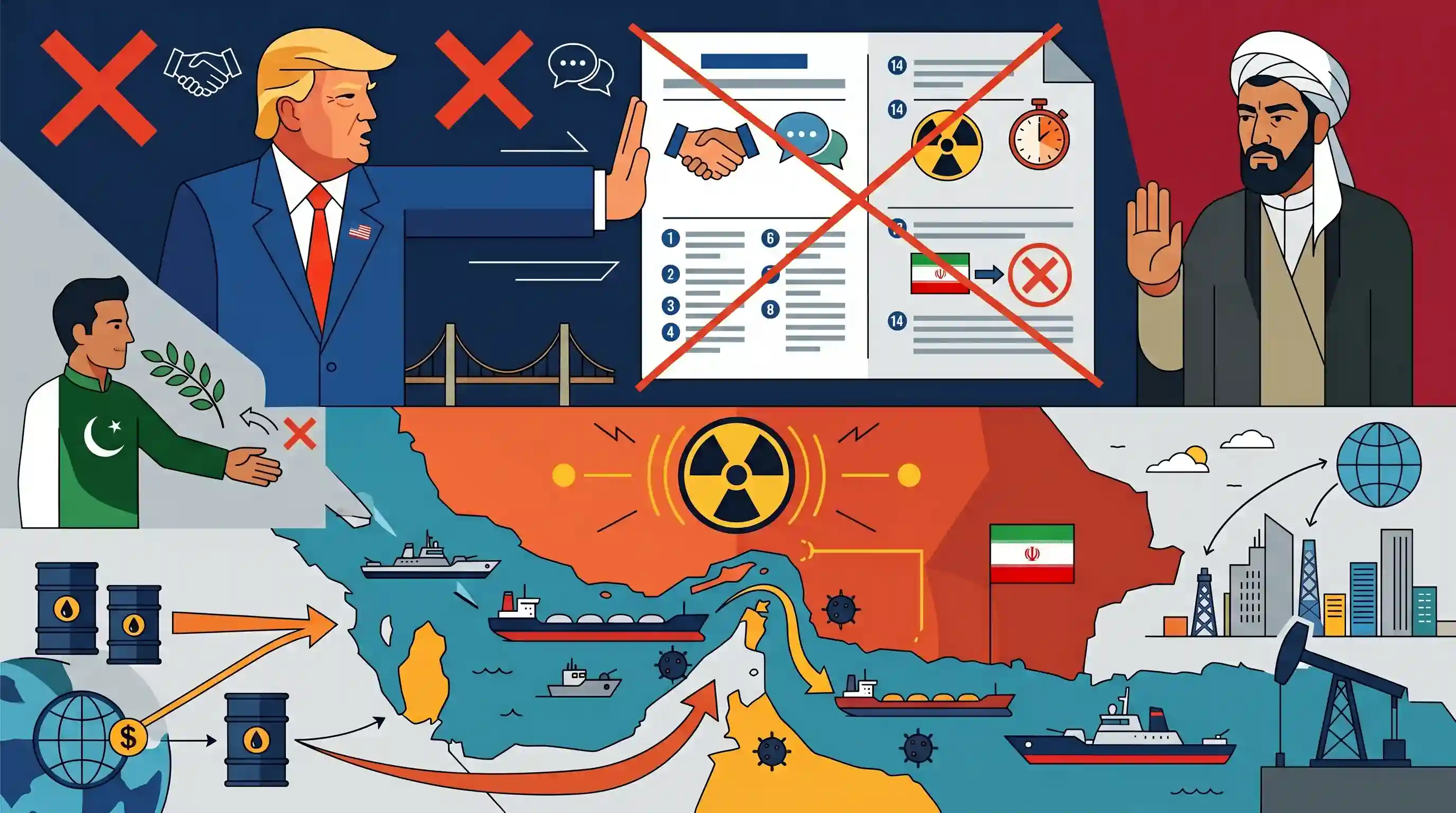
US President Donald Trump rejected a 14-point proposal from Iran that sought to ease conditions for peace talks while postponing discussions on the country's nuclear program. Trump also dismissed an offer for Pakistan to mediate the geopolitical dispute. The ongoing standoff highlights persistent US-Iran tensions over nuclear proliferation and maritime security in the Strait of Hormuz, a vital chokepoint for global energy transit.
Key Points
- US President Donald Trump rejected a 14-point peace proposal from Iran that aimed to ease conditions for bilateral talks.
- The Iranian proposal reportedly postponed discussions on its nuclear program, which remains a core concern for the United States.
- Trump also dismissed an offer for Pakistan to act as a mediator between Washington and Tehran.
- Tensions continue to center around maritime security and freedom of navigation in the Strait of Hormuz, a critical global energy chokepoint.
Important Terms
Joint Comprehensive Plan of Action (JCPOA)

A 2015 agreement between Iran and P5+1 powers (US, UK, France, Russia, China, and Germany) limiting Iran's nuclear program in exchange for economic sanctions relief.
UPSC context
GS Paper II: International Relations. Relevant for nuclear diplomacy, West Asian stability, and India's strategic energy interests.
Strait of Hormuz
A vital maritime chokepoint between the Persian Gulf and Gulf of Oman, carrying approximately 20% of global oil and significant LNG supplies.
UPSC context
GS Paper I & III: Geography and Energy Security. Tests knowledge of global trade arteries and India's import vulnerabilities.
Nuclear Proliferation
The spread of nuclear weapons, fissile material, and weapons-applicable nuclear technology to nations not recognized as 'Nuclear Weapon States' by the NPT.
UPSC context
GS Paper II: International Relations. Focuses on global security regimes, the NPT, and regional arms races.
Iran's 14-point proposal
A 2026 diplomatic framework submitted by Tehran via Pakistan, seeking sanctions relief, asset unfreezing, and a new security mechanism for the Strait of Hormuz.
UPSC context
GS Paper II: International Relations. Examines modern diplomatic conflict resolution and specific peace frameworks in the Middle East.
Maritime Security
The protection of sea lanes and maritime infrastructure from threats like piracy, state-sponsored blockades, and sabotage to ensure freedom of navigation.
UPSC context
GS Paper III: Security. Critical for understanding UNCLOS, naval diplomacy, and safeguarding India's maritime trade.
International Mediation
A diplomatic process where a neutral third party (e.g., Pakistan or Qatar) facilitates negotiations between conflicting states to reach a peaceful settlement.
UPSC context
GS Paper II: International Relations. Evaluates tools of diplomacy and the role of regional powers in resolving geopolitical standoffs.
Prelims Trap
"The Strait of Hormuz is a strategic chokepoint connecting the Red Sea to the Gulf of Aden."
Aspirants frequently confuse Middle Eastern straits. Hormuz connects the Persian Gulf to the Gulf of Oman. The Red Sea to the Gulf of Aden is connected by the Bab el-Mandeb strait.
Static Concepts Connected
What is the geographic significance of the Strait of Hormuz?
- Location: It is a narrow maritime chokepoint located between Oman (Musandam Peninsula) and Iran.
- Connectivity: It links the Persian Gulf to the Gulf of Oman and the Arabian Sea.
- Energy transit: It facilitates roughly 20% of global daily oil consumption, making it indispensable for India's energy security and import reliance.
What was the Joint Comprehensive Plan of Action (JCPOA)?
- Core objective: A 2015 agreement aiming to limit Iran's nuclear enrichment program in exchange for the lifting of international economic sanctions.
- P5+1 framework: Negotiated between Iran and the P5+1 (the five permanent UN Security Council members plus Germany).
- Current status: The agreement was severely destabilized after the US unilaterally withdrew in 2018 under the Trump administration, reinstating sanctions.
Cross-Topic Patterns
Chabahar Port & Strategic Autonomy
Escalating US-Iran tensions force India into a diplomatic tightrope, risking secondary sanctions while developing Iran's Chabahar Port to bypass Pakistan for Central Asian access.
Energy Security & SPR expansions
Vulnerability in the Strait of Hormuz directly links to India's push to expand its Strategic Petroleum Reserves (SPRs) to buffer against global crude supply shocks.

Middle East maritime chokepoints (Hormuz, Bab el-Mandeb) and connecting water bodies are highly likely as a pair-matching Prelims question.
Linked PYQs · 3
Linked PYQs · 3
- 2018MainsGS2
In what ways would the ongoing US-Iran Nuclear Pact Controversy affect the national interest of India? How should India respond to this situation?
- 2012MainsGS2
How have the US sanctions against Iran affected India's bilateral relations with Iran?
- 2026PrelimsGS1
Ships from which of the following countries have to cross the Strait of Hormuz to reach out to the Indian Ocean ? 1. Bahrain 2. Syria 3. Qatar 4. Egypt Select the answer using the code given below :
