Proposed US-Iran diplomatic deal and regional geopolitical impact
Source:Indian Express ↗
Why It Matters
The Strait of Hormuz is a vital artery for global energy flows, directly impacting India's energy security and macroeconomic stability. Additionally, the dynamics of US-Iran relations and nuclear diplomacy are central to India's foreign policy balancing act in the Middle East.
Summary
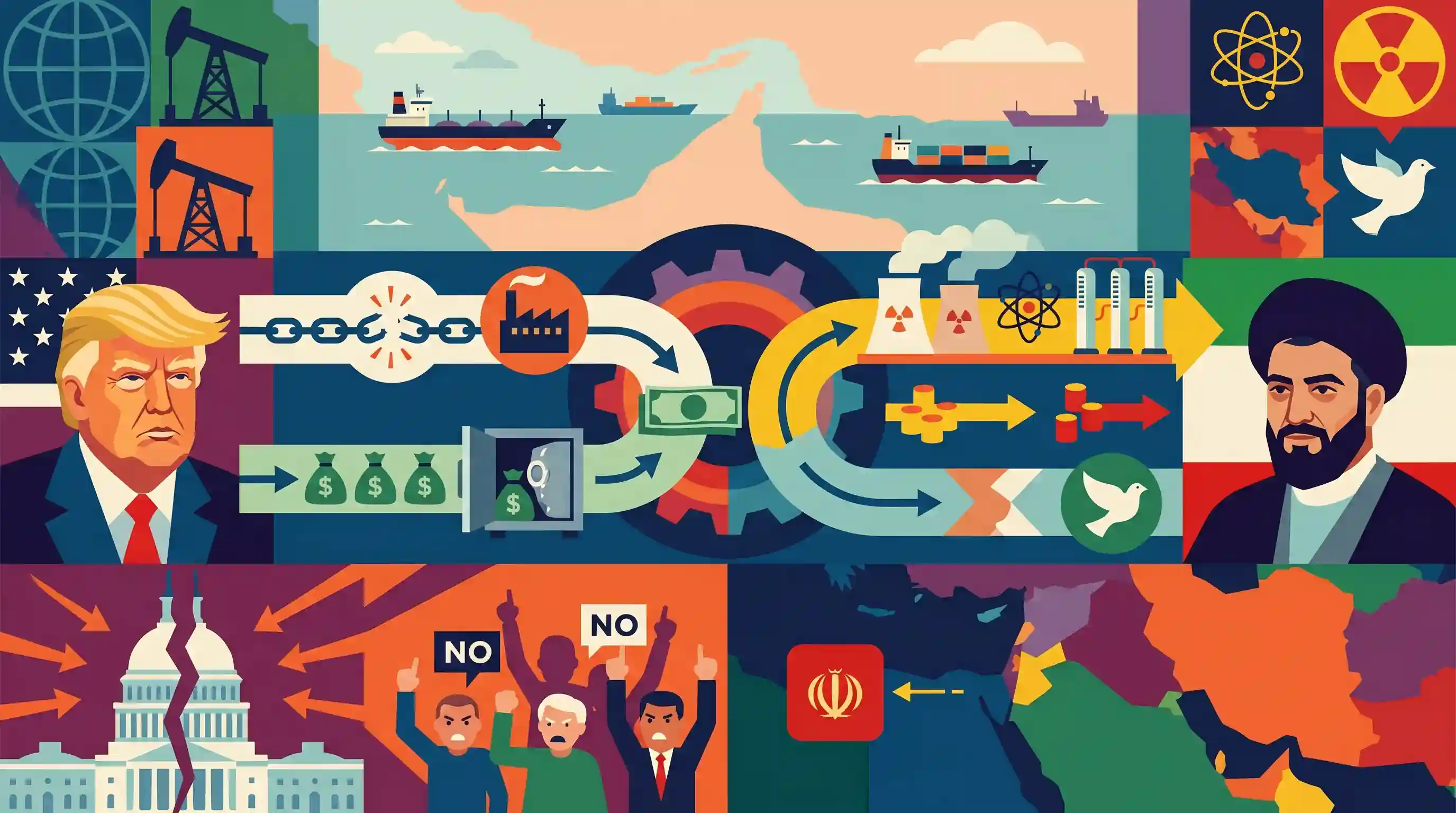
The article explores potential negotiations between US President Donald Trump and Iran aimed at de-escalating a three-month-old conflict in West Asia and reopening the strategically vital Strait of Hormuz. The prospective deal involves a delicate trade-off: Iran would agree to limits on its nuclear program—including the transfer of highly enriched uranium to Russia—in exchange for relief from crippling US sanctions and the unfreezing of its assets. However, Trump's efforts to finalize such an agreement face severe domestic opposition from the US Congress, threatening to deepen political divides over American foreign policy in the Middle East.
Key Points
- The US and Iran are reportedly engaged in negotiations to end recent military escalations in West Asia and facilitate the reopening of the Strait of Hormuz, a critical chokepoint for global energy supplies.
- The proposed diplomatic framework would require Iran to cap its nuclear development program, potentially transferring its stockpile of 60% highly enriched uranium to Russia for safe-keeping.
- In exchange for nuclear concessions, Iran is demanding significant economic relief, including the unfreezing of billions in overseas assets and the easing of strict US economic sanctions.
- US President Donald Trump faces substantial domestic hurdles, as attempts to bypass the US Congress to secure a deal with Iran are likely to exacerbate existing political fault lines in Washington.
Important Terms
Joint Comprehensive Plan of Action (JCPOA)

A 2015 landmark agreement between Iran and the P5+1 powers (US, UK, France, China, Russia, plus Germany) to restrict Iran's nuclear enrichment in exchange for international sanctions relief.
UPSC context
GS Paper II: International Relations. Crucial for understanding West Asia's security architecture and the 'rules-based international order.'
International Atomic Energy Agency (IAEA)
The United Nations' nuclear watchdog responsible for promoting peaceful nuclear energy and verifying that member states, like Iran, do not divert nuclear material toward weapons production.
UPSC context
GS Paper II: Important International institutions. Tests knowledge of global governance and non-proliferation regimes (NPT).
Strait of Hormuz
A narrow, strategically vital waterway connecting the Persian Gulf to the Gulf of Oman, through which approximately 20% of the world's total oil consumption passes.
UPSC context
GS Paper I: World Geography; GS Paper III: Energy Security. Vital 'maritime chokepoint' affecting India’s crude oil supply and inflation.
US Congress
The bicameral legislature of the US federal government. It exercises oversight on foreign policy through budget approvals, treaty ratification (Senate), and specific legislation like the Iran Nuclear Agreement Review Act.
UPSC context
GS Paper II: Comparison of the Indian Constitutional scheme with other countries. Highlights 'checks and balances' in foreign policy.
Economic Sanctions
Commercial and financial penalties applied by one or more countries against a targeted self-governing state, group, or individual to influence their behavior or punish non-compliance.
UPSC context
GS Paper II: Effect of policies of developed countries on India's interests. Relevant for 'CAATSA' and energy trade dynamics.
Prelims Trap
The Strait of Hormuz is a strategic maritime chokepoint connecting the Persian Gulf to the Red Sea.
The Strait of Hormuz links the Persian Gulf to the Gulf of Oman/Arabian Sea. The Bab-el-Mandeb connects the Red Sea to the Gulf of Aden.
Static Concepts Connected
Which countries and water bodies border the Strait of Hormuz?
- Water bodies: It links the Persian Gulf in the west to the Gulf of Oman and the Arabian Sea in the southeast.
- Bordering nations: It is bounded by Iran to the north and Oman (the Musandam Peninsula) and the United Arab Emirates to the south.
- Strategic value: It is the world's most critical oil chokepoint, handling a massive share of global seaborne petroleum transit.
What are the distinct levels of Uranium enrichment?
- Natural Uranium: Contains only about 0.7% of the fissile U-235 isotope, with the rest being U-238.
- Low Enriched (LEU): Enriched to 3-5% U-235, which is typically used as fuel in commercial civilian nuclear power reactors.
- Highly Enriched (HEU): 20% and above. 60% enrichment is a major non-proliferation concern because weapons-grade material requires about 90% enrichment.
Cross-Topic Patterns
INSTC bypasses Suez but hits sanctions
US sanctions on Iran continually threaten India's Chabahar port investments, stalling the International North-South Transport Corridor (INSTC) which was designed to bypass Pakistan and counter China's BRI.
Rupee-Rial trade as a dedollarisation precedent
India's past rupee-rial arrangement for Iranian oil serves as a vital historical case study for current RBI efforts to bypass SWIFT and establish local-currency trading mechanisms with Russia.

Expect a multi-statement prelims question linking uranium enrichment stages to IAEA safeguards and West Asian maritime chokepoints.
Linked PYQs · 5
Linked PYQs · 5
- 2017MainsGS2
The question of India's Energy Security constitutes the most important part of India's economic progress. Analyze India's energy policy cooperation with West Asian countries.
- 2025MainsGS2
"Energy security constitutes the dominant kingpin of India's foreign policy, and is linked with India's overarching influence in Middle Eastern countries.” How would you integrate energy security with India's foreign policy trajectories in the coming years?
- 2012MainsGS2
How have the US sanctions against Iran affected India's bilateral relations with Iran?
- 2018MainsGS2
In what ways would the ongoing US-Iran Nuclear Pact Controversy affect the national interest of India? How should India respond to this situation?
- 2022PrelimsGS1
The term "Levant" often heard in the news roughly corresponds to which of the following regions?
