विशेष मतदाता सूची संशोधन में प्रशासनिक चुनौतियां
स्रोत:द हिंदू ↗
क्यों मायने रखता है
This issue directly ties to GS2 Polity and Governance topics concerning the mandate and functioning of the ECI, electoral reforms, and the Representation of the People Act. It highlights the administrative challenges and rights-based issues surrounding universal adult suffrage and voter disenfranchisement, which are frequent subjects of UPSC inquiries.
सारांश
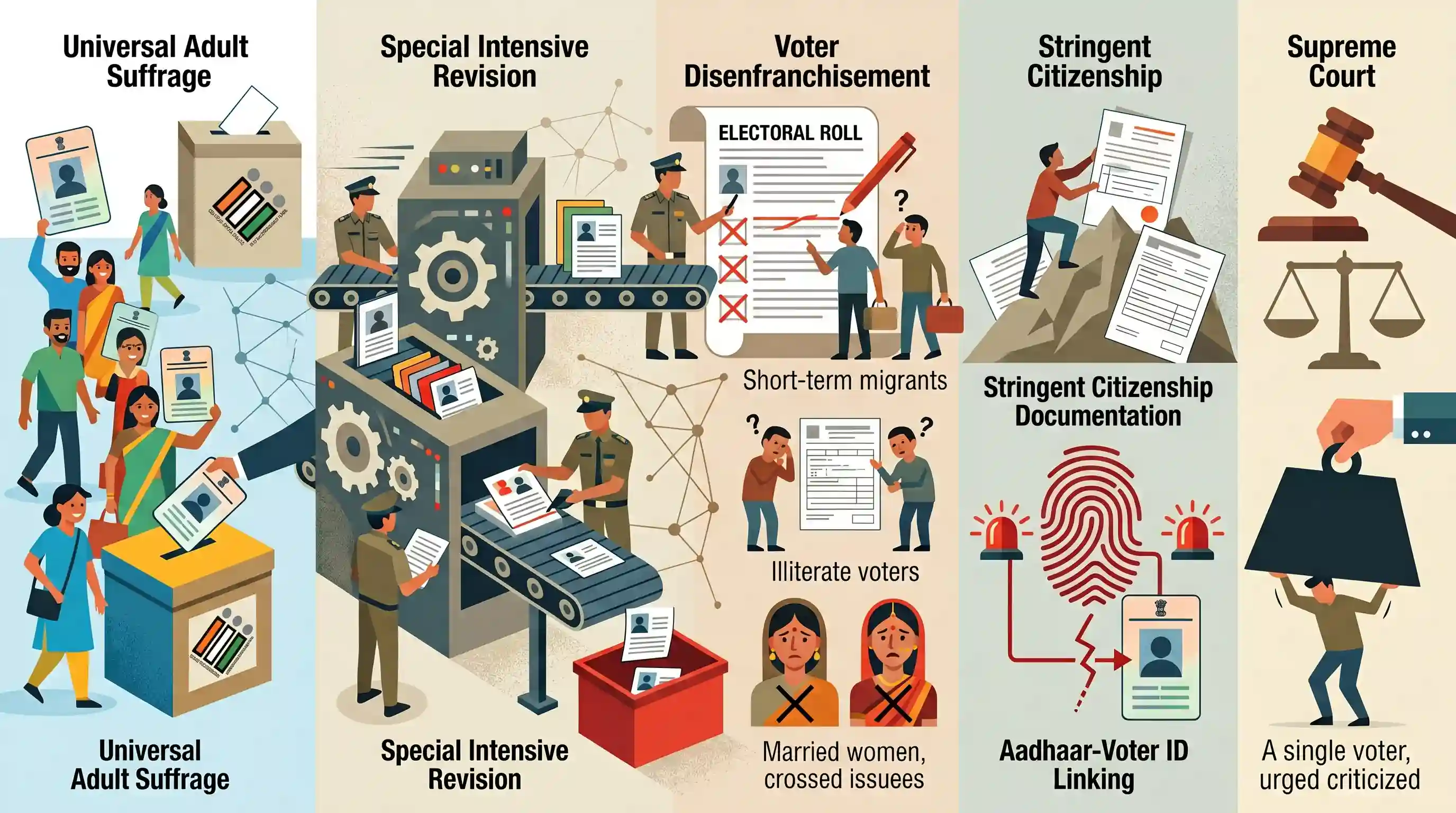
यह लेख भारत निर्वाचन आयोग (ECI) द्वारा मतदाता सूचियों के विशेष गहन पुनरीक्षण (SIR) को जल्दबाजी में लागू करने की आलोचना करता है, जिसके कारण तमिलनाडु, पश्चिम बंगाल और बिहार जैसे राज्यों में बड़े पैमाने पर मतदाताओं के नाम हटाए गए और उन्हें सूची से बाहर कर दिया गया है। कमजोर वर्ग—जिनमें अल्पकालिक प्रवासी, निरक्षर मतदाता और विवाहित महिलाएं शामिल हैं—इससे असमान रूप से प्रभावित हो रहे हैं, जिससे बड़े पैमाने पर मताधिकार से वंचित होने का जोखिम पैदा हो गया है। प्रशासनिक चुनौतियां, जैसे कि नागरिकता दस्तावेजों के लिए कड़ी आवश्यकताएं और Aadhaar-वोटर ID लिंकिंग से उत्पन्न होने वाली समस्याएं, इस मुद्दे को और जटिल बना रही हैं। उच्चतम न्यायालय ने ECI से सहानुभूतिपूर्ण दृष्टिकोण अपनाने का आग्रह किया है, और इस बात पर जोर दिया है कि नामांकन के सत्यापन का उत्तरदायित्व मतदाताओं पर डालना एक प्रणालीगत खामी है जो सार्वभौमिक वयस्क मताधिकार को कमजोर करती है।
मुख्य बिंदु
- The Election Commission of India's (ECI) rushed Special Intensive Revision (SIR) is causing large-scale voter disenfranchisement in states like Tamil Nadu, West Bengal, and Bihar.
- Vulnerable demographics, such as short-term migrants, illiterate individuals, and newly married women, face systemic exclusion from electoral rolls due to procedural hurdles.
- Strict citizenship documentation rules (e.g., proving parents' birth details for those born after 1987) create severe bottlenecks for voter registration.
- Despite the authorization of Aadhaar as an identity document for verification in Bihar, mass deletions persisted, highlighting ongoing administrative flaws.
- चुनावी उपस्थिति की पुष्टि करने का प्रणालीगत बोझ अनुचित रूप से पात्र मतदाताओं पर डाल दिया गया है, जिसके कारण सुप्रीम कोर्ट को ECI से अधिक सहानुभूतिपूर्ण दृष्टिकोण अपनाने का आग्रह करने हेतु हस्तक्षेप करना पड़ा है।
महत्वपूर्ण शब्द
Special Intensive Revision (SIR)

ECI द्वारा एक सक्रिय, घर-घर जाकर की जाने वाली गणना प्रक्रिया जिसका उद्देश्य एक नई मतदाता सूची तैयार करना है। सामान्य संक्षिप्त पुनरीक्षण (summary revisions) के विपरीत, SIR में अधिकारियों द्वारा भौतिक सत्यापन शामिल होता है ताकि 'ghost voters' को हटाया जा सके और नए मतदाताओं को शामिल किया जा सके।
UPSC context
GS Paper II (चुनाव); चुनावी सुधारों और मतदाता सूची की सटीकता तथा मतदाता समावेश के बीच संतुलन बनाने की प्रशासनिक चुनौतियों की समझ का परीक्षण करता है।
Election Commission of India (ECI)
A permanent constitutional body (Article 324) responsible for directing and controlling the entire electoral process in India, including the preparation of electoral rolls and conducting elections to Parliament and State Legislatures.
UPSC context
GS Paper II (Constitutional Bodies); central to topics on electoral integrity, institutional independence, and the conduct of free and fair elections.
Representation of the People Act, 1950
Key legislation providing the legal framework for seat allocation, delimitation of constituencies, and voter qualifications. It specifically governs the preparation and revision of electoral rolls before the actual conduct of elections.
UPSC context
GS Paper II (Polity); foundational for questions on the statutory basis of voter registration and the division of electoral powers.
सार्वभौमिक वयस्क मताधिकार
A constitutional right (Article 326) granting every citizen aged 18 and above the right to vote without discrimination based on religion, race, caste, or sex, unless legally disqualified.
UPSC context
GS पेपर II (राजव्यवस्था); मौलिक लोकतांत्रिक सिद्धांत; मताधिकार से वंचित करने, समावेशन और 'एक व्यक्ति, एक मत' के सिद्धांत पर चर्चा के लिए प्रासंगिक।
Election Laws (Amendment) Act, 2021
वह कानून जिसने प्रमाणीकरण के लिए आधार को वोटर आईडी से जोड़ने की अनुमति देने हेतु RPA 1950 में संशोधन किया। इसका उद्देश्य प्रविष्टियों के दोहराव को समाप्त करना है, जबकि यह गोपनीयता और बड़े पैमाने पर मतदाताओं के नाम हटाए जाने की संभावना के संबंध में चिंताएं भी पैदा करता है।
UPSC context
GS पेपर II (शासन); हाल के सुधारों, पुट्टास्वामी निजता निर्णय और चुनावी अधिकारों पर प्रौद्योगिकी के प्रभाव के प्रति जागरूकता का परीक्षण करता है।
Puttaswamy Judgment
A Supreme Court judgment (2017) declaring the Right to Privacy a fundamental right. It set the 'proportionality test' for state interventions, frequently cited in debates over mandatory Aadhaar-Voter ID linking.
UPSC context
GS पेपर II (मौलिक अधिकार); चुनावी प्रक्रियाओं में डेटा-शेयरिंग (data-sharing) और डिजिटल निगरानी की संवैधानिकता के विश्लेषण के लिए महत्वपूर्ण।
प्रारंभिक ट्रैप
The Election Commission mandates linking Aadhaar with Voter IDs to purge duplicate voters during intensive revisions.
चुनाव विधि (संशोधन) अधिनियम, 2021 मतदाता सूची को आधार (Aadhaar) के साथ स्वैच्छिक—अनिवार्य नहीं—जुड़ाव की अनुमति देता है। ECI लिंकिंग के लिए बाध्य नहीं कर सकता है और न ही आधार जमा न करने पर नाम हटा सकता है।
संबंधित अवधारणाएँ
भारत में निर्वाचक नामावली को तैयार करने और उसके पुनरीक्षण को क्या विनियमित करता है?
- RPA 1950: The Representation of the People Act (RPA), 1950 deals with the allocation of seats, delimitation of constituencies, and the preparation/revision of electoral rolls.
- अयोग्यताएं: Section 16 of RPA 1950 outlines disqualifications for registration, explicitly excluding non-citizens and those declared of unsound mind by a competent court.
- सुनवाई का अधिकार: Under Section 22, the Electoral Registration Officer (ERO) must provide the affected individual a reasonable prior opportunity of being heard before deleting their name.
How is the Right to Vote classified under Indian law?
- संवैधानिक अधिकार: अनुच्छेद 326, 18 वर्ष और उससे अधिक आयु के नागरिकों के लिए सार्वभौमिक वयस्क मताधिकार की गारंटी देता है। यह निश्चित रूप से एक संवैधानिक अधिकार है, मौलिक अधिकार नहीं।
- Statutory Mechanics: The actual exercise and procedural mechanics of this right are statutory, governed by the Representation of the People Acts of 1950 and 1951.
अंतर-विषय पैटर्न
प्रवासन + चुनावी मताधिकार से वंचना
The systemic exclusion of short-term migrants from electoral rolls connects directly to the ECI's recently debated proposal for Remote Electronic Voting Machines (RVMs) for domestic migrants.
Aadhaar linking + Privacy Debate
Voluntary Aadhaar-Voter ID linking under the Election Laws (Amendment) Act, 2021 frequently intersects with the Puttaswamy proportionality test on state data collection and the right to privacy.

Expect a 2026 multi-statement question mixing RPA 1950 provisions on electoral roll deletions, Aadhaar linkage legality, and ERO powers.
संबद्ध PYQ · 5
संबद्ध PYQ · 5
- 2017MainsGS2
To enhance the quality of democracy in India the Election Commission of India has proposed electoral reforms in 2016. What are the suggested reforms and how far are they significant to make democracy successful?
- 2024MainsGS2
Examine the need for electoral reforms as suggested by various committees with particular reference to "one nation one election" principle.
- 2022MainsGS2
Discuss the role of the Election Commission of India in the light of the evolution of the Model Code of Conduct.
- 2024MainsGS2
Right to privacy is intrinsic to life and personal liberty and is inherently protected under Article 21 of the constitution. Explain. In this reference discuss the law relating to D.N.A. testing of child in the womb to establish its paternity.
- 2017PrelimsGS1
Right to vote and to be elected in India is a
