India Sri Lanka Bilateral Relations and Katchatheevu Island Stance
Source:The Hindu ↗
কেন এটি গুরুত্বপূর্ণ
The article touches upon critical aspects of India-Sri Lanka bilateral ties, maritime boundary agreements, and sovereignty issues concerning Katchatheevu, which have profound implications for regional stability and India's neighborhood diplomacy.
সারসংক্ষেপ
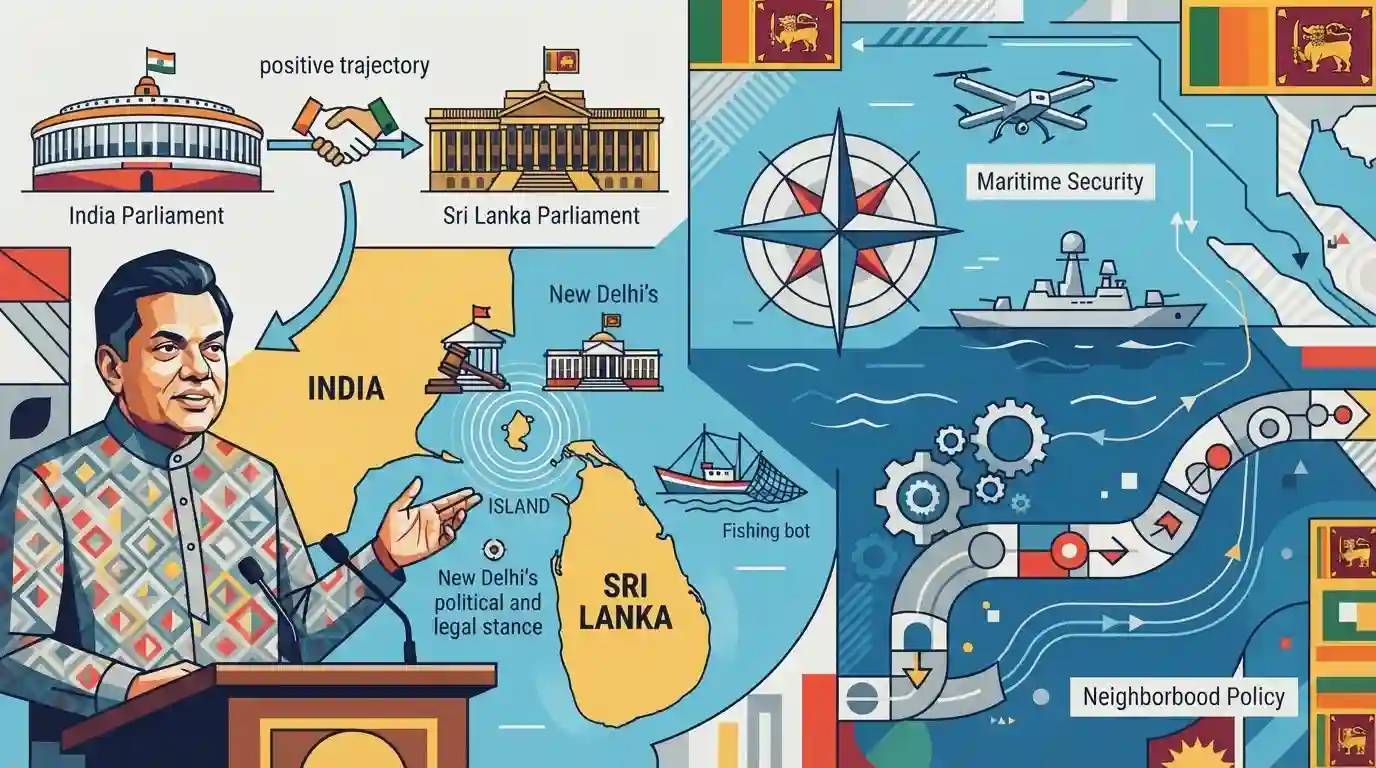
Sri Lankan President Anura Kumara Dissanayake emphasized the positive trajectory of relations between India and Sri Lanka while addressing regional developments, including New Delhi's political and legal stance on the Katchatheevu island.
মূল বিষয়
- Sri Lankan President Anura Kumara Dissanayake highlighted good diplomatic and economic relations with India.
- Dissanayake pointed to New Delhi's stance on the Katchatheevu island issue, reflecting on its domestic political resonance in India.
- The Katchatheevu island issue and Palk Strait fishing rights remain vital geopolitical talking points in bilateral relations between India and Sri Lanka.
গুরুত্বপূর্ণ শব্দ
1974 and 1976 Indo-Sri Lankan Maritime Boundary Agreements

Bilateral treaties signed in 1974 and 1976 that demarcated the maritime boundary between India and Sri Lanka in the Palk Strait and transferred sovereignty over the Katchatheevu island to Sri Lanka.
UPSC context
GS Paper II (International Relations - India's Neighborhood Policy and bilateral treaties). Tests understanding of historical maritime boundary disputes and diplomacy.
প্রিলিমস ফাঁদ
Katchatheevu island was ceded to Sri Lanka through a formal constitutional amendment passed by the Indian Parliament.
Aspirants often assume Katchatheevu was ceded by a constitutional amendment requiring a two-thirds majority, whereas it was done via an executive boundary agreement (1974/1976).
সংযুক্ত স্থির ধারণা
How does India alter its international boundaries and territory under constitutional law?
- Article 2 Power: Article 2 empowers Parliament to admit new states into the Union or establish new states on terms it thinks fit.
- Article 3 Territory: Article 3 empowers Parliament to alter boundaries, areas, or names of existing states through a simple majority bill.
- Ceding Territory: Ceding national territory to a foreign state requires a Constitutional Amendment Act (e.g., 100th Amendment for the Indo-Bangladesh enclaves).
- Boundary Settlement: Executive boundary demarcation agreements do not necessarily require constitutional amendments if they resolve ambiguous or undefined boundary disputes without ceding established sovereign territory.
আন্তঃবিষয় প্যাটার্ন
Maritime Disputes + Treaty-Making Power
Bilateral maritime boundary agreements like Katchatheevu intersect with constitutional debates on executive treaty-making power and parliamentary approval under Article 3.
Palk Strait Fishing + Federalism
Palk Strait fishing disputes pit center-state cooperative federalism against India's overarching Neighborhood First doctrine in maritime security.

Katchatheevu and Palk Strait agreements will feature in a statement-based question testing Indo-Lankan maritime treaties and Article 3.
সংযুক্ত PYQ · 1
সংযুক্ত PYQ · 1
- 2022MainsGS2
India is an age-old friend of Sri Lanka.’ Discuss India's role in the recent crisis in Sri Lanka in the light of the preceding statement.
