Artificial Intelligence Accessibility and Rights of Disabled Citizens
Source:The Hindu ↗
हे का महत्त्वाचे आहे
As AI rapidly integrates into governance, employment, and everyday life, ensuring that it remains accessible and non-discriminatory for persons with disabilities is vital for inclusive development and digital equity.
सारांश
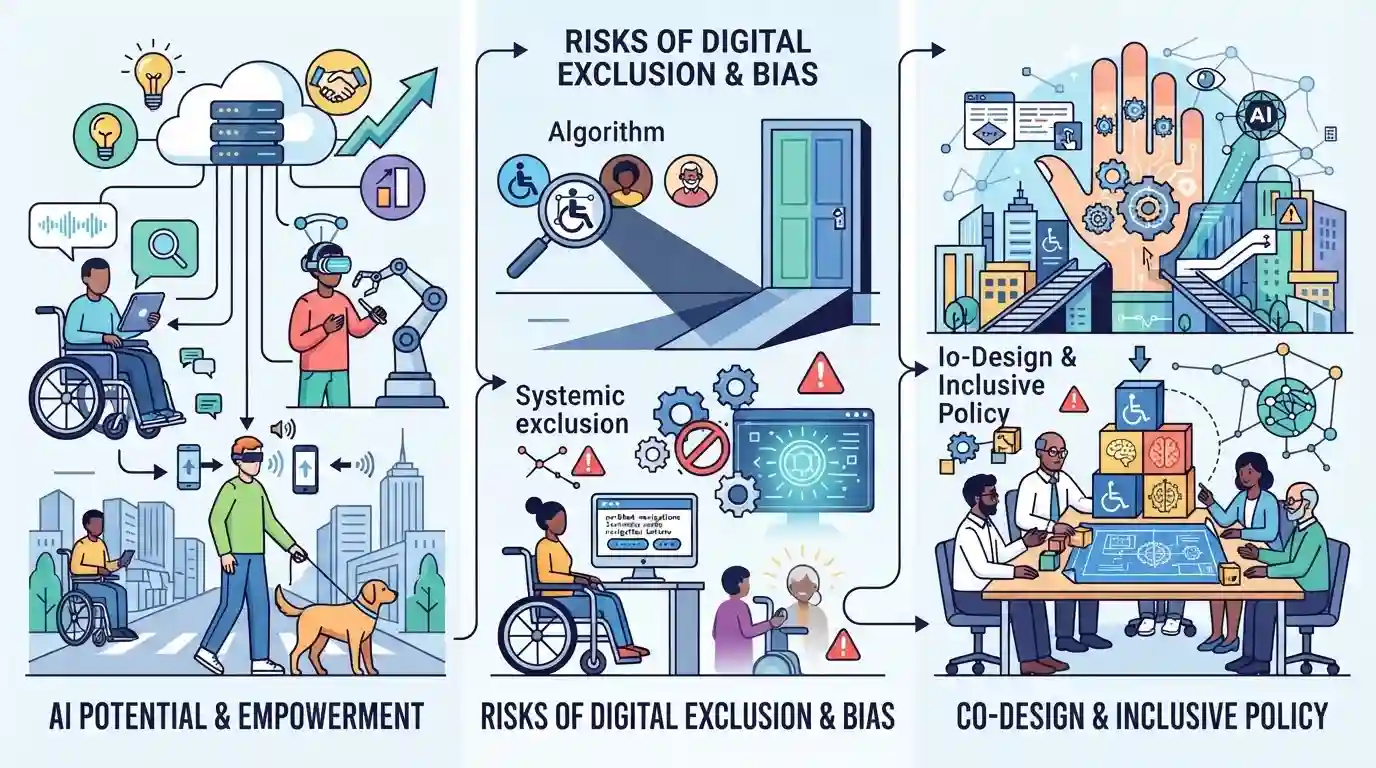
The article discusses the intersection of Artificial Intelligence (AI) and the rights of disabled citizens, emphasizing both the transformative potential of AI as an assistive tool and the severe risks of digital exclusion due to algorithmic bias and inaccessible design. It advocates for inclusive policy frameworks and co-design principles involving persons with disabilities.
मुख्य मुद्दे
- Artificial Intelligence (AI) holds immense potential to transform accessibility and inclusion for disabled citizens by acting as assistive technology.
- Biases in AI training data can lead to exclusion or misrepresentation of disabled individuals, worsening digital marginalization.
- Inclusive AI development requires active participation, co-design, and representation of persons with disabilities (PwDs) throughout the technology lifecycle.
- Policy frameworks must integrate accessibility standards into AI governance to prevent discrimination and ensure equitable benefits.
महत्त्वाच्या संज्ञा
Rights of Persons with Disabilities Act, 2016

An Indian legislation enacted to give effect to the UN Convention on the Rights of Persons with Disabilities, expanding recognized disabilities from 7 to 21 and mandating reservations, accessibility, and non-discrimination.
UPSC context
GS Paper II (Vulnerable Sections, Social Justice) - tests statutory frameworks, policy implementation, and rights of disabled persons in India.
United Nations
An international organization founded in 1945 committed to maintaining international peace and security, developing friendly relations, and promoting human rights, including disability-inclusive development frameworks.
UPSC context
GS Paper II (International Relations / Global Governance) - tests multilateral organizations, international conventions, and global advocacy on human rights.
संबंधित स्थिर संकल्पना
What are the key provisions of the Rights of Persons with Disabilities (RPWD) Act, 2016?
- Reservation Quantum: Increased reservation in higher educational institutions from 3% to 5% and in government jobs from 3% to 4% for benchmark disabilities.
- Expanded Categories: Expands recognized disabilities from 7 to 21 types, including specific learning disabilities, blood disorders, and acid attack victims.
- Accessibility Mandates: Mandates universal accessibility in physical infrastructure, transport, and Information and Communication Technology (ICT) ecosystems within stipulated timeframes.
- Institutional Mechanism: Establishes National and State Commissions for Persons with Disabilities as statutory monitoring and grievance redressal bodies.
आंतर-विषय नमुने
RPWD Act 2016 meets Digital Public Infrastructure
The RPWD Act mandates ICT accessibility, linking legal rights of disabled citizens directly to digital public infrastructure (DPI) and AI deployment standards.
Algorithmic Bias in Inclusive Growth Frameworks
Algorithmic bias against marginalized groups mirrors broader socio-economic exclusions addressed in inclusive growth governance models.

AI governance + vulnerable sections (RPWD Act 2016) likely to appear as a multi-statement question on digital inclusion mandates.
संबंधित PYQ · 2
संबंधित PYQ · 2
- 2023MainsGS3
Introduce the concept of Artificial Intelligence (AI). How does Al help clinical diagnosis? Do you perceive any threat to privacy of the individual in the use of Al in healthcare?
- 2017MainsGS2
Does the Rights of Persons with Disabilities Act, 2016 ensure effective mechanism for empowerment and inclusion of the intended beneficiaries in the society? Discuss.
