Digital Arrest Cyber Frauds and Banking System Liabilities
Source:Indian Express ↗
આ શા માટે મહત્વનું છે
It directly addresses modern internal security challenges, specifically cybercrimes and financial frauds ('digital arrests'), alongside the regulatory obligations of banks and central institutions to protect citizens and maintain financial integrity.
સારાંશ
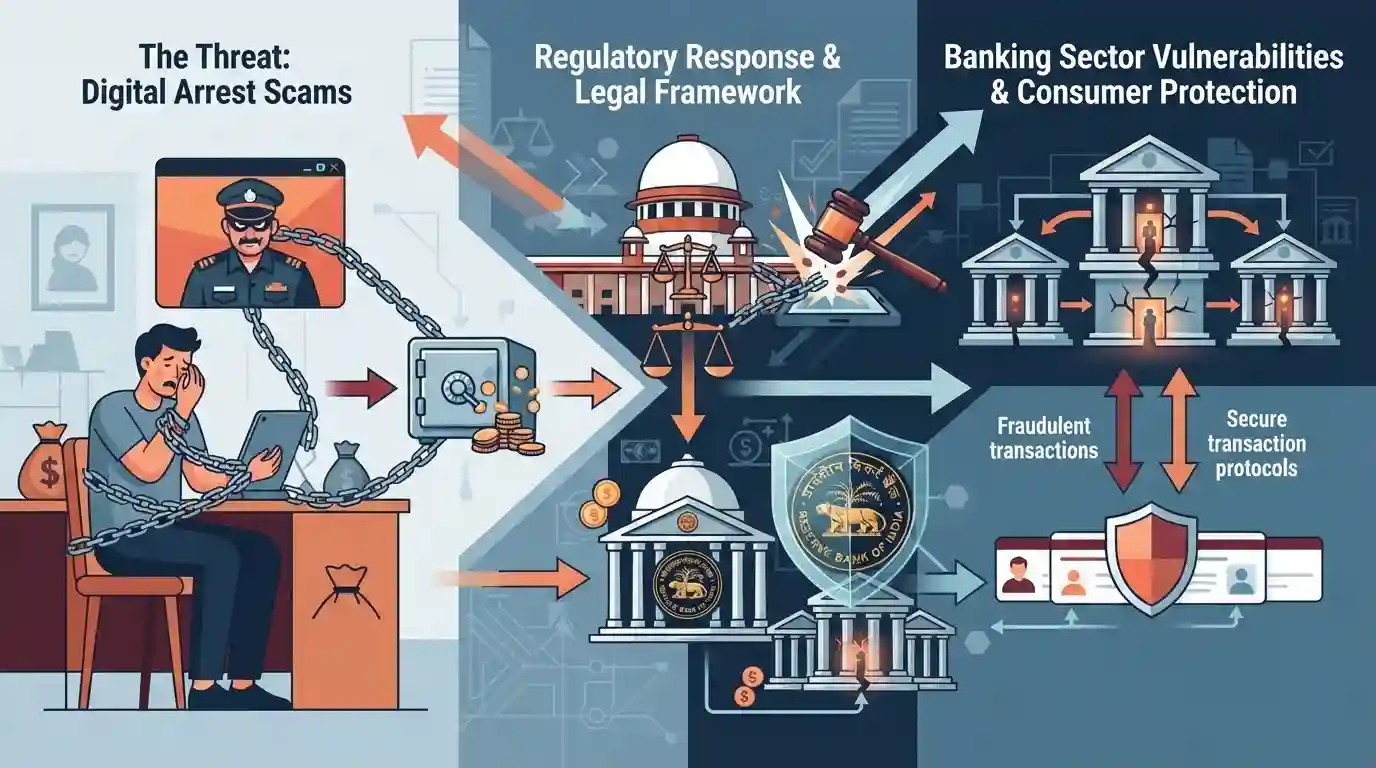
This article explores the growing menace of 'digital arrest' scams in India, examining the legal and regulatory responses from the Supreme Court and the Reserve Bank of India (RBI) regarding bank liability, consumer protection, and systemic vulnerabilities in the banking sector that facilitate financial cyber fraud.
મુખ્ય મુદ્દા
- Digital arrest scams represent a sophisticated form of cyber fraud where scammers impersonate law enforcement agencies to extort money from victims under false pretexts of criminal investigations.
- The Supreme Court and RBI are addressing issues regarding bank liability, emphasizing the legal and financial accountability of financial institutions in safeguarding customers against unauthorized or fraudulent transactions.
- The issue highlights systemic vulnerabilities in the banking sector, including the proliferation of mule accounts and lax Know Your Customer (KYC) norms, prompting tighter regulatory oversight.
- Combating digital arrest scams requires a multi-pronged approach involving strict enforcement, consumer financial literacy, robust cybersecurity frameworks, and prompt grievance redressal mechanisms.
મહત્વપૂર્ણ શબ્દો
Digital Arrest Scams

A sophisticated cyber fraud where criminals pose as law enforcement or government officials via video calls, intimidating victims with fake arrest warrants and forcing them to transfer funds under virtual confinement.
UPSC context
UPSC Prelims/Mains (GS-III Internal Security): Tests awareness of emerging cyber threats, financial frauds, and law enforcement responses in India.
Reserve Bank of India (RBI)
India's apex banking institution responsible for regulating monetary policy, currency issuance, and supervising the banking sector, including framing guidelines for digital banking security and customer liability.
UPSC context
UPSC Prelims/Mains (GS-III Economy): Tests understanding of central banking regulations, financial stability, and consumer protection frameworks against cyber fraud.
Supreme Court
India's highest judicial tribunal, which has recently asserted strict bank accountability and mandatory compensation rules for financial cyber fraud victims due to lapses in due diligence.
UPSC context
UPSC Prelims/Mains (GS-II Polity): Tests the role of judicial activism and oversight in addressing governance, administrative lapses, and systemic citizen rights violations.
પ્રિલિમ્સ ટ્રેપ
Digital arrest is a legally recognized interim detention method under the Code of Criminal Procedure (CrPC) for cyber-related offenses.
Under Indian criminal jurisprudence, 'digital arrest' has zero statutory backing; law enforcement agencies cannot legally conduct arrests or interrogate citizens over video calls.
સંલગ્ન સ્થિર ખ્યાલો
What are the key guidelines governing bank liability and customer protection in unauthorized electronic banking transactions?
- Zero Liability: Zero liability of the customer in case of contributory fraud/negligence on the part of the bank or third-party breach where deficiency lies elsewhere.
- Limited Liability: Limited liability of customers if the deficiency is neither the bank's nor the customer's, but the customer reports within 3 working days.
- Burden of Proof: Burden of proof lies with the commercial bank to establish customer negligence in case of unauthorized electronic transactions.
આંતર-વિષય પેટર્ન
Cyber Fraud vs. Banking Accountability Frameworks
Cyber frauds like digital arrest exploit gaps in both financial regulation (RBI) and internal security apparatuses, connecting cybercrime policy with banking accountability frameworks.
Mule Accounts and AML Compliance Risks
The proliferation of mule accounts for laundering scam proceeds highlights weaknesses in formal banking channels, linking financial inclusion drives with anti-money laundering enforcement.

Expect statements combining RBI grievance redressal mandates, mule account liabilities, and legal reality of 'digital arrest' in UPSC prelims.
સંલગ્ન PYQ · 2
સંલગ્ન PYQ · 2
- 2022MainsGS3
What are the different elements of cyber security ? Keeping in view the challenges in cyber security, examine the extent to which India has successfully developed a comprehensive National Cyber Security Strategy.
- 2017MainsGS3
Discuss the potential threats of Cyber attack and the security framework to prevent it.
