प्रेस नोट 3 एफडीआई प्रतिबंधों और आर्थिक प्रभाव का मूल्यांकन
स्रोत:द हिंदू ↗
क्यों मायने रखता है
राष्ट्रीय सुरक्षा और आर्थिक विकास के बीच संतुलन UPSC का एक मुख्य विषय है। यह समझना कि भू-राजनीतिक तनाव किस प्रकार आर्थिक नीतियों (जैसे प्रेस नोट 3) में परिवर्तित होते हैं और ये नीतियां भारत की विनिर्माण क्षमताओं तथा वैश्विक आपूर्ति श्रृंखला एकीकरण को कैसे प्रभावित करती हैं, GS2 (IR) और GS3 (Economy) विश्लेषण के लिए अत्यंत महत्वपूर्ण है।
सारांश
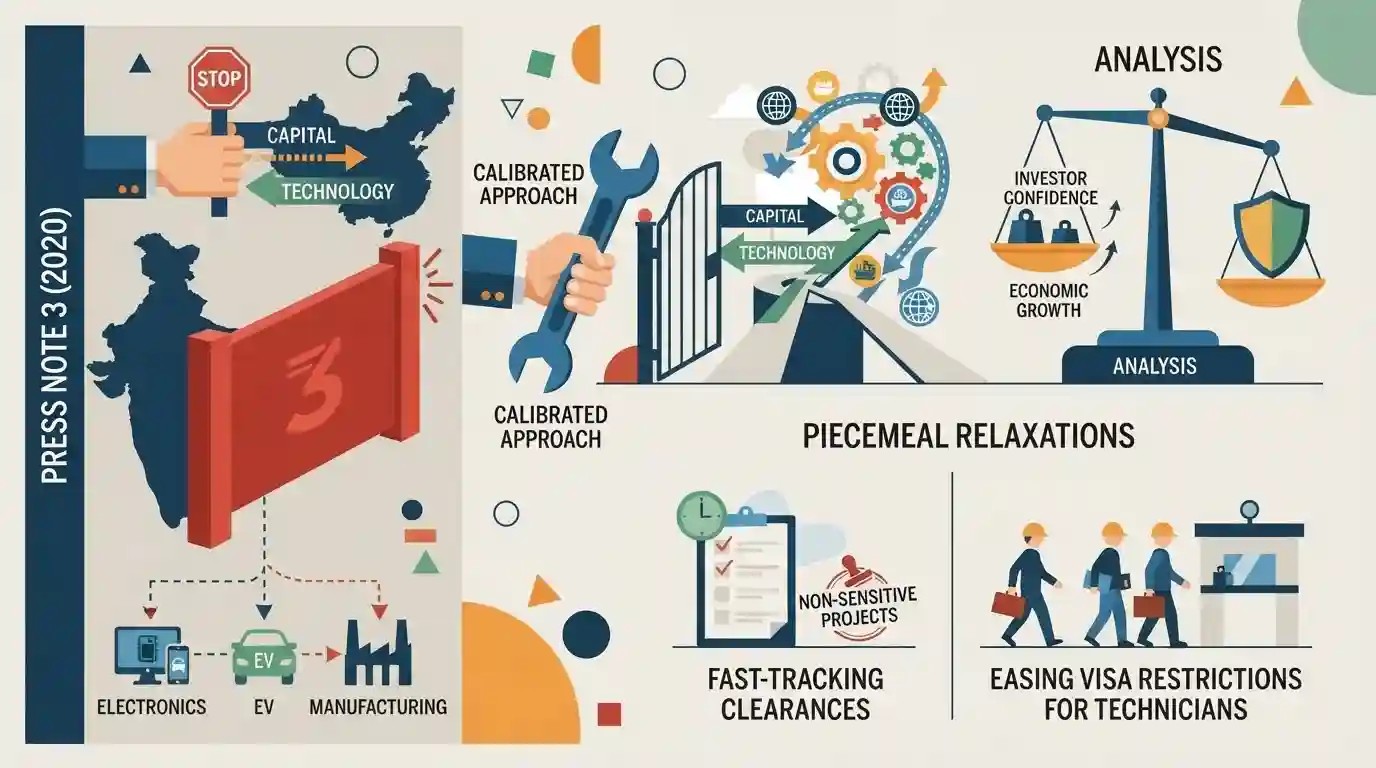
The article evaluates the impact of recent relaxations to the stringent Foreign Direct Investment (FDI) rules introduced under Press Note 3 (2020). Originally designed to prevent opportunistic acquisitions of Indian companies by entities from land-border-sharing countries—primarily China—the policy severely throttled capital inflows and technological tie-ups in sectors like electronics, EVs, and manufacturing. Recognizing the adverse effects on India's ambitions to integrate into Global Value Chains (GVCs) and boost export-led manufacturing, the government has adopted a more calibrated approach. By fast-tracking clearances for specific non-sensitive projects and easing visa restrictions for essential foreign technicians, policymakers are attempting to revive stalled FDI. The analysis weighs whether these piecemeal relaxations are sufficient to restore investor confidence and stimulate economic growth while continuing to safeguard national security.
मुख्य बिंदु
- Press Note 3 of 2020 mandated prior government approval for Foreign Direct Investment (FDI) from countries sharing a land border with India to curb opportunistic takeovers during the COVID-19 pandemic.
- इस नीति ने चीनी निवेश को असमान रूप से प्रभावित किया, जिससे सैकड़ों प्रस्ताव अटक गए और इलेक्ट्रॉनिक्स विनिर्माण, इलेक्ट्रिक वाहन (EVs) तथा फार्मास्यूटिकल्स जैसे महत्वपूर्ण क्षेत्रों में FDI प्रवाह में भारी गिरावट आई।
- Policymakers are re-evaluating the restrictions, noting that integrating India into Global Value Chains (GVCs) and boosting domestic manufacturing requires capital and technical expertise from China.
- Recent selective relaxations—such as fast-tracking security clearances for non-sensitive sectors and easing visa norms for Chinese technicians—aim to attract delayed FDI without compromising national security.
महत्वपूर्ण शब्द
Press Note 3 (2020)

A government directive requiring prior state approval for any Foreign Direct Investment (FDI) originating from or beneficially owned by entities in countries sharing a land border with India, primarily targeting opportunistic acquisitions.
UPSC context
GS Paper III (Economy/Investment Models); tests knowledge of foreign investment regulations, national security policies, and India-China economic relations.
विदेशी मुद्रा प्रबंधन अधिनियम (FEMA)
FERA को प्रतिस्थापित करने के लिए 1999 में अधिनियमित, यह कानून विदेशी मुद्रा लेनदेन को विनियमित करता है, सीमा पार भुगतानों को प्रबंधित करता है, और भारत में प्रत्यक्ष विदेशी निवेश (FDI) अनुपालन के लिए व्यापक कानूनी ढांचा प्रदान करता है।
UPSC context
GS Paper III (Economy/Indian Economy); tests understanding of external sector regulations, capital/current account transactions, and regulatory frameworks.
उत्पादन संबद्ध प्रोत्साहन (PLI) योजना
A flagship industrial policy offering 4% to 6% financial incentives to domestic and foreign manufacturers on incremental sales of goods produced in 14 strategic sectors in India.
UPSC context
GS पेपर III (आर्थिक विकास/औद्योगिक नीति); विनिर्माण-संचालित विकास रणनीतियों, निर्यात प्रोत्साहन और आत्मनिर्भर भारत पहलों की समझ का परीक्षण करता है।
उद्योग संवर्धन और आंतरिक व्यापार विभाग (DPIIT)
वाणिज्य और उद्योग मंत्रालय के तहत एक विभाग जो औद्योगिक नीति तैयार करने, ईज ऑफ डूइंग बिजनेस को सुगम बनाने और भारत की समेकित प्रत्यक्ष विदेशी निवेश (FDI) नीति को प्रशासित करने के लिए उत्तरदायी है।
UPSC context
GS पेपर III (अर्थव्यवस्था/औद्योगिक क्षेत्र); आर्थिक नीतियों, निवेश प्रोत्साहन और औद्योगिक विकास को संचालित करने वाले प्रशासनिक निकायों की समझ का परीक्षण करता है।
भारतीय रिज़र्व बैंक (RBI)
भारत का केंद्रीय बैंक और मौद्रिक प्राधिकरण, जो विदेशी मुद्रा बाजार को विनियमित करने, FEMA नियमों को लागू करने और पूंजी एवं चालू खाता लेनदेन सीमाओं की निगरानी करने के लिए जिम्मेदार है।
UPSC context
GS पेपर III (भारतीय अर्थव्यवस्था/बैंकिंग); केंद्रीय बैंकिंग परिचालन, मौद्रिक नीति, विदेशी मुद्रा भंडार प्रबंधन और निवेश प्रवाह के ज्ञान का परीक्षण करता है।
प्रारंभिक ट्रैप
10% की छूट चीनी कंपनियों को स्वचालित मार्ग के माध्यम से 10% तक की हिस्सेदारी के प्रत्यक्ष निवेश की अनुमति देती है।
2026 की ढील सख्ती से वैश्विक फंडों के माध्यम से होने वाले अप्रत्यक्ष, निष्क्रिय निवेशों पर लागू होती है, जहाँ भूमि-सीमा साझा करने वाले देश के अंतिम लाभकारी मालिक के पास 10% से कम हिस्सेदारी है और उसके पास कोई बोर्ड/नियंत्रण अधिकार नहीं हैं। प्रत्यक्ष निवेश स्वचालित मार्ग से अभी भी प्रतिबंधित हैं।
संबंधित अवधारणाएँ
What is the current FDI approval mechanism in India post-FIPB?
- FIPB का विघटन: Abolished in 2017 to reduce bureaucratic red tape and speed up clearances.
- एकल खिड़की पोर्टल: The Foreign Investment Facilitation Portal (FIFP) acts as the new single-window clearance point.
- सक्षम प्राधिकारी: DPIIT समन्वय करता है, लेकिन व्यक्तिगत प्रशासनिक लाइन मंत्रालय FDI नीति के तहत प्रस्तावों को मंजूरी देते हैं।
- सुरक्षा मंजूरी: गृह मंत्रालय संवेदनशील क्षेत्रों में निवेश के लिए सुरक्षा मंजूरी का कार्य संभालता है।
भारत में FDI और FPI के बीच मुख्य अंतर क्या हैं?
- 10% Threshold Rule: Based on the Arvind Mayaram Committee; an investment of 10% or more in a listed company is classified as FDI.
- प्रबंधन नियंत्रण: FDI implies a lasting interest and active management control, whereas FPI represents passive portfolio investments.
- नियामक निकाय: FDI is regulated by the FDI Policy (DPIIT) and FEMA, while FPI is primarily regulated under SEBI regulations.
अंतर-विषय पैटर्न
FDI प्रतिबंध बनाम PLI कार्यान्वयन
प्रेस नोट 3 के कड़े प्रतिबंधों ने महत्वपूर्ण इलेक्ट्रॉनिक घटक आपूर्ति श्रृंखलाओं को गंभीर रूप से बाधित किया है, जो यह दर्शाता है कि कैसे सुरक्षा-प्रथम व्यापार नीतियां PLI जैसी घरेलू विनिर्माण योजनाओं के मार्ग में सीधे तौर पर बाधा उत्पन्न कर सकती हैं।
Economic statecraft and border security
Using investment blockages post-Galwan highlights India's pivot to geo-economics, using market access and regulatory gatekeeping as strategic leverage against territorial incursions.

सुरक्षा बनाम GVC एकीकरण को संतुलित करने वाले FDI प्रतिबंधों (प्रेस नोट 3) का विश्लेषण GS-3 के लिए अत्यधिक संभावित है।
संबद्ध PYQ · 5
संबद्ध PYQ · 5
- 2023MainsGS3
Faster economic growth requires increased share of the manufacturing sector in GDP, particularly of MSMEs. Comment on the present policies of the Government in this regard.
- 2016MainsGS3
Justify the need for FDI for the development of the Indian economy. Why there is gap between MOUs signed and actual FDIs? Suggest remedial steps to be taken for increasing actual FDIs in India.
- 2020PrelimsGS1
With reference to Foreign Direct Investment in India, which one of the following is considered its major characteristic?
- 2012MainsGS2
Do you think that China's emergence as one of the largest trading partners of India has adversely affected the settlement of the outstanding border problem?
- 2024MainsGS2
‘The West is fostering India as an alternative to reduce dependence on China's supply chain and as a strategic ally to counter China's political and economic dominance.’ Explain this statement with examples.
