DGCA Updates Ticket Refund and Cancellation Rules
Source:Indian Express ↗
Why It Matters
Understanding civil aviation regulations is crucial for analyzing the broader infrastructure ecosystem and assessing how statutory/regulatory bodies protect consumer interests while maintaining industry viability.
Summary
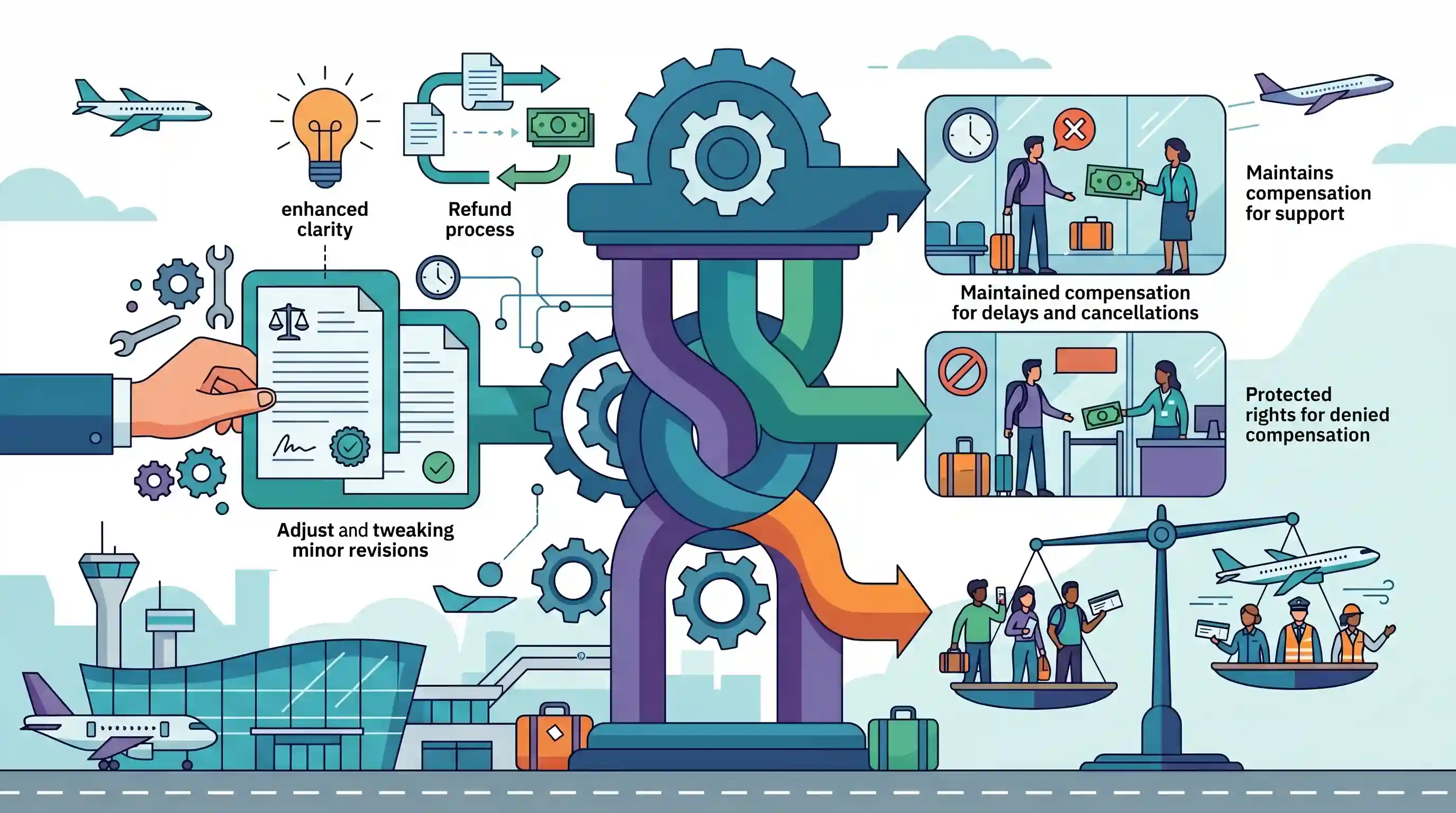
The Directorate General of Civil Aviation (DGCA) recently revised its guidelines on airline ticket refunds and cancellations. The changes consist of minor tweaks aimed at streamlining the refund process and enhancing clarity for consumers, while the broader regulatory framework under the Civil Aviation Requirements (CAR) remains fundamentally unchanged. By maintaining the core compensation structures for delays, cancellations, and denied boarding, the regulator seeks to ensure robust passenger rights without imposing excessive new operational burdens on the aviation industry.
Key Points
- The DGCA has introduced minor amendments to its rules governing flight cancellations, ticket refunds, and passenger compensations, while leaving the primary framework largely unchanged.
- The revised Civil Aviation Requirements (CAR) aim to clarify ambiguities and slightly streamline the refund mechanism to enhance consumer protection.
- Most existing provisions regarding compensation for denied boarding, delays, and cancellations remain intact, ensuring regulatory stability for airlines.
- The tweaks reflect an ongoing effort by the regulator to balance robust passenger rights with the financial and operational viability of the aviation sector.
Important Terms
Directorate General of Civil Aviation (DGCA)

India's statutory regulatory body for civil aviation, responsible for safety oversight, licensing, and airworthiness. It functions under the Ministry of Civil Aviation and coordinates with the ICAO.
UPSC context
GS Paper II: Statutory Bodies. Tests understanding of regulatory frameworks and executive oversight in the aviation sector.
Civil Aviation Requirements (CAR)
Legally binding regulations issued by the DGCA under the Aircraft Rules. They set technical standards for safety, maintenance, airworthiness, and passenger rights (e.g., ticket refunds).
UPSC context
GS Paper III: Infrastructure (Aviation). Tests knowledge of subordinate legislation and industry standards.
Ministry of Civil Aviation
The nodal ministry responsible for national policy formulation and development of the civil aviation sector, exercising administrative control over bodies like the DGCA and AAI.
UPSC context
GS Paper II: Union Government Ministries. Tests knowledge of sectoral policy-making and governance.
Bharatiya Vayuyan Adhiniyam, 2024
Legislation that replaced the colonial-era Aircraft Act of 1934 to modernize regulations for drones, electric aircraft, and space-planes, while formalizing the DGCA’s statutory status.
UPSC context
GS Paper II: Government Policies & Interventions. Tests awareness of recent legislative reforms and decolonization of laws.
UDF, ADF, and PSF
Mandatory airport-related charges (User Development Fee, Passenger Service Fee) that airlines must refund to passengers even on non-refundable tickets during cancellations or no-shows.
UPSC context
GS Paper III: Economy/Infrastructure. Tests understanding of consumer rights and pricing components in public transport.
Prelims Trap
The DGCA is an executive body functioning as an attached office without statutory backing.
The DGCA was formally granted statutory status through the Aircraft (Amendment) Act, 2020. It is a statutory regulatory body, not merely an executive office.
Static Concepts Connected
What is the institutional architecture for civil aviation regulation in India?
- DGCA (Statutory): Regulates flight safety, licensing, and issues binding Civil Aviation Requirements (CAR) under the Aircraft Act.
- AAIB (Independent): Conducts major aircraft accident investigations, ensuring impartiality by remaining structurally separate from the DGCA's routine safety oversight.
- BCAS (Security): Functions as the regulatory authority for civil aviation security, including anti-hijacking protocols and airport security checks.
How do consumer rights legally apply to aviation services?
- Deficiency in Service: Airline ticketing is a "contract for service". Arbitrary cancellations or denied boarding constitute actionable service deficiencies under the Consumer Protection Act, 2019.
- Parallel Jurisdiction: While DGCA's CAR mandates immediate baseline refunds, passengers retain the right to approach Consumer Disputes Redressal Commissions for broader damages or unfair trade practices.
Cross-Topic Patterns
Consumer Protection vs Sectoral Regulators
Like TRAI or RBI, the DGCA sets baseline sectoral compensations, but parallel jurisdiction under the Consumer Protection Act allows consumers to seek additional damages in consumer courts.
UN ICAO and Domestic Compliance
DGCA regulations often directly transpose Annexes of the Chicago Convention, highlighting how UN specialized agencies (ICAO) mandate domestic legislative frameworks and technical safety standards.

Expect a multi-statement Prelims question contrasting the statutory mandates of DGCA, AAIB, and BCAS under the Aircraft Act.
Linked PYQs · 2
Linked PYQs · 2
- 2017MainsGS3
Examine the development of Airports in India through joint ventures under Public-Private Partnership (PPP) model. What are the challenges faced by the authorities in this regard?
- 2023MainsGS2
Discuss the role of the Competition Commission of India in containing the abuse of dominant position by the Multi-National Corporations in India. Refer to the recent decisions.
