Urban Biodiversity Conservation and Sustainable Planning
Source:The Hindu ↗
Why It Matters
It bridges the gap between urban infrastructure development and ecological conservation, which is a frequent theme in both GS1 (Urbanization) and GS3 (Environment/Disaster Management) Mains questions. Understanding how to balance these aspects is crucial for aspiring civil servants dealing with urban planning policies.
Summary
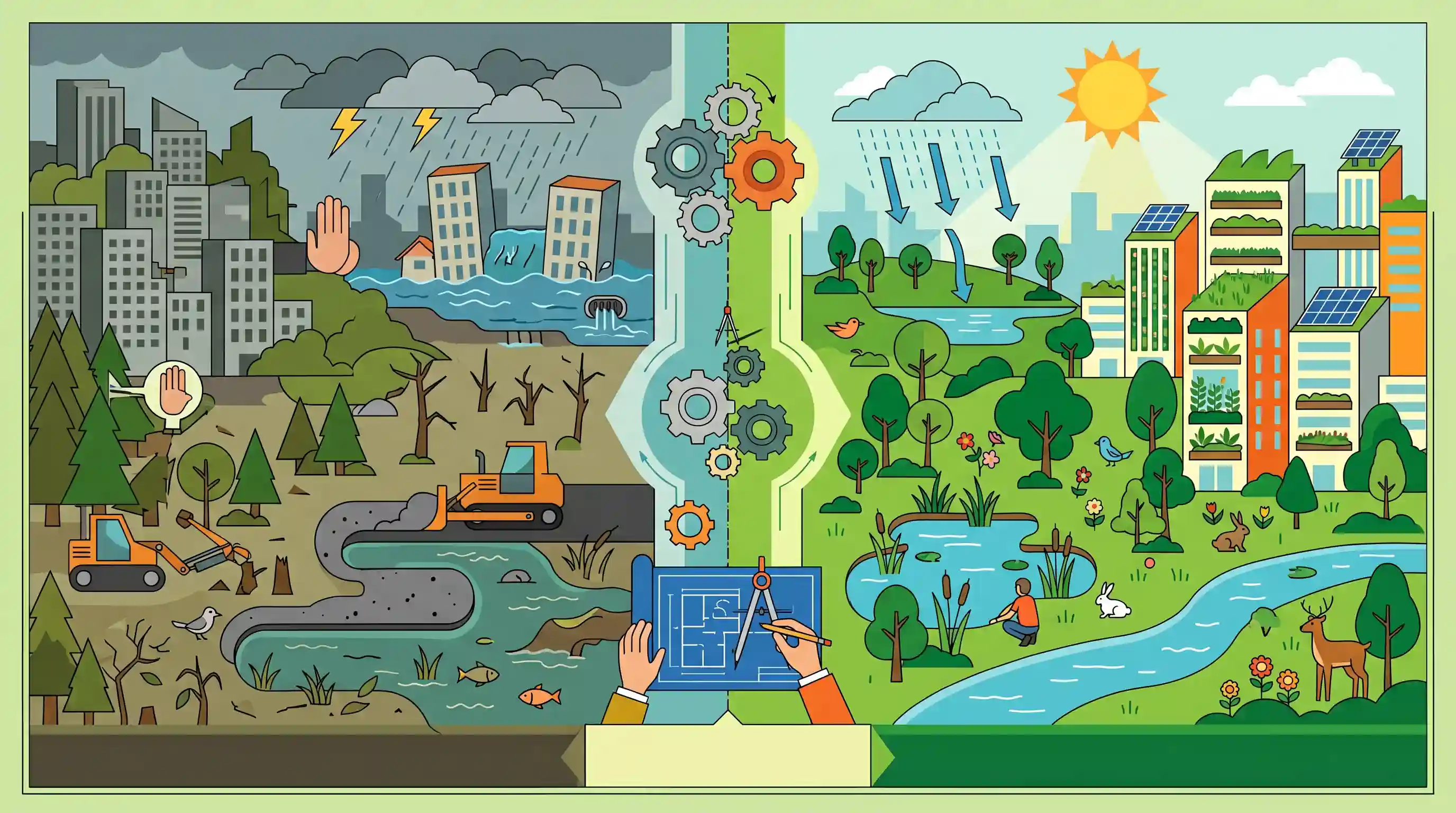
The article emphasizes the urgent need for sustainable urban development that does not compromise urban biodiversity. It highlights the detrimental impact of rapid urbanization on local ecosystems, including the loss of green cover and the reclamation of wetlands. Advocating for ecologically conscious urban planning, the author argues that protecting urban flora, fauna, and water bodies is essential for building climate-resilient cities, preventing urban flooding, and ensuring long-term environmental sustainability.
Key Points
- Rapid and unplanned urbanization frequently leads to the destruction of urban biodiversity and natural habitats.
- Preserving urban ecosystems, such as wetlands and green spaces, is vital for mitigating climate-induced disasters like urban flooding.
- Sustainable urban planning must integrate ecological conservation to maintain the carrying capacity of city environments.
- Future development projects and smart city initiatives should prioritize environmental protection alongside infrastructure growth.
Important Terms
Urban Biodiversity

The variety and abundance of plants, animals, and microorganisms within city limits, including ecosystems like urban forests, wetlands, and parks.
UPSC context
GS III: Environment; highlights the shift from viewing cities as purely concrete to vital ecological zones.
Ecological Urbanism
A planning approach that places natural ecosystems at the core of city design to create resilient, sustainable, and socially inclusive urban environments.
UPSC context
GS I: Urbanization; tests knowledge of sustainable planning paradigms beyond traditional infrastructure.
Environmental Impact Assessment (EIA)
A statutory process to evaluate the potential environmental, social, and economic consequences of a proposed project before granting development permission.
UPSC context
GS III: Environment/Conservation; a critical regulatory mechanism frequently tested for its effectiveness and dilutions.
Urban Flooding
The inundation of city property caused by extreme rainfall overwhelming drainage systems, often exacerbated by the loss of wetlands and natural floodplains.
UPSC context
GS III: Disaster Management; examines anthropogenic causes like "concretization" versus natural climatic triggers.
Urban Heat Island (UHI) Effect
A phenomenon where urban areas experience significantly higher temperatures than surrounding rural areas due to human activities, concrete structures, and lack of vegetation.
UPSC context
GS I: Geography (Climatology); GS III: Environment; addresses the micro-climatic impacts of urbanization.
Nature-based Solutions (NbS)
Actions to protect, sustainably manage, and restore natural or modified ecosystems to address societal challenges (e.g., climate change, water security) effectively.
UPSC context
GS III: Environment; tests the implementation of ecological restorative practices in disaster mitigation.
Smart Cities Mission
A GOI initiative to promote cities that provide core infrastructure and a clean environment through the application of 'smart solutions' and technology.
UPSC context
GS III: Infrastructure; GS I: Urbanization; focuses on the intersection of technology and liveability in India.
Prelims Trap
The Kunming-Montreal Global Biodiversity Framework strictly focuses on wild ecosystems and protected areas, excluding urban zones.
Target 12 of the GBF explicitly mandates increasing the area, quality, and connectivity of green and blue spaces in urban and densely populated areas.
Static Concepts Connected
What is the 'Sponge City' concept in urban disaster management?
- Ecological Sponges: It uses nature-based solutions like restored wetlands, permeable pavements, and rain gardens to absorb and temporarily store excess rainfall.
- Flood Mitigation: By acting as natural buffers, these areas reduce surface runoff velocity, lowering the risk of sudden urban flooding during extreme weather events.
- Groundwater Recharge: The absorbed rainwater percolates into the soil, helping to replenish rapidly depleting urban groundwater aquifers.
How is 'Carrying Capacity' defined in the context of urban environments?
- Resource limits: The maximum human population and infrastructure a city can sustain given its finite water, land, and ecological resources.
- Waste assimilation: The urban environment's innate ability to absorb and dilute pollution without suffering irreversible ecological degradation.
- Policy application: Courts and the NGT frequently use this concept to cap or halt construction in ecologically fragile cities, such as Himalayan hill stations.
Cross-Topic Patterns
Urban flooding & Solid Waste Rules
Unsegregated solid waste and plastic pollution choke municipal drainage grids, directly linking GS3's waste management guidelines to increased vulnerability to urban flooding.
Concrete expansion & Urban Heat Islands
The loss of urban blue-green infrastructure reduces localized evaporative cooling, exacerbating the UHI effect and altering micro-climatic precipitation patterns within cities.

Expect a Prelims Q linking Kunming-Montreal GBF to urban ecosystems, or a GS3 Mains Q on 'Sponge Cities' mitigating urban flooding.
Linked PYQs · 4
Linked PYQs · 4
- 2024MainsGS3
Flooding in urban areas is an emerging climate-induced disaster. Discuss the causes of this disaster. Mention the features of two such major floods in the last two decades in India. Describe the policies and frameworks in India that aim at tackling such floods.
- 2021MainsGS1
What are the environmental implications of the reclamation of water bodies into urban land use ? Explain with examples.
- 2019MainsGS3
Define the concept of carrying capacity of an ecosystem as relevant to an environment. Explain how understanding this concept is vital while planning for sustainable development of a region.
- 2022PrelimsGS1
"If rainforests and tropical forests are the lungs of the Earth, then surely wetlands function as its kidneys." Which one of the following functions of wetlands best reflects the above statement?
