Evolution of Personality Rights and Right to Privacy in India
Source:Indian Express ↗
Why It Matters
The intersection of constitutional rights (Right to Privacy) and Intellectual Property Rights is a critical area of legal evolution. With the advent of AI and deepfakes, personality rights are highly relevant for both GS2 (Polity and Constitution) and GS3 (IPR and Technology) as they address emerging challenges in individual liberty and commercial law.
Summary
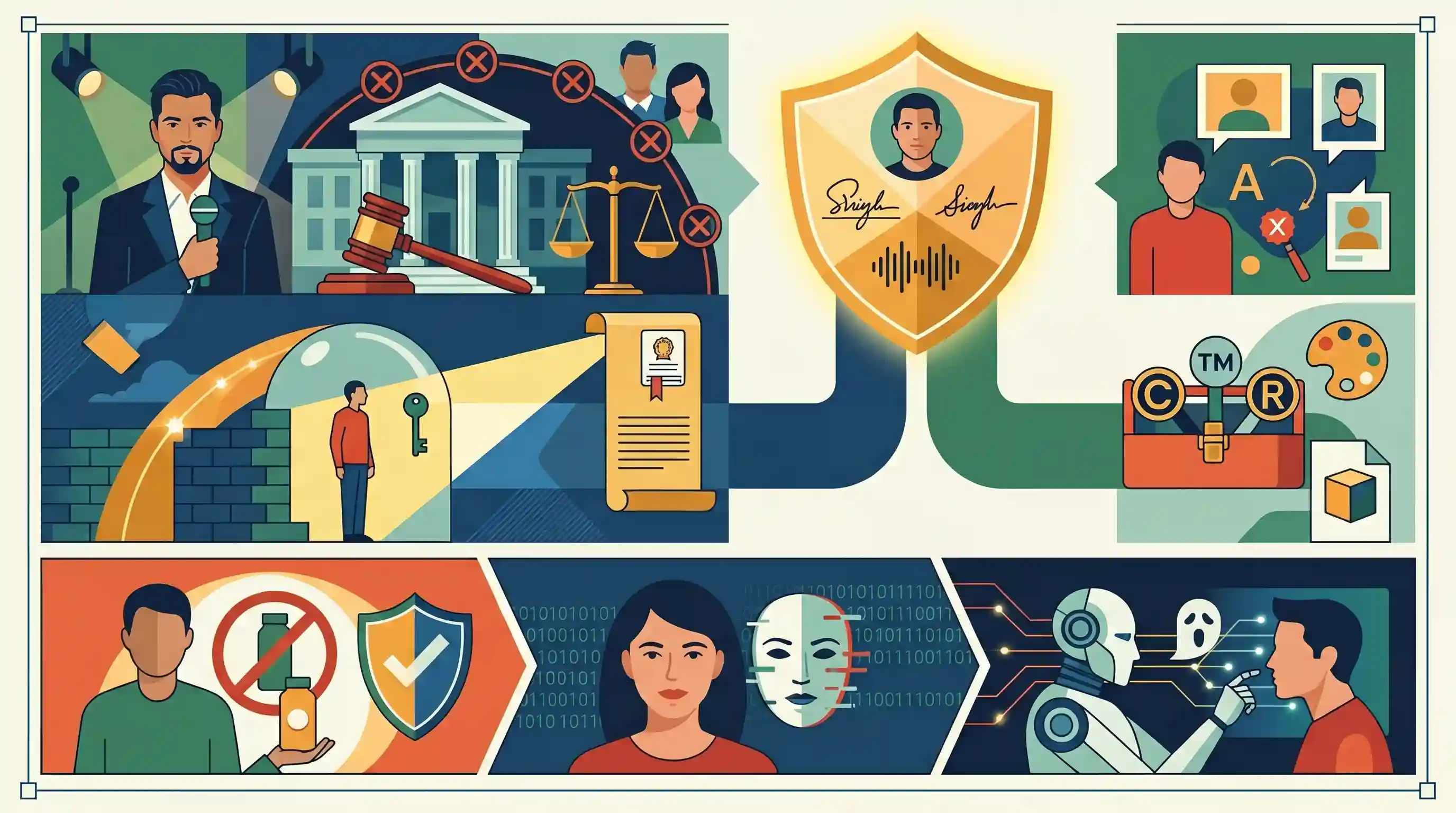
The Delhi High Court recently restrained the unauthorized commercial use of actor R. Madhavan's likeness, highlighting the growing significance of 'personality rights' in India. Personality rights refer to an individual's right to control the commercial exploitation of their identity, including their name, image, and voice. In India, these rights are not governed by a single dedicated law; instead, they have evolved through a combination of the Right to Privacy (recognized as a Fundamental Right under Article 21 post the 2017 Puttaswamy judgment) and Intellectual Property Rights like copyrights and trademarks. The expanding scope of these rights is especially relevant today to combat false endorsements, deepfakes, and AI-driven identity theft.
Key Points
- The Delhi High Court issued an ex-parte interim injunction barring the unauthorized commercial use of actor R. Madhavan's name, image, voice, and likeness.
- Personality rights in India encompass the right to privacy (preventing unauthorized intrusion) and the right to publicity (controlling the commercial exploitation of one's identity).
- These rights are not codified in a single Indian statute but have evolved through judicial interpretation of the Right to Privacy as a Fundamental Right under Article 21 (affirmed in the 2017 Puttaswamy judgment).
- Additional legal backing for personality rights is drawn from Intellectual Property Rights (IPR) frameworks, including the Trade Marks Act 1999 and the Copyright Act 1957.
- The protection against unauthorized commercial exploitation is increasingly critical in the digital age, especially with the proliferation of deepfakes and AI-generated content.
Important Terms
Personality Rights

Legal rights of an individual to control the commercial exploitation of their identity, including their name, image, and voice, to prevent unauthorized profit or misrepresentation.
UPSC context
GS-II (Fundamental Rights) and GS-III (IPR). Tests understanding of digital identity and evolving legal frameworks.
Article 21 of the Indian Constitution
Guarantees the right to life and personal liberty. The judiciary has interpreted this broadly to include privacy, forming the constitutional basis for personality rights in India.
UPSC context
GS-II (Polity). Central to debates on civil liberties, judicial activism, and fundamental rights.
Puttaswamy Judgment (2017)
A landmark 2017 Supreme Court ruling that unanimously declared the Right to Privacy a fundamental right under the Indian Constitution, specifically within the scope of Article 21.
UPSC context
GS-II (Judiciary). A high-yield landmark case for questions on privacy, data protection, and constitutional law.
Right to Privacy
An intrinsic part of Article 21 that allows individuals to control personal information and affairs, serving as a shield against unauthorized public representation of their persona.
UPSC context
GS-II (Fundamental Rights). Fundamental to topics like data protection, surveillance, and individual autonomy.
Right of Publicity
A specific aspect of personality rights that prevents the unauthorized commercial use of a person's name or likeness, treating an individual’s persona as a protected property interest.
UPSC context
GS-III (IPR). Relevant for understanding how law balances commercial interests with individual identity rights.
Copyright Act, 1957
Legislation protecting original creative works. Sections 38 and 57 grant "performers' rights" and "moral rights," which celebrities use to combat unauthorized exploitation of their performances or likeness.
UPSC context
GS-III (Intellectual Property Rights). Tests knowledge of statutory protections for creators and performers.
Trade Marks Act, 1999
The law governing brand protection. It allows celebrities to register their names or signatures as "marks" to prevent others from suggesting false commercial associations or endorsements.
UPSC context
GS-III (Economy/IPR). Focuses on protection of brands and personal identifiers in global commerce.
Prelims Trap
Personality rights in India are explicitly codified under the Intellectual Property Rights framework.
Personality rights are uncodified in India. They are a judicial construct derived from the Right to Privacy (Article 21) and indirectly supported by IPR laws.
Static Concepts Connected
How did the Puttaswamy judgment (2017) reshape Article 21?
- Fundamental Right: Elevated the Right to Privacy to a fundamental right intrinsic to Life and Personal Liberty under Article 21.
- Proportionality Test: Established that any State intrusion into privacy must satisfy legality (a law), legitimate state aim (need), and proportionality.
How do Copyrights and Trademarks differ in India?
- Copyright Act 1957: Protects original literary, dramatic, and artistic works. It notably grants 'performer's rights' to actors, singers, and musicians, preventing unauthorized recordings.
- Trade Marks Act 1999: Protects names, logos, or catchphrases used to distinguish goods and services in commerce, preventing unauthorized commercial endorsements.
Cross-Topic Patterns
Deepfakes & IT Rules 2021
AI-driven identity theft links personality rights to the IT Rules 2021, obligating intermediaries to remove impersonating or morphed content within 24 hours of a user complaint.
DPDP Act 2023 privacy overlap
While personality rights protect the commercial exploitation of identity, the DPDP Act 2023 governs the processing of personal data, jointly forming India's broader informational privacy ecosystem.

2026 prelims could mix Article 21 privacy, IPR overlaps, and the uncodified nature of posthumous personality rights into one question.
Linked PYQs · 5
Linked PYQs · 5
- 2024MainsGS2
Right to privacy is intrinsic to life and personal liberty and is inherently protected under Article 21 of the constitution. Explain. In this reference discuss the law relating to D.N.A. testing of child in the womb to establish its paternity.
- 2017MainsGS2
Examine the scope of Fundamental Rights in the light of the latest judgement of the Supreme Court on Right to Privacy.
- 2024PrelimsGS1
Under which of the following Articles of the Constitution of India, has the Supreme Court of India placed the Right to Privacy ?
- 2021PrelimsGS1
'Right to Privacy' is protected under which Article of the Constitution of India?
- 2018PrelimsGS1
Right to Privacy is protected as an intrinsic part of Right to Life and Personal Liberty. Which of the following in the Constitution of India correctly and appropriately imply the above statement?
