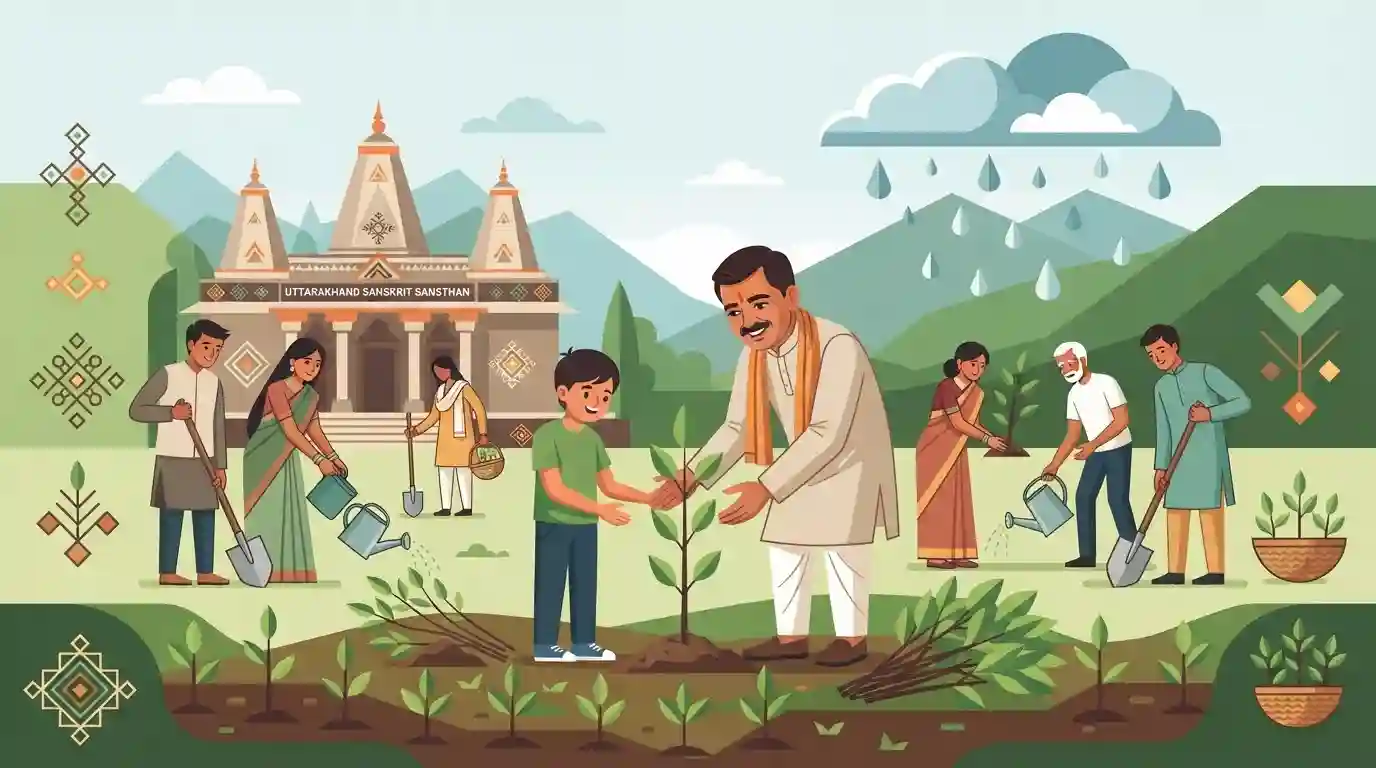
Harela festival and tree plantation at Uttarakhand Sanskrit Sansthan
Source:garhwalpost ↗
Why It Matters
Harela is one of the most important traditional festivals in Uttarakhand, symbolizing the connection between culture and environmental conservation. Its focus on tree plantation has made it a recurring topic in UKPSC Prelims (e.g., asked directly in 2016), making it essential knowledge for state-specific general studies.
Summary
Deepak Kumar, Secretary of Sanskrit Education for the Uttarakhand government, led the traditional Harela festival celebrations at the Uttarakhand Sanskrit Sansthan in Haridwar. Harela, which marks the arrival of the monsoon, is widely celebrated across Uttarakhand and is strongly associated with environmental conservation and tree plantation. The event emphasizes the state's cultural commitment to protecting its ecology.
Key Points
- Deepak Kumar, Secretary of Sanskrit Education, led the Harela festival celebrations at the Uttarakhand Sanskrit Sansthan in Haridwar.
- The Harela festival is a traditional festival of Uttarakhand celebrating the onset of the monsoon season.
- The festival is deeply linked to environmental conservation and typically involves extensive tree plantation drives across the state.
- The celebration highlights the integration of cultural heritage and environmental awareness in Uttarakhand.
Important Terms
Harela Festival

A traditional folk festival of Uttarakhand and Himachal Pradesh marking the monsoon's arrival and sowing cycle, deeply associated with environmental conservation, tree plantation, and sustainable agriculture.
UPSC context
GS Paper I (Art & Culture/Folk Festivals) and GS Paper III (Environment/Community-led Conservation).
Uttarakhand Sanskrit Sansthan
An autonomous state institution in Haridwar, chaired by the Chief Minister, dedicated to the research, publication, preservation, and promotion of Sanskrit, Uttarakhand's second official language.
UPSC context
GS Paper I (Indian Culture/Classical Languages) and GS Paper II (Governance/Education Policies).
Department of Sanskrit Education, Uttarakhand
A dedicated administrative department of the Uttarakhand government that manages, inspects, and standardizes primary-to-postgraduate level Sanskrit schooling and institutes across the state.
UPSC context
GS Paper II (Government Policies and Interventions/Human Resource Development).
Prelims Trap
Harela is exclusively celebrated within the Kumaon region of Uttarakhand.
While famous in Kumaon, it is celebrated across Garhwal (as Mol-Sankranti) and Himachal Pradesh (as Hariyali), showcasing a broader Western Himalayan agro-ecological footprint.
Static Concepts Connected
What is the Barahnaza agricultural system of the Indian Himalayas?
- Core Practice: Sowing twelve different crops (including cereals, legumes, and oilseeds) simultaneously in the same field.
- Ecological Value: Leguminous plants naturally restore soil nitrogen, eliminating the need for synthetic chemical fertilizers.
- Climate Resilience: Crop diversity ensures community food security even if erratic monsoons cause specific crop failures.
What are the constitutional rules governing state official languages under Article 345?
- State Autonomy: Article 345 empowers state legislatures to adopt any language(s) spoken in the state or Hindi as official.
- Eighth Schedule: The chosen state language is not constitutionally mandated to belong to the Eighth Schedule.
- Sanskrit Precedent: Uttarakhand (2010) and Himachal Pradesh (2019) utilized this power to declare Sanskrit their second official language.
Cross-Topic Patterns
Sacred Ecology and Afforestation
Traditional festivals like Harela and Sacred Groves (Sarna) demonstrate how community-led, faith-based conservation practices successfully drive regional ecological restoration and afforestation.
Barahnaza vs. Monoculture
The traditional multi-cropping Barahnaza system offers a climate-resilient, low-input alternative to the resource-intensive monoculture systems promoted during the Green Revolution.

Himalayan agro-ecological practices (like Barahnaza) linked to festivals are prime candidates for GS Prelims agriculture questions.
Linked PYQs · 1
Linked PYQs · 1
- 2016UKPSC_PRELIMSGS1
'HARELA' festival of Uttarakhand is related to:
