Union Budget sparks debate over structural reforms versus tinkering
Source:The Hindu ↗
Why It Matters
The Union Budget is the most important annual economic policy document of the Government of India. Evaluating its strategic direction (whether it provides structural transformation or incremental tinkering) is crucial for UPSC aspirants to understand fiscal policy dynamics, economic growth strategies, and the challenges of macroeconomic management.
Summary
The article critically examines the Union Budget 2026, evaluating whether it acts as a transformative turning point for India's economy or merely tinkers with existing policies. It focuses on the government's macro-economic management, emphasizing the ongoing debate around capital expenditure priorities, fiscal consolidation trajectories under the FRBM framework, and taxation reforms required to stimulate inclusive growth and crowd-in private investment.
Key Points
- Evaluation of the Union Budget 2026's overall macro-economic strategy and its long-term vision for the Indian economy.
- Analysis of the balance between fiscal consolidation (reducing fiscal deficit) and maintaining high capital expenditure to boost infrastructure.
- Assessment of whether proposed taxation reforms provide a meaningful economic stimulus or focus primarily on revenue generation.
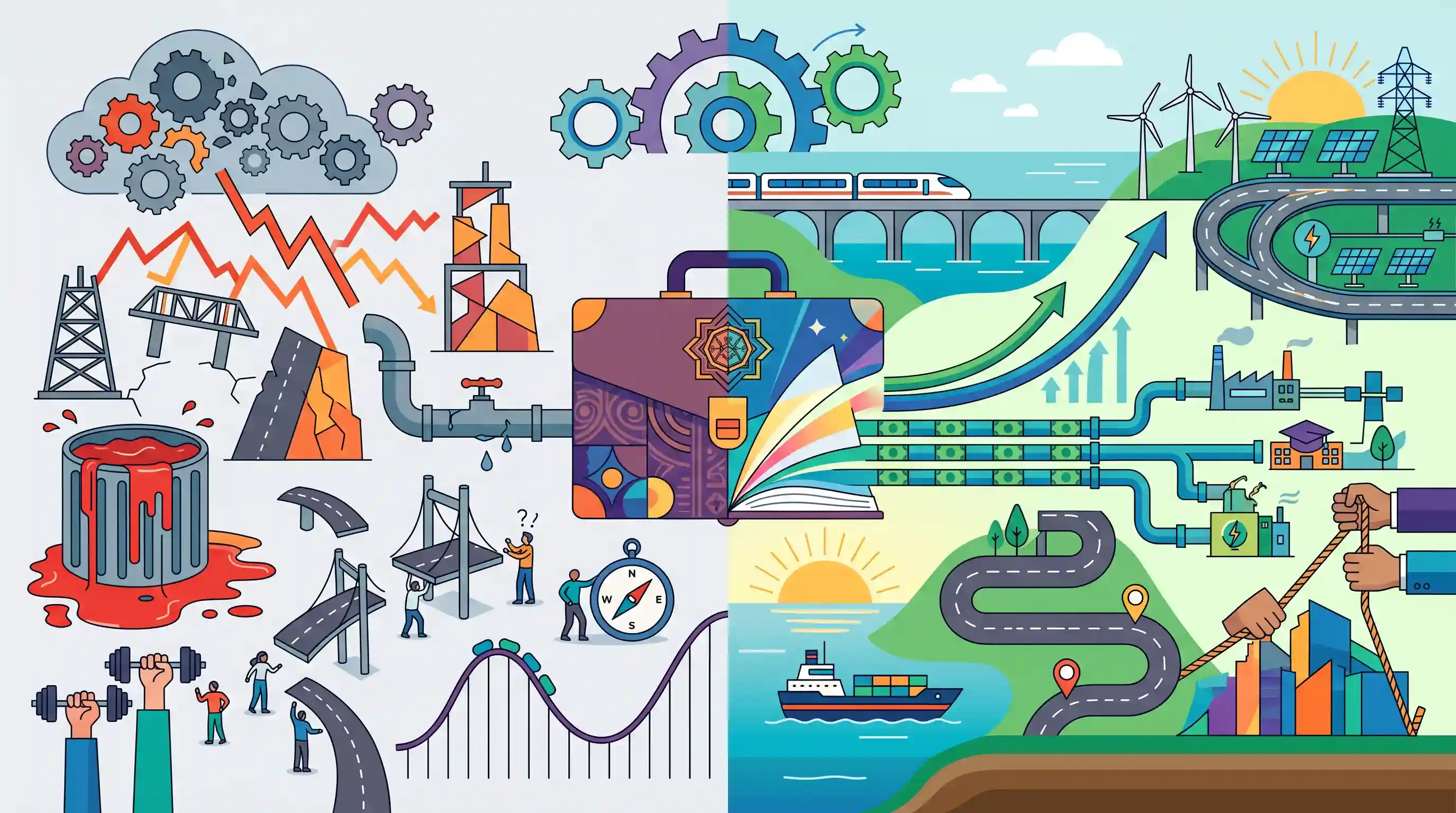
- The debate over whether the budget introduces structural reforms making it a 'turning point' or simply offers incremental changes ('tinkering').
Important Terms
Union Budget 2026-27

The annual financial statement of India for FY 2026-27, emphasizing "Viksit Bharat" and infrastructure-led growth with a record ₹12.2 lakh crore capital expenditure allocation.
UPSC context
GS Paper III: Government Budgeting. Essential for understanding fiscal priorities, deficit targets, and sectoral allocations in the Indian economy.
Fiscal Responsibility and Budget Management (FRBM) Act
Enacted in 2003 to institutionalize fiscal discipline by setting targets for reducing fiscal deficits and public debt, ensuring long-term macroeconomic stability and transparency.
UPSC context
GS Paper III: Fiscal Policy. Tests knowledge of India's legislative framework for deficit management and inter-generational equity.
Fiscal Consolidation
A policy strategy aimed at reducing the government's fiscal deficit and stabilizing debt-to-GDP ratios through increased revenue mobilization and disciplined public spending.
UPSC context
GS Paper III: Indian Economy. Crucial for analyzing macroeconomic stability and the government's ability to balance growth with debt.
Capital Expenditure (Capex)
Government spending on the creation of long-term productive assets (like roads, power) or debt reduction, valued for its high multiplier effect on economic growth.
UPSC context
GS Paper III: Infrastructure and Budgeting. Key to assessing "quality of expenditure" and its impact on long-term GDP growth.
Crowding-in
An economic effect where increased public investment in infrastructure improves business conditions, thereby encouraging and attracting higher levels of private sector investment.
UPSC context
GS Paper III: Investment Models. Tests understanding of the relationship between public spending and private sector participation in the economy.
Prelims Trap
"High government borrowing for infrastructure capital expenditure strictly leads to the 'crowding out' of private sector investment."
While high borrowing can raise interest rates, strategic infrastructure CapEx improves logistics and business viability, creating a "crowding in" effect that actually stimulates private investment.
Static Concepts Connected
What are the key policy statements mandated to be presented under the FRBM Act?
- Macro-Economic Framework: Outlines the macroeconomic stability strategy, assessing GDP growth prospects, inflation, and external sector balance.
- Medium-Term Fiscal Policy: Sets a three-year rolling target for specific fiscal indicators like the fiscal deficit and revenue deficit.
- Fiscal Policy Strategy: Details the government's current policies on taxation, expenditure, and borrowing to achieve its fiscal targets.
How does the 'Fiscal Multiplier' differ between Capital and Revenue expenditure in India?
- Capital Expenditure: Yields a higher multiplier (often >2.0) by creating durable physical assets, reducing logistics costs, and crowding in private investment.
- Revenue Expenditure: Yields a lower multiplier (often <1.0) as it primarily funds immediate consumption, subsidies, and administrative salaries without expanding productive capacity.
Cross-Topic Patterns
CapEx + PM Gati Shakti integration
The debate over budget 'structural reforms' directly ties into whether increased capital allocation efficiently funds integrated multi-modal networks under Gati Shakti or simply disperses funds into isolated projects.
Fiscal consolidation + RBI Monetary stance
A strict fiscal consolidation glide path under FRBM allows the RBI to maintain a balanced monetary stance, lowering borrowing costs and preventing the 'crowding out' of private sector credit.

Expect a multi-statement Prelims question in 2026 linking FRBM mandated documents with the 'crowding in' effect of Capital Expenditure.
Linked PYQs · 4
Linked PYQs · 4
- 2017MainsGS3
One of the intended objectives of the Union Budget 2017-18 is to 'transform, energise and clean India'. Analyse the measures proposed in the Budget 2017-18 to achieve the objective.
- 2021MainsGS3
“Investment in infrastructure is essential for more rapid and inclusive economic growth.” Discuss in the light of India's experience.
- 2020PrelimsGS1
Along with the Budget, the Finance Minister also places other documents before the Parliament which include 'The Macro Economic Framework Statement'. The aforesaid document is presented because this is mandated by
- 2025MainsGS3
Explain how the Fiscal Health Index (FHI) can be used as a tool for assessing the fiscal performance of states in India. In what way would it encourage the states to adopt prudent and sustainable fiscal policies?
