US Iran Diplomacy and the Strategic Risks of Public Rhetoric
Source:Indian Express ↗
Why It Matters
US-Iran relations directly impact Middle East stability, global energy security, and India's strategic and economic interests, including investments like the Chabahar port, diaspora safety, and crude oil imports. Understanding the dynamics of major power foreign policy is essential for the International Relations syllabus.
Summary
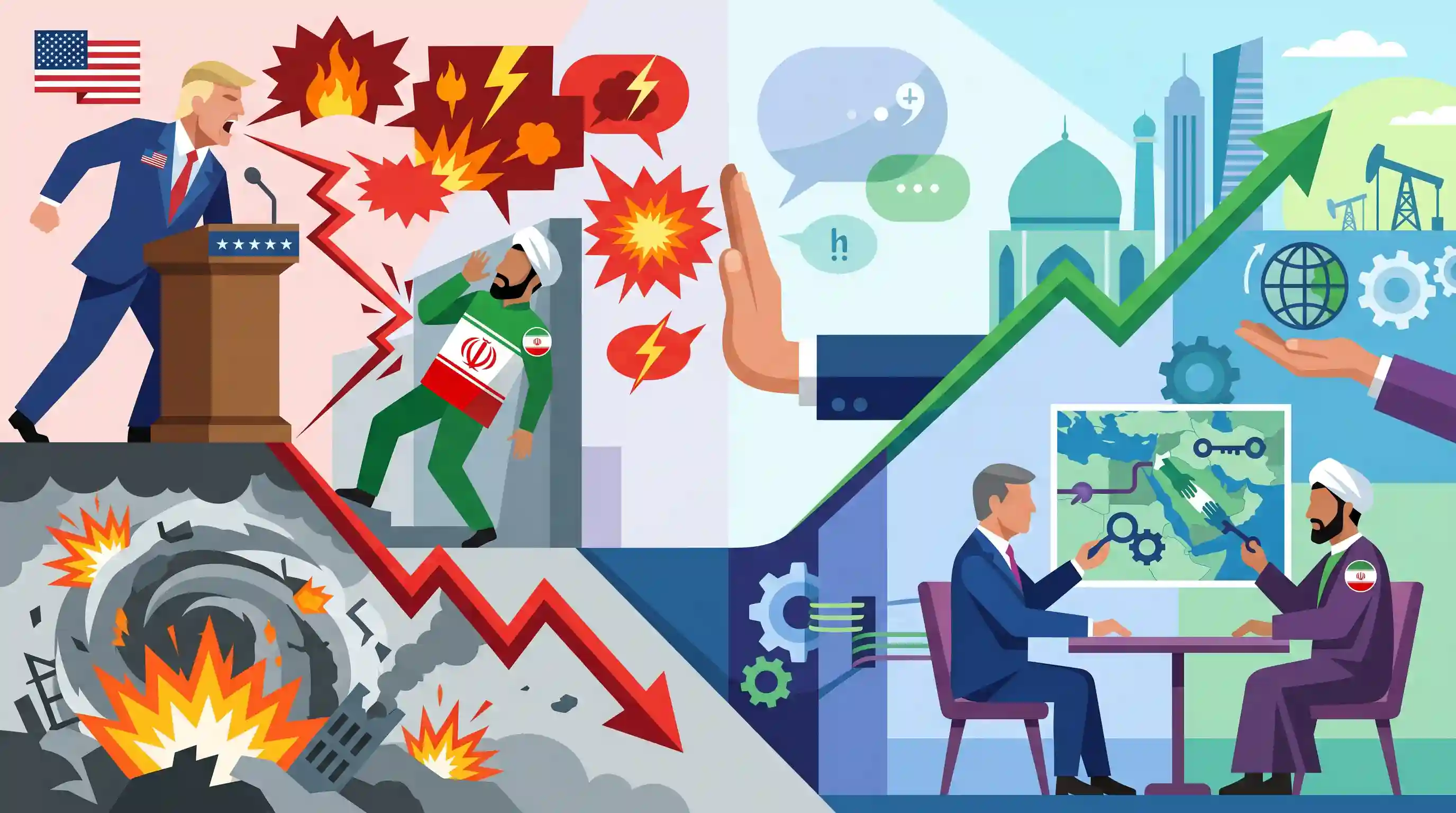
The opinion piece advises Donald Trump on managing the escalating tensions between the United States and Iran, emphasizing that inflammatory public rhetoric only exacerbates the conflict. By advocating for a reduction in public threats and a shift towards strategic diplomacy or back-channel negotiations, the article argues that 'stopping talking' can prevent the US and Iran from sliding into an unintended, full-scale war. The piece highlights the dangers of cornering adversaries with aggressive posturing and calls for a more pragmatic approach to Middle East geopolitics, crisis management, and international diplomacy.
Key Points
- The article analyzes Donald Trump's diplomatic approach towards Iran, suggesting that aggressive public rhetoric escalates geopolitical tensions unnecessarily.
- It emphasizes the importance of strategic silence and back-channel diplomacy over public threats in managing complex US-Iran relations.
- Highlights how inflammatory public statements can corner adversaries like Iran, forcing retaliatory actions and increasing the risk of an unintended full-scale war.
- Advises a recalibrated US foreign policy focused on de-escalation, deterrence without provocation, and pragmatic negotiations rather than grandstanding.
Important Terms
Joint Comprehensive Plan of Action (JCPOA)

The 2015 landmark agreement between Iran and P5+1 powers aimed at restricting Iran's nuclear program in exchange for lifting international economic sanctions.
UPSC context
GS Paper II: Important for International Relations, bilateral agreements, and India's energy security/connectivity via Chabahar.
Brinkmanship
A risky foreign policy practice of pushing a situation to the threshold of active conflict to force an adversary to back down or make concessions.
UPSC context
GS Paper II: Conceptual understanding of diplomatic strategies and crisis management in volatile regions like West Asia.
Back-channel Diplomacy
Unofficial, secret, or 'Track-II' communication channels between governments used to resolve crises or negotiate sensitive issues when official diplomatic relations are strained or non-existent.
UPSC context
GS Paper II: Essential tool for maintaining stability in international relations and India's own neighborhood policy.
West Asia Geopolitics
The strategic and political dynamics of the region comprising the Arabian Peninsula, Iran, Iraq, and the Levant, critical for global energy and trade.
UPSC context
GS Paper II & III: Tests understanding of regional stability, energy security, and the safety of the Indian diaspora.
Economic Sanctions
Commercial and financial penalties applied by one or more countries against a targeted state, group, or individual to influence their behavior or policy.
UPSC context
GS Paper II: Analyzed as a tool of foreign policy and its impact on global trade and India's strategic interests.
P5+1
The group of world powers (China, France, Russia, UK, US, plus Germany) that led the diplomatic negotiations regarding Iran's nuclear program.
UPSC context
GS Paper II: Global groupings and agreements involving major powers that affect India's interests.
Prelims Trap
Track II diplomacy refers to formal, back-channel negotiations between state officials and diplomats.
Track II diplomacy relies strictly on unofficial, non-state actors (academics, retired officials). Formal, back-channel negotiations between state officials are Track I or Track 1.5.
Static Concepts Connected
What are the primary 'Tracks' of diplomacy in International Relations?
- Track I: Official government-to-government diplomatic interactions, treaties, and formal dialogues.
- Track II: Unofficial, informal dialogues involving non-state actors like academics, NGOs, and retired officials to build trust.
- Track 1.5: A blend of official and unofficial actors collaborating, allowing for state presence without formal commitments.
What is the strategic and geographical significance of the Strait of Hormuz?
- Location: It connects the Persian Gulf to the Gulf of Oman and the Arabian Sea.
- Bordering nations: It is bounded by Iran to the north and Oman/UAE to the south.
- Economic weight: It is a critical maritime chokepoint handling approximately 20% of the world's daily oil consumption.
Cross-Topic Patterns
JCPOA sanctions vs India's strategic autonomy
US sanctions on Iran (Maximum Pressure campaign) directly constrain India's energy security and Chabahar port investments, highlighting the tension between India's strategic autonomy and US bilateral ties.
Maritime chokepoints and energy security
Escalations in the Middle East repeatedly expose the vulnerability of critical maritime chokepoints (Bab-el-Mandeb, Strait of Hormuz), threatening global supply chains and inflating India's energy import bills.

Expect a 2026 Prelims map-based question linking Middle East conflict zones to specific maritime chokepoints like the Strait of Hormuz.
Linked PYQs · 3
Linked PYQs · 3
- 2018MainsGS2
In what ways would the ongoing US-Iran Nuclear Pact Controversy affect the national interest of India? How should India respond to this situation?
- 2012MainsGS2
How have the US sanctions against Iran affected India's bilateral relations with Iran?
- 2025MainsGS2
"Energy security constitutes the dominant kingpin of India's foreign policy, and is linked with India's overarching influence in Middle Eastern countries.” How would you integrate energy security with India's foreign policy trajectories in the coming years?
