Power Transmission Lines Pose Severe Electrocution Threat to Vultures
Source:The Hindu ↗
কেন এটি গুরুত্বপূর্ণ
As India expands its renewable energy and power distribution infrastructure, balancing developmental needs with wildlife conservation—specifically addressing hidden ecological costs like avian electrocution—has become a vital dimension of environmental governance and species recovery under GS Paper III.
সারসংক্ষেপ
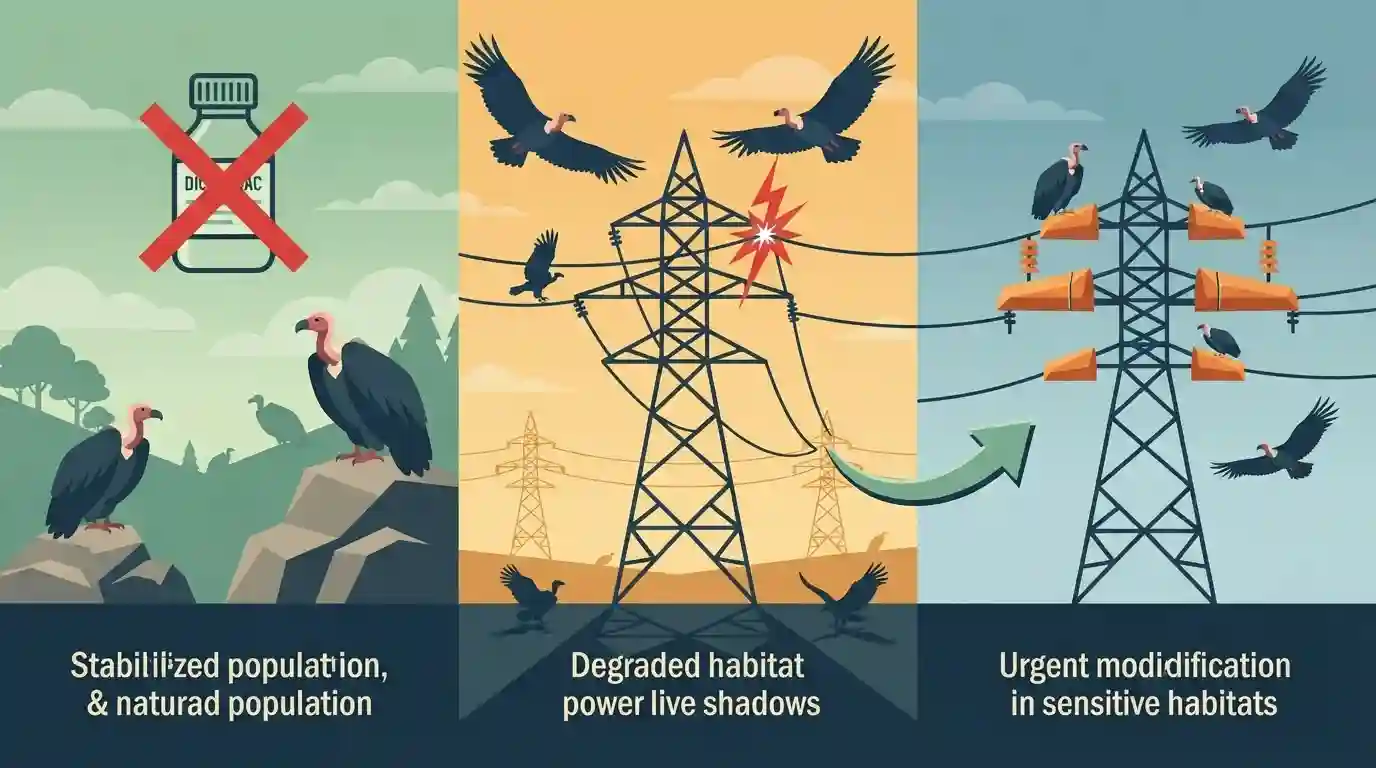
The editorial highlights a critical threat to vulture safety in India: power line electrocution. While conservation efforts successfully targeted chemical poisons like diclofenac, infrastructure expansion—specifically poorly insulated power transmission lines—now poses a severe danger to large raptors due to their wide wingspans. Experts stress the urgent need for structural modifications to power grids in sensitive habitats to safeguard endangered vulture populations.
মূল বিষয়
- Vulture populations in India, which previously faced catastrophic decline due to the veterinary drug diclofenac, now face an emerging lethal threat from power transmission line electrocutions.
- Large raptors, including endangered vulture species, have wingspans wide enough to bridge phase-to-earth or phase-to-phase clearances on medium-voltage distribution lines, resulting in fatal electrocutions.
- Conservationists and experts call for urgent mitigation measures such as insulating overhead cables, installing bird diverters, and undergrounding low- and medium-voltage power lines in critical vulture habitats.
- Addressing infrastructure-related wildlife mortality is crucial for the success of species recovery programs and maintaining ecosystem health.
গুরুত্বপূর্ণ শব্দ
Wild Life (Protection) Act, 1972

India's core umbrella legislation for protecting wild animals, birds, and plants, listing vulnerable species under schedules (e.g., Gyps vultures under Schedule I) to provide strict legal safeguards against harm or hunting.
UPSC context
UPSC Prelims/Mains (GS Paper III): Essential statutory framework for species protection, wildlife conservation, and legal penalties.
Action Plan for Vulture Conservation in India
A strategic government framework targeting the rehabilitation of dwindling vulture populations through breeding centers, drug bans (like diclofenac, aceclofenac), and the creation of Vulture Safe Zones.
UPSC context
UPSC Prelims/Mains (GS Paper III): Biodiversity conservation policies, species recovery initiatives, and environmental management.
Supreme Court of India
The highest judicial forum in India, which has passed landmark directives mandating the undergrounding of power lines and use of bird diverters to protect endangered avifauna from electrocution.
UPSC context
UPSC Prelims/Mains (GS Paper II & III): Judicial activism, environmental jurisprudence, and balancing infrastructure with wildlife conservation.
Ministry of Environment, Forest and Climate Change
The nodal central ministry responsible for formulating environmental and forestry policies, regulating wildlife protection laws, and implementing species-specific recovery action plans.
UPSC context
UPSC Prelims/Mains (GS Paper II & III): Core institutional mechanism governing environmental governance, statutory bodies, and national conservation strategies.
প্রিলিমস ফাঁদ
Chemical poisons like diclofenac are now the sole remaining driver of vulture population decline in India.
Diclofenac remains the most famous historical threat, but aspirants often overlook that physical infrastructure (power lines) and newer veterinary NSAIDs (aceclofenac, ketoprofen) are major contemporary concerns.
সংযুক্ত স্থির ধারণা
What are the key statutory bodies and schedules governing vulture conservation in India?
- Schedule I Status: Highest legal protection under the Wild Life (Protection) Act, 1972, prohibiting any form of hunting or commercial trade.
- Action Plan (2020-25): Formulated by MoEFCC to establish breeding centers, ban toxic veterinary NSAIDs, and monitor population recoveries.
- IUCN Red List: Key species like the White-rumped and Indian Vulture are listed as Critically Endangered on the IUCN Red List.
আন্তঃবিষয় প্যাটার্ন
Power Infrastructure vs. Wildlife Conservation Linkages
The collision of linear infrastructure expansion with endangered megafauna tests India's commitment to balancing rapid green energy and power grid build-out with statutory biodiversity safeguards under the WLPA 1972.

Vulture conservation + infrastructure threats (electrocution vs diclofenac) likely to be paired in a multi-statement prelims question.
সংযুক্ত PYQ · 1
সংযুক্ত PYQ · 1
- 2012PrelimsGS1
Vultures which used to be very common in Indian countryside some years ago are rarely seen nowadays. This is attributed to
