Electrical fire hazards and building safety regulations in India
Source:The Hindu ↗
Why It Matters
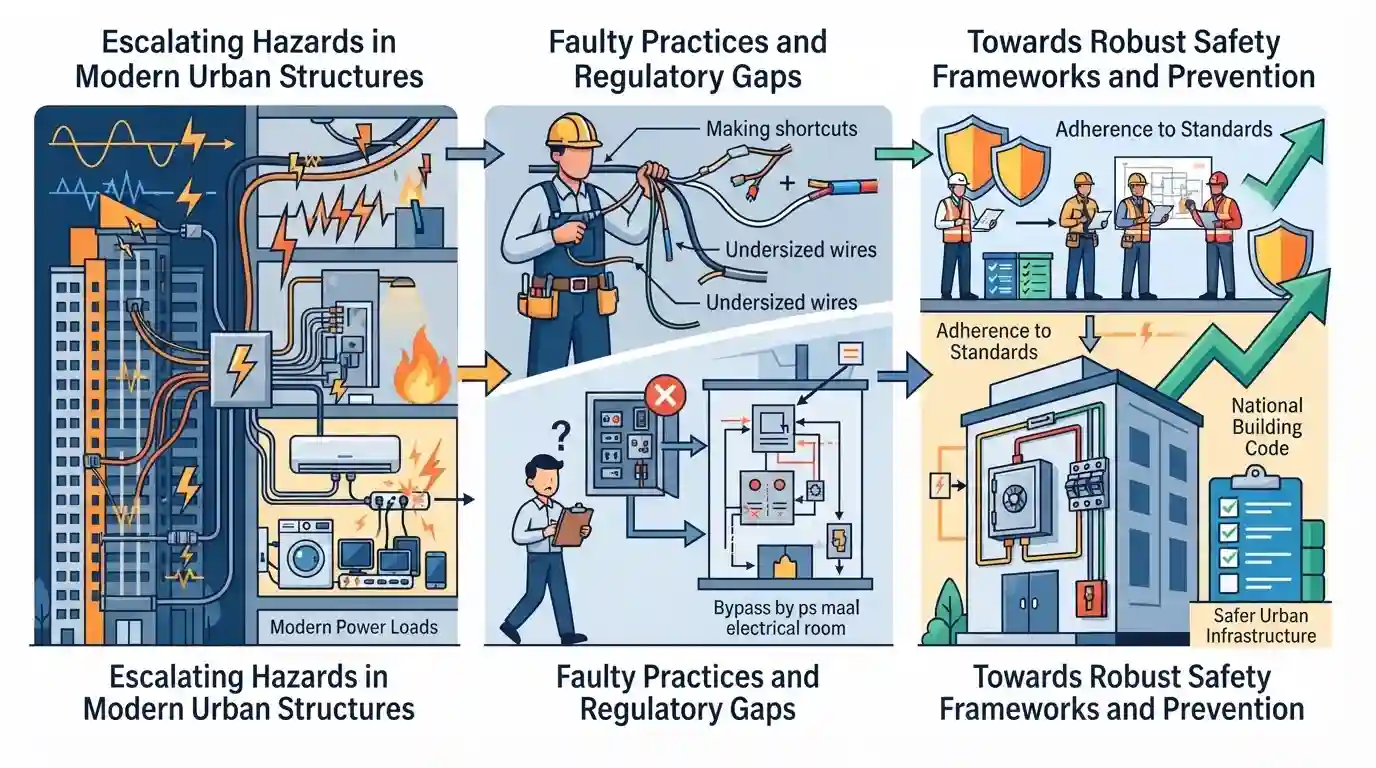
It highlights a critical yet overlooked dimension of urban infrastructure vulnerability and disaster management—electrical fires driven by modern power loads and poor regulatory compliance—which is directly relevant to GS3 Disaster Management syllabus.
Summary
The article examines the hidden dangers of electrical fires in India, focusing on how modern power loads, electrical harmonics, and faulty installation practices escalate fire hazards in buildings. It highlights regulatory gaps in enforcement and the urgent need for robust safety frameworks and adherence to standards like the National Building Code to prevent urban disasters.
Key Points
- Electrical fires remain a major cause of fatalities and property destruction in India, often attributed to non-linear loads, harmonics, and poor wiring standards.
- Harmonics generated by modern electronic equipment and appliances can cause severe overloading of neutral conductors and transformers, escalating fire risks.
- Gaps in regulatory enforcement, outdated building bye-laws, and inadequate safety audits across urban commercial and residential spaces compound the crisis.
- Strengthening national safety standards, strict enforcement of the National Building Code, and rigorous testing of electrical equipment are vital for disaster risk reduction.
Important Terms
Bureau of Indian Standards

India's national standards body responsible for standardisation, marking, and quality certification of goods, including mandatory safety certifications for electrical appliances, wiring, and infrastructure materials.
UPSC context
GS Paper III (Economy/Infrastructure) - Tests knowledge of regulatory institutions, quality control, and standards enforcement for public safety.
National Building Code
A comprehensive national instrument providing guidelines for regulating building construction activities across the country, including mandatory specifications for fire safety, electrical installations, and hazard mitigation.
UPSC context
GS Paper III (Disaster Management) - Tests urban safety frameworks, disaster risk reduction, and regulatory compliance in building architecture.
Prelims Trap
The National Building Code is a central penal statute that automatically overrides all municipal building bye-laws across every state.
Aspirants often assume the National Building Code is a legally binding central statute nationwide, whereas building bye-laws and municipal enforcement fall primarily under state and local urban bodies.
Static Concepts Connected
What are the key statutory bodies and codes governing electrical safety and building standards in India?
- CEA Regulations: Legally binding regulations for construction, operation, and maintenance of electrical plants and lines are issued under the Electricity Act, 2003.
- BIS Standards: Formulates national standards for electrical appliances, wiring materials, and safety protocols to protect consumers from hazards.
- National Building Code: Provides comprehensive guidelines for fire safety, structural design, and electrical installations in urban residential and commercial buildings.
Cross-Topic Patterns
Urbanization + Municipal Disaster Governance
Rapid urban commercial growth and non-linear electrical loads test municipal enforcement capacities under the 74th Constitutional Amendment framework.

Electrical safety standards + National Building Code enforcement will likely be tested via multi-statement disaster management questions.
Linked PYQs · 2
Linked PYQs · 2
- 2024MainsGS3
Flooding in urban areas is an emerging climate-induced disaster. Discuss the causes of this disaster. Mention the features of two such major floods in the last two decades in India. Describe the policies and frameworks in India that aim at tackling such floods.
- 2020MainsGS3
Discuss the recent measures initiated in disaster management by the Government of India departing from the earlier reactive approach.
