Dalit student gang rape incident in Lucknow triggers security concerns
Source:The Hindu ↗
Why It Matters
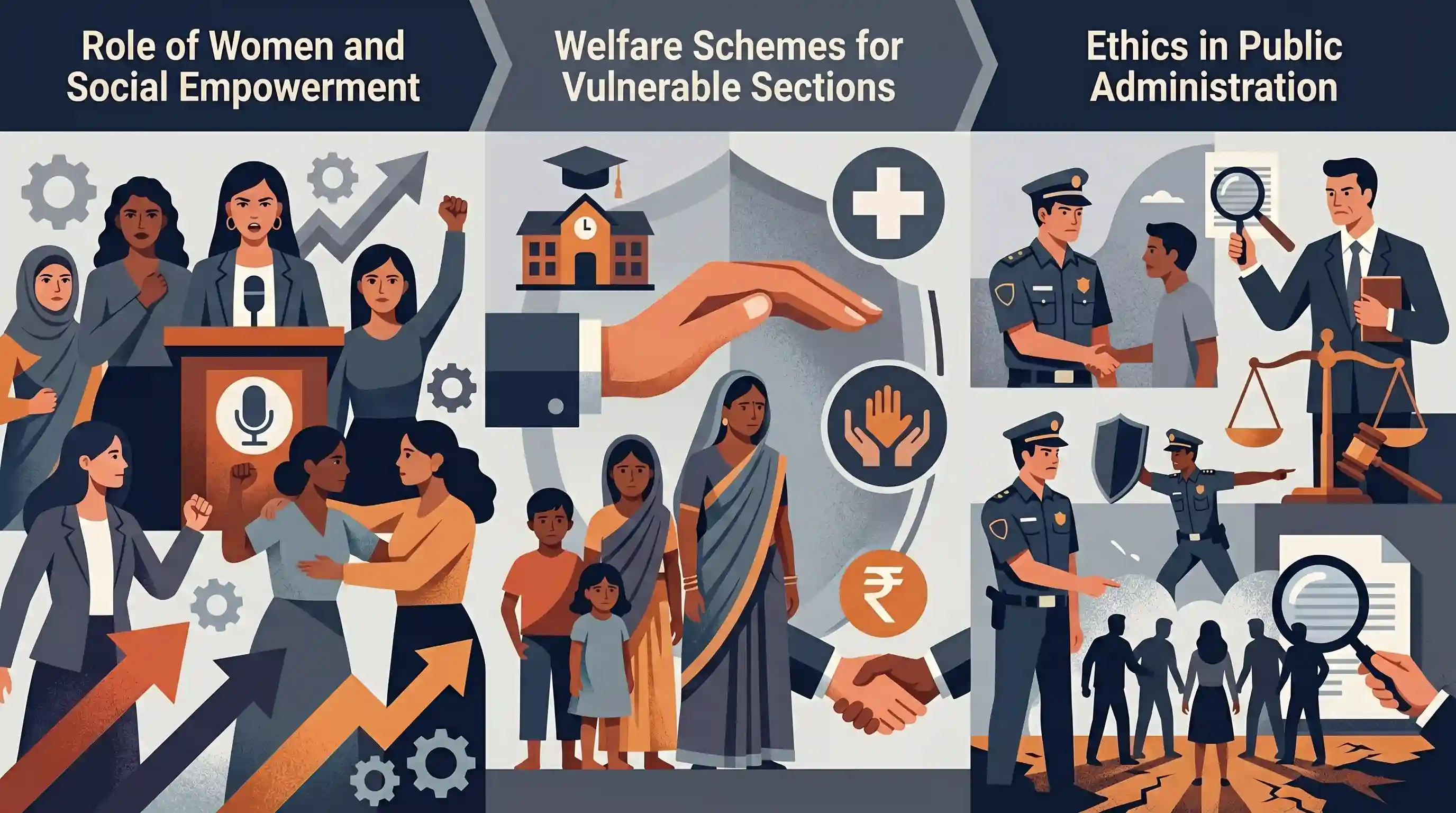
The incident underscores the double burden of caste and gender discrimination faced by Dalit women, which is a core theme in GS1 (Indian Society). The subsequent police encounter also touches upon GS4 debates regarding procedural justice, rule of law, and ethics in law enforcement.
Summary
A 16-year-old Dalit girl was allegedly gang-raped by five men in Lucknow, Uttar Pradesh. Four of the accused have been arrested, with one suspect injured during a retaliatory police firing. The incident has drawn strong political condemnation and highlights critical issues concerning the safety of women from lower social strata and the ethical implications of police encounters.
Key Points
- The gang-rape of a 16-year-old Dalit girl in Lucknow highlights the intersectional vulnerability of women from marginalized communities to extreme violence.
- Political figures, including BSP chief Mayawati, emphasized the urgent need for governments to prioritize women's safety and respect over mere reactive measures.
- The injury of an accused in retaliatory police firing spotlights the recurring debate on the use of police encounters and extrajudicial methods in law enforcement.
Important Terms
Scheduled Castes and the Scheduled Tribes (Prevention of Atrocities) Act, 1989

A stringent 1989 law designed to prevent discrimination, violence, and atrocities against members of Scheduled Castes and Scheduled Tribes by non-members, establishing special courts for speedy justice.
UPSC context
GS Paper II: Welfare schemes for vulnerable sections; tests knowledge of legislative protections for marginalized communities and judicial safeguards.
Protection of Children from Sexual Offences (POCSO) Act, 2012
Enacted in 2012, this gender-neutral law protects persons below 18 from sexual assault and exploitation, treating minor consent as legally irrelevant and providing a child-friendly judicial process.
UPSC context
GS Paper II: Issues relating to children; tests understanding of the legal framework surrounding child protection and sexual offences.
Extra-judicial Killings
The killing of individuals by state agents without trial or due process of law, often justified as 'encounters' occurring in self-defense or during attempts to prevent escape.
UPSC context
GS Paper IV: Ethics in Public Administration; tests the balance between administrative efficiency, 'instant justice,' and the constitutional Rule of Law.
Bahujan Samaj Party (BSP)
A national political party founded in 1984 by Kanshi Ram, focusing on the empowerment of Dalits, OBCs, and religious minorities under the philosophy of social transformation.
UPSC context
GS Paper II: Political parties and representation; tests knowledge of caste-based political mobilization and its role in social empowerment.
Scheduled Castes (SC)
Socially disadvantaged groups notified under Article 341 of the Indian Constitution, historically facing discrimination and untouchability, for whom the state provides affirmative action and legal protection.
UPSC context
GS Paper I: Social Empowerment; tests understanding of the historical and constitutional status of marginalized groups in Indian society.
Rule of Law
A fundamental governance principle asserting that no individual is above the law, ensuring that every government action is justified by legal authority and subject to judicial review.
UPSC context
GS Paper IV: Ethics and Governance; tests the ability to analyze the tension between executive power and constitutional restraints.
Prelims Trap
"Under the SC/ST (Prevention of Atrocities) Act, anticipatory bail is absolutely barred under all circumstances."
While Section 18 bars anticipatory bail, the Supreme Court (2020) clarified that courts can still grant it if no prima facie case is made out, preventing blatant misuse.
Static Concepts Connected
What are the Supreme Court's PUCL (2014) guidelines on police encounters?
- Independent Probe: Mandates an independent investigation by the state CID or a police team from another, separate police station.
- Magisterial Inquiry: An inquiry by a Judicial Magistrate must invariably be held in all cases of death resulting from police action.
- NHRC Reporting: The National Human Rights Commission (NHRC) or the State Human Rights Commission must be informed of the incident without delay.
- No immediate rewards: No immediate gallantry awards or out-of-turn promotions are allowed for the officers involved soon after the occurrence.
What institutional mechanisms are mandated under the SC/ST (Prevention of Atrocities) Act?
- Special Courts: Requires the establishment of Exclusive Special Courts at the district level to ensure the speedy trial of atrocity cases.
- Nodal Officers: State governments must appoint a nodal officer at the state level to coordinate the functioning of District Magistrates and Superintendents of Police.
- Relief and Rehabilitation: Immediate relief in cash or kind must be provided to victims, alongside rehabilitation and travel allowances during the trial.
Cross-Topic Patterns
Ethics of "swift justice" vs due process
Links GS2 (Rule of Law, Article 21) directly with GS4 (Ethics), contrasting constitutional due process and PUCL guidelines against public demands for retributive extrajudicial actions.
Intersectionality in systemic violence
Merges GS1 (Society) and GS2 (Vulnerable Sections), highlighting how NCRB data shows systemic violence disproportionately targets women at the bottom of the caste hierarchy, compounding vulnerabilities.

Expect a GS4 case study on the "swift justice vs due process" encounter debate, or a Prelims MCQ on PUCL guidelines/NHRC reporting.
Linked PYQs · 4
Linked PYQs · 4
- 2018MainsGS1
Women's movement in India has not addressed the issues of women of lower social strata.' Substantiate your view.
- 2024MainsGS1
Despite comprehensive policies for equity and social justice, underprivileged sections are not yet getting the full benefits of affirmative action envisaged by the Constitution. Comment.
- 2023MainsGS2
Explain the constitutional perspectives of Gender Justice with the help of relevant Constitutional Provisions and case laws.
- 2018MainsGS4
Explain the process of resolving ethical dilemmas in Public Administration.
