CSIR-CCMB Identifies New Targets to Fight Tuberculosis
Source:The Hindu ↗
Why It Matters
Tuberculosis remains a critical public health challenge in India, compounded by drug resistance. Research into novel drug targets is vital for improving treatment efficacy, supporting public health goals like the National Tuberculosis Elimination Programme, and addressing antimicrobial resistance.
Summary
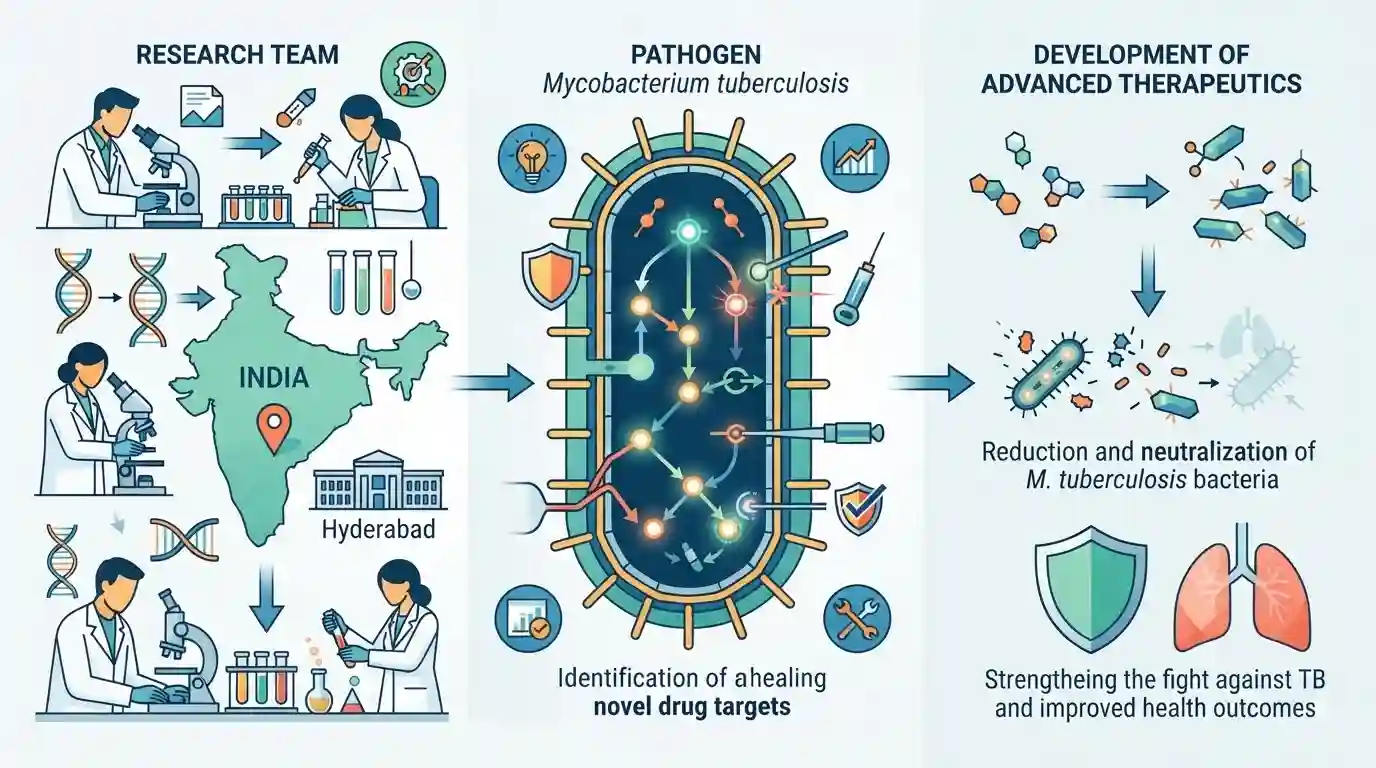
A team of scientists at the CSIR-Centre for Cellular and Molecular Biology (CCMB) in Hyderabad has identified novel potential drug targets within Mycobacterium tuberculosis, offering a pathway to combat drug-resistant tuberculosis. By targeting essential metabolic pathways unique to the bacterium, this research paves the way for developing advanced therapeutics and strengthening India's fight against TB.
Key Points
- Researchers at CSIR-CCMB Hyderabad have identified new potential drug targets to combat Tuberculosis (TB) by focusing on essential metabolic pathways of Mycobacterium tuberculosis.
- The discovery aims to overcome limitations of existing drug regimens and address the rising challenge of drug-resistant strains of tuberculosis.
- Targeting novel cellular vulnerabilities in the bacterium can fast-track the development of safer and more effective anti-TB therapeutics.
Important Terms
CSIR-CCMB

A premier research institution under the Council of Scientific and Industrial Research located in Hyderabad, specializing in frontier areas of modern biology, cell biology, and molecular genetics.
UPSC context
UPSC Prelims/Mains (GS Paper III - Science & Technology): Tests awareness of premier Indian research laboratories and indigenous technological advancements in health.
National Tuberculosis Elimination Programme
India’s flagship public health initiative aimed at ending the tuberculosis epidemic by providing free diagnosis, treatment, and support services across the country.
UPSC context
UPSC Prelims/Mains (GS Paper II - Health & Social Justice): Critical for questions on major national health schemes, disease eradication targets, and social determinants of health.
Protein Export Machinery
A specialized system within Mycobacterium tuberculosis involving pathways like SecA1 and Tat, which is essential for transporting proteins and maintaining bacterial cell wall stability.
UPSC context
UPSC Prelims (GS Paper III - Science & Technology/Biotechnology): Important for understanding novel drug discovery mechanisms, antimicrobial resistance, and molecular biology.
Prelims Trap
drug-resistant tuberculosis strains represent newly evolved bacterial species outside Mycobacterium tuberculosis
Aspirants often assume drug-resistant TB strains like MDR-TB and XDR-TB are entirely new species of bacteria rather than resistant variants of Mycobacterium tuberculosis.
Static Concepts Connected
What are the key strategies and goals under India's National Tuberculosis Elimination Programme (NTEP)?
- Elimination Target: Goal year: India aims to eliminate tuberculosis by 2025, ahead of the global Sustainable Development Goal target of 2030.
- Strategic Shift: Key focus: Shifting from mere control to elimination, universal drug susceptibility testing, and private sector engagement.
- Nutritional Support: Financial support: Provision of nutritional support to TB patients through the Ni-kshay Poshan Yojana.
Cross-Topic Patterns
Drug-Resistant TB + AMR + TRIPS Flexibility
Rising anti-microbial resistance (AMR) connects drug-resistant TB research with international trade rules on generic drug manufacturing and compulsory licensing under TRIPS.
CSIR Research + Public Health Policy
Genomics research at CSIR labs directly supports India's National Health Mission goals and Indigenous diagnostics production under Make in India.

Expect a multi-statement Prelims question testing the difference between latent TB, drug-resistant TB mechanisms, and India's NTEP targets.
Linked PYQs · 1
Linked PYQs · 1
- 2014MainsGS3
Can overuse and free availability of antibiotics without Doctor's prescription, be contributors to the emergence of drug-resistant diseases in India? What are the available mechanisms for monitoring and control? Critically discuss the various issues involved.
