Cerebrovascular regulation and neurovascular coupling mechanisms
Source:The Hindu ↗
Why It Matters
Understanding basic physiological processes and medical science advancements is directly relevant to the UPSC GS-3 Science & Technology syllabus. Questions often probe the biological mechanisms behind bodily functions, diseases, and new health discoveries (e.g., proteins, antibodies, vascular health).
Summary
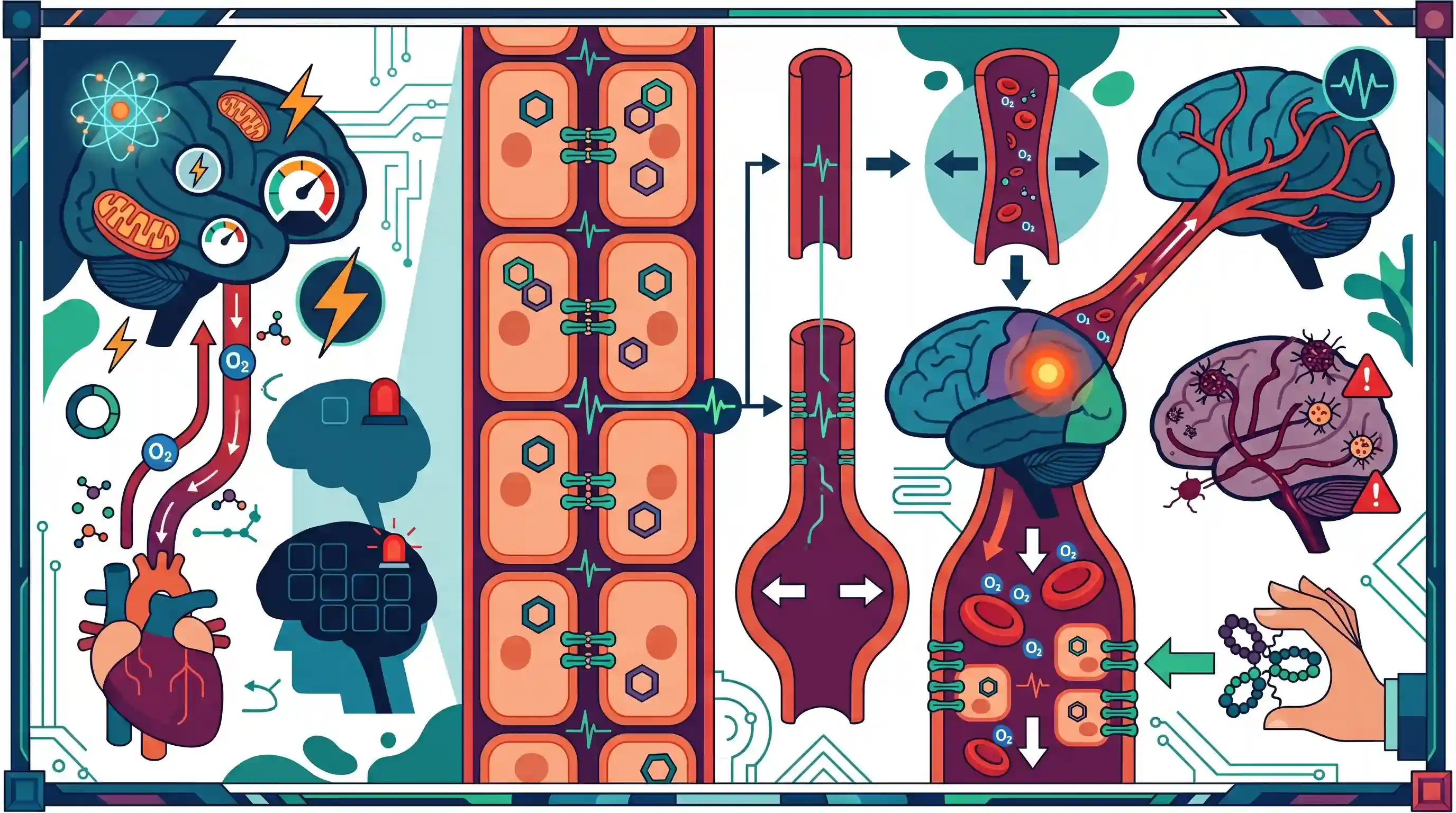
Scientists have elucidated the role of connexin proteins in regulating blood flow to the brain. Because the brain consumes vast amounts of energy without storing it, it relies on a highly responsive vascular network to deliver oxygen and nutrients on demand. Connexins form gap junctions that facilitate rapid intercellular communication within arterial walls, prompting arteries to dilate synchronously and direct blood to active brain regions. This insight into cerebrovascular regulation offers potential new pathways for treating neurological disorders associated with impaired brain nourishment.
Key Points
- The brain lacks the capacity to store energy and depends heavily on responsive blood flow for its high oxygen and nutrient requirements.
- Connexin proteins function as critical communication channels (gap junctions) between cells in the walls of brain arteries.
- These proteins enable rapid signaling that rallies arteries to dilate and supply blood instantly when specific brain regions demand nourishment.
- The discovery deepens the understanding of neurovascular coupling and could aid in researching cerebrovascular conditions like dementia, Alzheimer's, or strokes where blood flow is compromised.
Prelims Trap
Because the brain consumes vast energy, it stores significant glycogen reserves.
The brain actually lacks significant energy storage capacity. It relies almost entirely on continuous, highly responsive blood flow for its constant glucose and oxygen demands.
Static Concepts Connected
What are Gap Junctions and how do they differ from other cell junctions?
- Gap Junctions: Protein channels (like connexins) allowing rapid, direct exchange of ions and molecules between adjacent cells.
- Tight Junctions: Seal adjacent epithelial cells tightly to prevent fluid leakage (crucial in the blood-brain barrier).
- Desmosomes: Act like rivets, providing mechanical strength to tissues under physical stress, such as heart muscle.
How does the human brain manage its massive energy requirements?
- Disproportionate Consumption: Despite being only ~2% of body weight, the brain consumes roughly 20% of the body's total energy and oxygen.
- Zero Storage: It lacks substantial glycogen or fat storage, making it completely dependent on continuous vascular delivery.
- Neurovascular Coupling: A mechanism where localized neural activity instantly triggers nearby blood vessel dilation to meet acute energy demands.
Cross-Topic Patterns
Geriatric healthcare and Alzheimer's burden
Discoveries in cerebrovascular regulation directly inform treatments for Alzheimer's and strokes, linking GS3 science to GS2 demographic challenges of India's aging population.
Biomimicry in Neuromorphic Computing
The brain's highly efficient, on-demand energy routing (neurovascular coupling) provides biological models for developing energy-efficient AI hardware and neuromorphic chips.

Expect a Prelims match-the-following question pairing cell junctions (Gap, Tight, Desmosome) or specific cellular proteins with their functions.
Linked PYQs · 2
Linked PYQs · 2
- 2024PrelimsGS1
Which one of the following is synthesised in human body that dilates blood vessels and increases blood flow?
- 2024PrelimsGS1
With reference to monoclonal antibodies, often mentioned in news, consider the following statements : I. They are man-made proteins. II. They stimulate immunological function due to their ability to bind to specific antigens. III. They are used in treating viral infections like that of Nipah virus. Which of the statements given above are correct?
