Human Animal Conflict Mitigation and Wildlife Conservation
Source:The Hindu ↗
Why It Matters
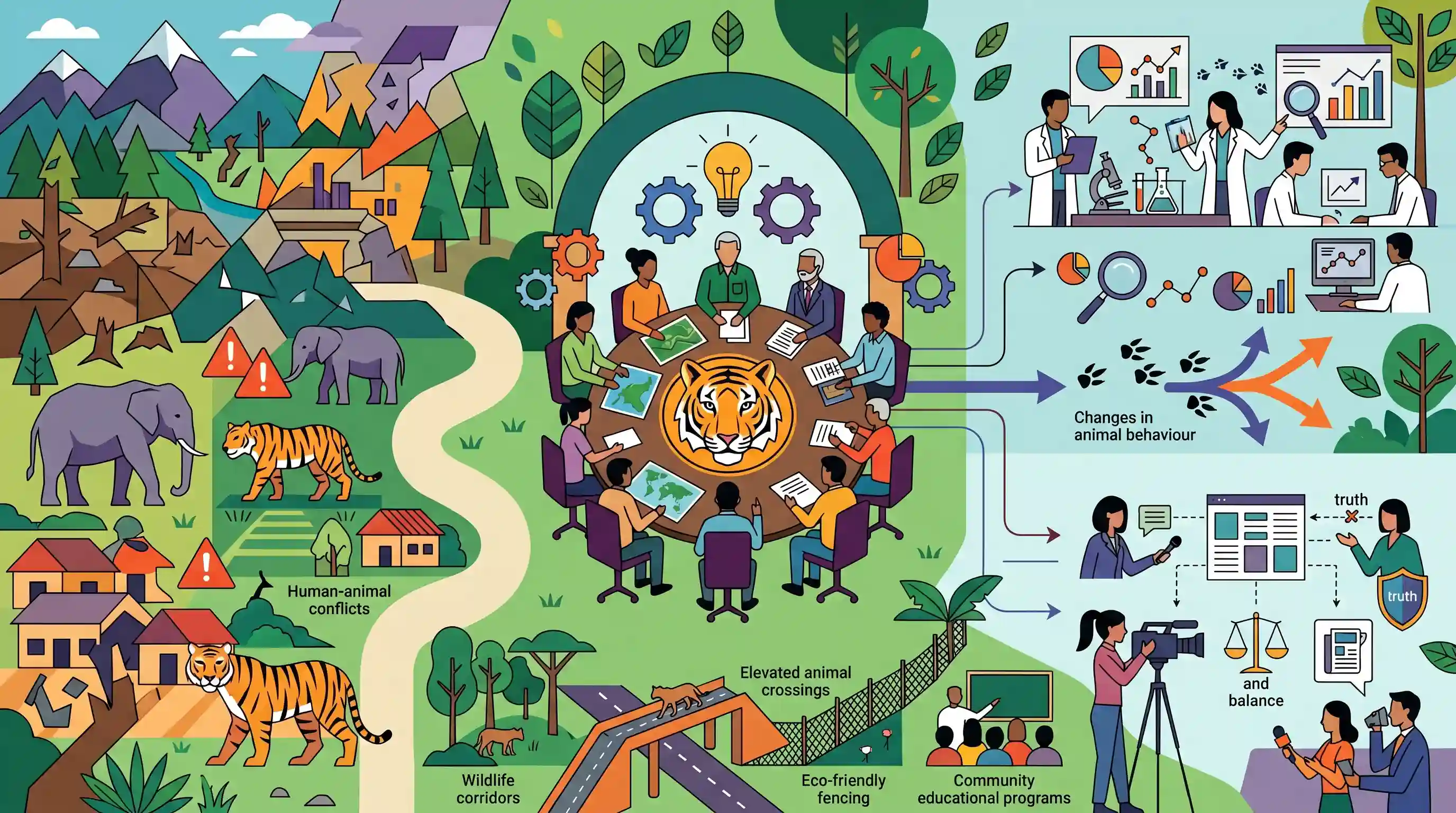
The increasing frequency of human-animal conflicts is a pressing environmental and governance issue in India. Understanding the ecological triggers, managing community relations, and implementing scientific mitigation strategies are essential for effective wildlife conservation. This article highlights the need for institutional mechanisms (like technical committees) and responsible media communication.
Summary
A media, literature, and environmentalist conclave held during the Periyar Tiger Reserve's (PTR) Platinum Jubilee celebrations stressed the urgent need for a scientific study on rising human-animal conflicts in Kerala. Participants advocated for forming a technical committee to analyze animal behavior changes and find long-term solutions, particularly for heavily affected districts like Idukki and Wayanad. The event also highlighted the importance of responsible media reporting to avoid spreading unnecessary panic regarding wildlife encounters.
Key Points
- A conclave organized for the Platinum Jubilee of the Periyar Tiger Reserve called for a scientific study on human-animal conflicts in Kerala.
- A technical committee was proposed to investigate the root causes of the conflict and the changing behavioral patterns of wild animals.
- Districts like Idukki and Wayanad are identified as major hotspots for these conflicts.
- Media participants emphasized the need for responsible, scientific reporting of wildlife encounters to prevent public panic.
Important Terms
Periyar Tiger Reserve (PTR)

A 925 sq km tiger and elephant reserve in Kerala’s Western Ghats, encompassing the Periyar and Pamba river watersheds and centered around Periyar Lake.
UPSC context
GS Paper 3 (Conservation). Noted as India’s best-maintained reserve in the 5th MEE cycle with a score of 94.38%.
Human-Animal Conflict
Negative interactions between humans and wildlife that lead to crop damage, livestock loss, or fatalities on both sides, often due to habitat overlap.
UPSC context
GS Paper 3 (Biodiversity). Tests understanding of habitat fragmentation, monoculture plantations, and socio-economic impacts on forest-fringe communities.
Management Effectiveness Evaluation (MEE)
A cyclical assessment framework used by the NTCA to evaluate the management standards of India’s tiger reserves based on 33 parameters.
UPSC context
GS Paper 3 (Conservation). Essential for monitoring governance success; PTR’s top national ranking makes it a key administrative case study.
Eco-Sensitive Zones (ESZ)
Fragile areas notified around Protected Areas under the Environment (Protection) Act, 1986, to regulate human activity and act as 'shock absorbers'.
UPSC context
GS Paper 3 (Legislation). Critical due to legal debates over mandatory buffer zones and community rights in Kerala.
PTR East Division
The administrative wing of Periyar Tiger Reserve headquartered at Thekkady, managing core visitor zones and ranges like Thekkady and Vallakadavu.
UPSC context
GS Paper 3 (Management). Represents field-level structure responsible for managing high-density human-wildlife interactions at the reserve's main entry point.
Western Ghats
A UNESCO World Heritage site and global biodiversity hotspot stretching 1,600km along India's west coast, hosting high endemism and vital river sources.
UPSC context
GS Paper 1 (Geography) & Paper 3. Central to the Gadgil and Kasturirangan committee reports on sustainable development.
Prelims Trap
"Periyar Tiger Reserve forms the primary watershed for the Cauvery river and is a core part of the Nilgiri Biosphere Reserve."
PTR is located in the Southern Western Ghats (Cardamom/Pandalam Hills), far south of the Nilgiri Biosphere, and is the watershed for the Periyar and Pamba rivers.
Static Concepts Connected
What are the key geographical features of Periyar Tiger Reserve?
- Mountain Ranges: It is situated high in the Cardamom and Pandalam Hills of the Southern Western Ghats in Kerala.
- River Watersheds: The reserve serves as the critical and primary watershed for both the Periyar and Pamba rivers.
- Vegetation: It features highly diverse tropical evergreen, semi-evergreen, and moist deciduous forests, alongside expansive grasslands.
What are the primary anthropogenic drivers of human-wildlife conflict?
- Habitat Fragmentation: Linear infrastructure, dams, and expanding settlements break up continuous wildlife corridors, obstructing traditional migratory routes.
- Fodder Depletion: Exotic monocultures (Eucalyptus, Acacia) and invasives (Lantana, Senna) outcompete native grasses, severely reducing herbivore fodder.
- Changing Agriculture: The shift to palatable cash crops like sugarcane and bananas near forest fringes acts as a magnet for wild elephants.
Cross-Topic Patterns
Invasive Species & Wildlife Conflicts
The proliferation of water-guzzling exotics like Senna spectabilis degrades native fodder, forcing elephants and ungulates into human settlements, which subsequently draws predators into agricultural areas.
Interstate Corridors & Migration
Wayanad's conflict is amplified by its connectivity to Nagarhole, Bandipur, and Mudumalai, creating a contiguous tri-state corridor that complicates localized, state-specific wildlife containment strategies.

Expect a multi-statement question interlinking invasive plant species, native fodder degradation, and rising human-elephant conflicts.
Linked PYQs · 3
Linked PYQs · 3
- 2019PrelimsGS1
Which of the following are in Agasthyamala Biosphere Reserve?
- 2020PrelimsGS1
Among the following Tiger Reserves, which one has the largest area under "Critical Tiger Habitat"?
- 2017PrelimsGS1
From the ecological point of view, which one of the following assumes importance in being a good link between the Eastern Ghats and the Western Ghats?
