India Responds to US Investigations on Labour and Capacity
Source:The Hindu ↗
ఇది ఎందుకు ముఖ్యం
This article highlights trade tensions between India and the U.S. over regulatory probes like forced labour and excess capacity, impacting bilateral economic diplomacy and multilateral trade discussions at the WTO.
సారాంశం
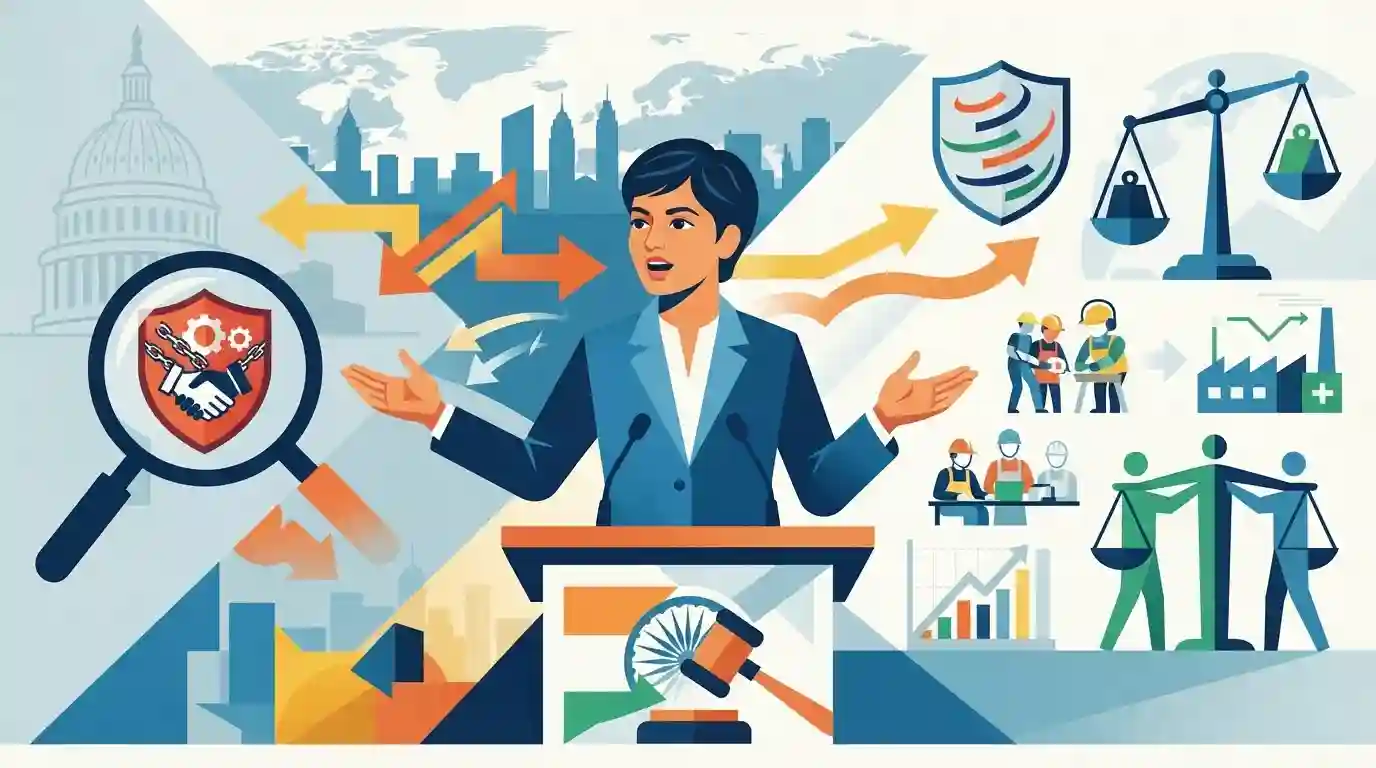
Union Commerce Minister Piyush Goyal defended India against investigations initiated by the United States regarding forced labour and industrial excess capacity, asserting India's commitment to fair trade, labor rights, and transparent economic policies amid evolving bilateral trade tensions.
ముఖ్య అంశాలు
- Commerce Minister Piyush Goyal strongly defended India against U.S. investigations concerning forced labour and excess production capacity.
- He highlighted that India's domestic economic policies prioritize fair competition, worker welfare, and sustainable industrial growth without resorting to unfair subsidies or systemic excess capacities.
- The issues underscore ongoing trade frictions and regulatory scrutiny between India and the U.S. within bilateral and multilateral frameworks like the WTO.
ముఖ్యమైన పదాలు
World Trade Organization (WTO)

A global intergovernmental organization that regulates international trade, provides a forum for negotiating trade agreements, and resolves disputes among member nations based on established rules.
UPSC context
UPSC GS Paper II & III: Important international institutions, global trade governance, and India's multilateral negotiations.
United States Trade Representative (USTR)
A United States federal cabinet-level agency responsible for developing, coordinating, and implementing U.S. international trade policy, including conducting investigations into foreign trade practices under laws like Section 301.
UPSC context
UPSC GS Paper II: Bilateral relations with the U.S. and challenges arising from protectionist trade investigations.
Ministry of Commerce and Industry
The Union government ministry in India responsible for formulating and implementing foreign trade policy, promoting industrial growth, handling bilateral/multilateral trade negotiations, and managing domestic commerce.
UPSC context
UPSC GS Paper III: Indian Economy, industrial policy, export promotion, and foreign trade frameworks.
ప్రిలిమ్స్ ఉచ్చు
India's legal framework permits structural forced labor and lacks constitutional protections against human trafficking.
Article 23 of the Indian Constitution makes the prohibition of forced labor a fundamental right, making blanket international assumptions legally and factually inaccurate.
అనుసంధానమైన స్థిర భావనలు
What are the key trade remedy measures recognized under WTO rules?
- Anti-Dumping:: Anti-Dumping Duties applied to offset dumping when foreign goods are sold below market value causing domestic injury.
- Countervailing Duties:: Countervailing Duties imposed to neutralize negative trade impacts of specific government subsidies in exporting countries.
- Safeguard Measures:: Safeguard Measures acting as temporary restrictions on imports to protect a domestic industry from sudden surges.
అంతర-అంశ నమూనాలు
Section 301 Investigations vs. WTO Multilateralism
U.S. unilateral tariff investigations under Section 301 frequently challenge developing countries' industrial subsidies, raising core compliance debates under WTO dispute settlement rules.
Fundamental Rights vs. International Trade Scrutiny
Constitutional guarantees against forced labor directly interface with international trade compliance, showing how domestic fundamental rights shield against external trade allegations.

U.S. Section 301 investigations + WTO dispute mechanisms + India's constitutional safeguards likely to form a multi-statement prelims Q.
అనుసంధాన PYQలు · 3
అనుసంధాన PYQలు · 3
- 2016MainsGS2
The broader aims and objectives of WTO are to manage and promote international trade in the era of globalization. But the Doha round of negotiations seem doomed due to differences between the developed and the developing countries." Discuss in the Indian perspective.
- 2018MainsGS2
What are the key areas of reform if the WTO has to survive in the present context of "Trade War', especially keeping in mind the interest of India?
- 2019MainsGS2
‘What introduces friction into the ties between India and the United States is that Washington is still unable to find for India a position in its global strategy, which would satisfy India's national self-esteem and ambitions.’ Explain with suitable examples.
