Climate Resilient Urban Development and Disaster Mitigation
Source:Indian Express ↗
Why It Matters
With India experiencing rapid urbanization alongside intensifying climate change events (such as urban floods and heatwaves), understanding climate-resilient urban development is critical for Mains GS3 (Environment, Disaster Management) and GS1 (Urbanization issues).
Summary
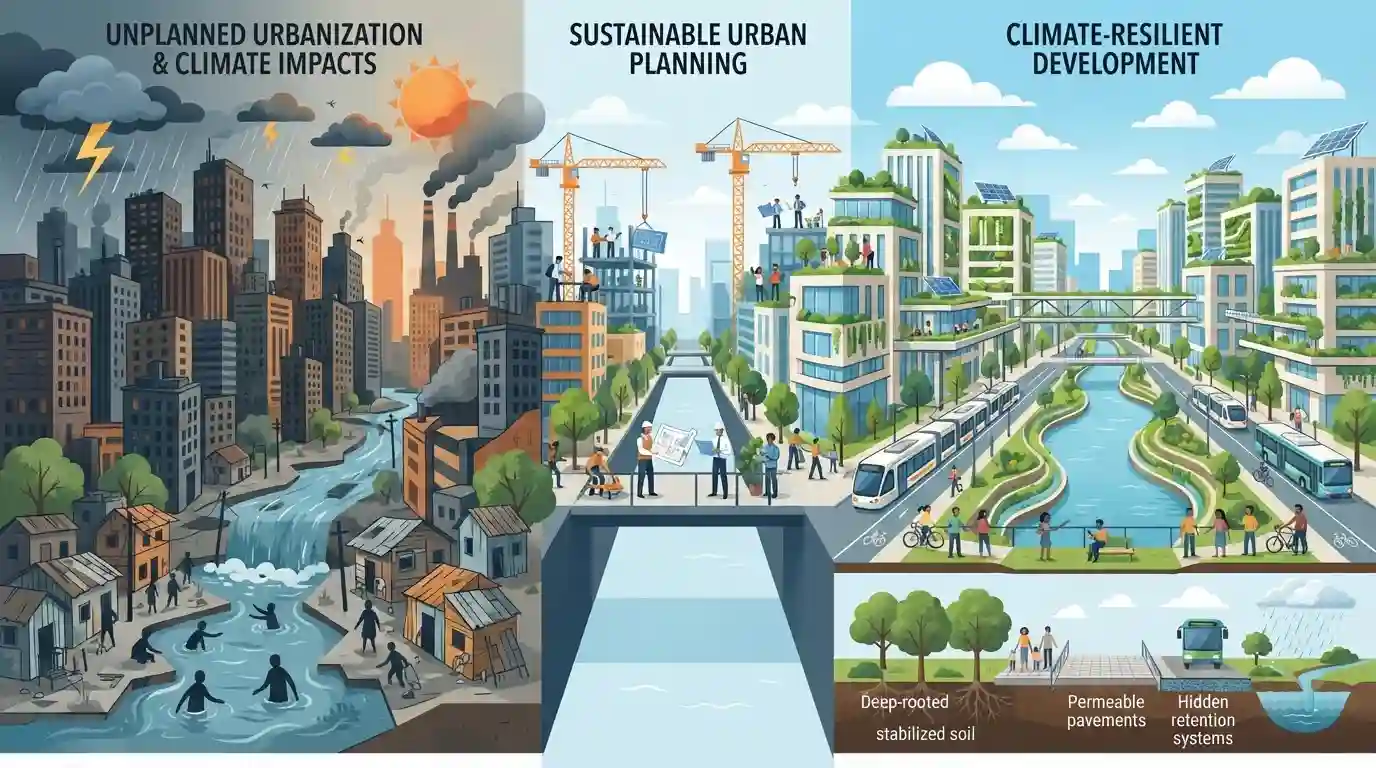
The article discusses the pressing need for climate-resilient urban development to counter escalating environmental and social costs caused by rapid, unplanned urbanization and climate change impacts. It highlights how sustainable urban planning can foster disaster resilience, protect vulnerable communities, and balance ecological sustainability with socio-economic growth.
Key Points
- Rapid and unplanned urbanization exacerbates environmental vulnerabilities like urban flooding, heat islands, and resource depletion.
- Climate-resilient urban development integrates ecological preservation, sustainable land use, and robust infrastructure to mitigate both environmental and socio-economic costs.
- Social equity and inclusive planning are crucial to ensure that climate adaptation measures do not marginalize vulnerable or low-income urban populations.
- Policy frameworks must focus on decentralised water management, green spaces, and disaster-resilient building codes.
Important Terms
Sendai Framework for Disaster Risk Reduction

A 15-year international agreement (2015–2030) adopted at the Third UN World Conference in Sendai, Japan, aimed at preventing new disaster risks and reducing existing ones through targeted global priorities and resilience measures.
UPSC context
Important for GS Paper III (Disaster Management); tests international frameworks, national disaster management planning, and risk reduction strategies.
Prelims Trap
Climate-resilient urban development is primarily an engineering challenge focusing on infrastructure hardening rather than social policy.
Aspirants often assume climate resilience is purely structural or engineering-focused, ignoring that inclusivity and social equity are core pillars of modern urban resilience frameworks.
Static Concepts Connected
What are the key principles and targets of the Sendai Framework for Disaster Risk Reduction?
- Timeline: Adoption period spans 2015 to 2030, succeeding the Hyogo Framework for Action.
- Priority Areas: Targets four priority areas: understanding disaster risk, governing risk, investing in resilience, and enhancing preparedness.
- Core Aim: Aims for substantial reduction of disaster mortality, affected people, and economic loss by 2030.
What are the primary institutional mechanisms for urban disaster management in India under the NDMA guidelines?
- Decentralisation: Devolves primary response duties to Urban Local Bodies (ULBs) and State Disaster Management Authorities (SDMAs).
- City Plans: Mandates city-specific Disaster Management Plans incorporating hazard-vulnerability risk assessments.
- Infrastructure: Emphasizes building code enforcement and retrofitting of critical urban infrastructure.
Cross-Topic Patterns
Urban Heat Islands & Sendai Framework
Unplanned urban expansion directly fuels urban heat islands and water scarcity, compounding disaster risks addressed under the Sendai Framework.
Urban Local Bodies & Green Municipal Finance
Sustainable urban planning intersects with fiscal federalism through municipal green bonds and decentralized urban local body financing.

Expect a mains analytical question linking climate-resilient urban design with social equity and the Sendai Framework targets.
Linked PYQs · 3
Linked PYQs · 3
- 2024MainsGS3
Flooding in urban areas is an emerging climate-induced disaster. Discuss the causes of this disaster. Mention the features of two such major floods in the last two decades in India. Describe the policies and frameworks in India that aim at tackling such floods.
- 2024MainsGS3
What is disaster resilience? How is it determined? Describe various elements of a resilience framework. Also mention the global targets of Sendai Framework for Disaster Risk Reduction (2015–2030).
- 2013MainsGS1
Discuss the various social problems which originated out of the speedy process of urbanization in India.
