Climate Change Impacts on Transboundary Indus Waters Treaty
Source:Indian Express ↗
Why It Matters
The Indus Waters Treaty is a hallmark of India-Pakistan diplomacy, heavily tested by contemporary climate change. Understanding the intersection of transboundary water sharing (GS2) and the geographical/hydrological impacts of melting Himalayan glaciers (GS1) is a frequent theme in both Prelims and Mains.
Summary
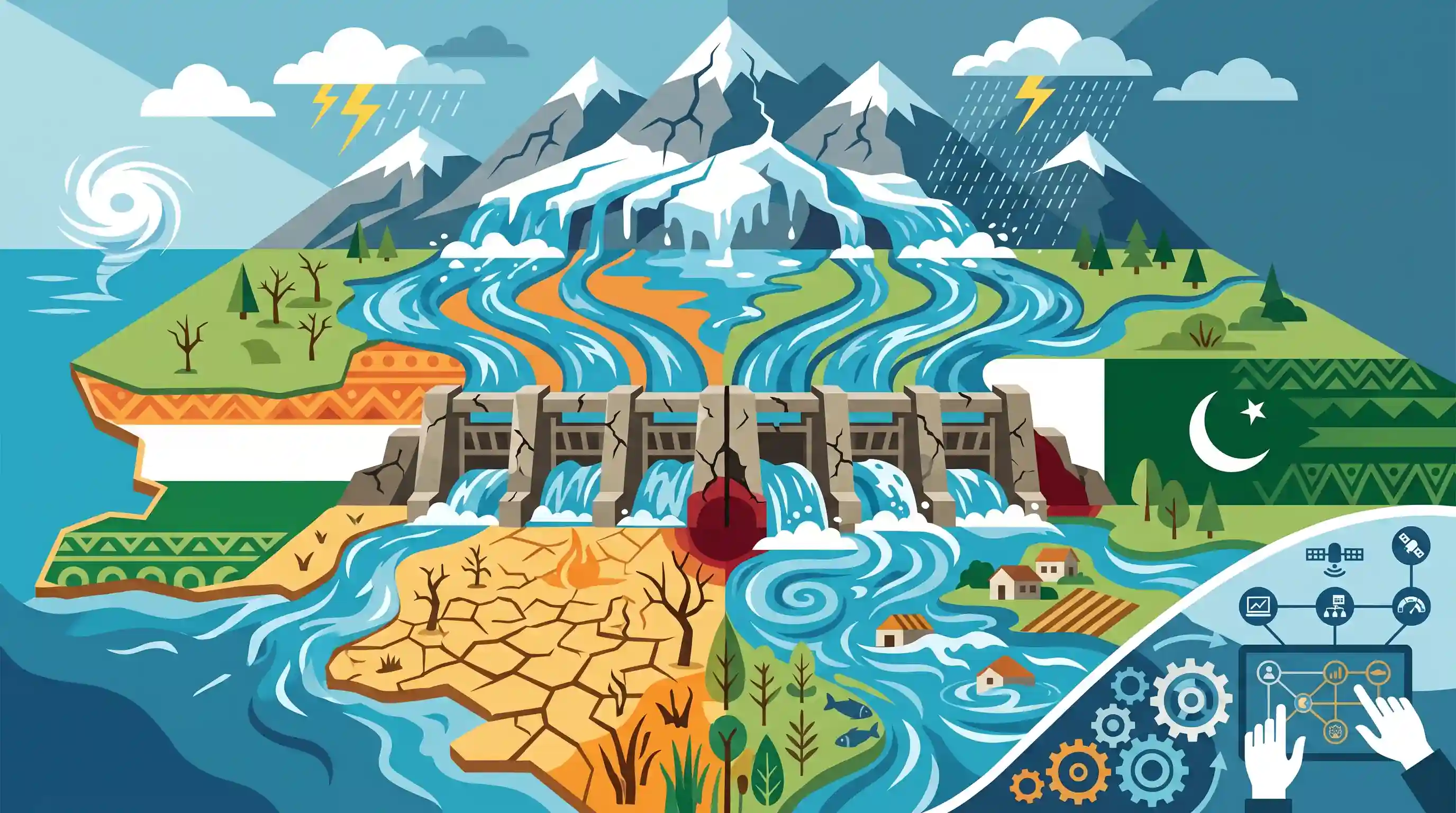
The Indus Waters Treaty (IWT), signed by India and Pakistan in 1960, is increasingly strained by the realities of climate change. While the treaty successfully divided the Indus basin's rivers, it lacks provisions for addressing shifting hydrology caused by melting Himalayan glaciers and erratic rainfall patterns. As river flows become more unpredictable, the rigid quantitative allocation of water is no longer sufficient. The article argues that India and Pakistan must renegotiate and update the treaty to include climate resilience, ecological preservation, and a cooperative joint basin management framework to secure the region's future water needs.
Key Points
- The 1960 Indus Waters Treaty (IWT) between India and Pakistan rigidly divides the basin's rivers but lacks mechanisms to address modern environmental and climate challenges.
- Climate change is drastically altering the hydrology of the Indus basin through melting Himalayan glaciers and erratic precipitation, leading to unpredictable river flows.
- The treaty currently focuses on a strict quantitative division of water rather than comprehensive environmental sustainability or ecological preservation.
- To ensure long-term regional water security, both nations need to update the IWT by moving towards a cooperative, joint basin management approach that incorporates climate resilience.
Important Terms
Indus Waters Treaty (1960)

A 1960 water-distribution agreement between India and Pakistan, brokered by the World Bank, allocating the Indus system's six rivers between the two nations.
UPSC context
GS Paper II: India-Pakistan relations; tests knowledge of transboundary water governance and historic bilateral agreements.
Permanent Indus Commission
A bilateral body of officials from India and Pakistan established to implement the treaty, exchange data, and resolve technical "questions" through annual meetings.
UPSC context
GS Paper II: Institutional mechanisms for dispute resolution and bilateral cooperation in international relations.
World Bank
The global financial institution that mediated the nine-year negotiations for the IWT and remains a signatory with specific procedural roles in dispute resolution.
UPSC context
GS Paper II: Role of international organizations in mediating regional conflicts and overseeing global treaties.
Western Rivers
The Indus, Jhelum, and Chenab; allocated primarily to Pakistan under the IWT, with India allowed limited "non-consumptive" uses like run-of-the-river power projects.
UPSC context
GS Paper I & II: Geography of the Indus basin and the legal constraints on India's water usage.
Eastern Rivers
The Sutlej, Beas, and Ravi; allocated for unrestricted use by India under the Indus Waters Treaty.
UPSC context
GS Paper I: Drainage systems of North India and the division of water resources.
Neutral Expert
The second stage of the IWT's dispute resolution mechanism, appointed by the World Bank to resolve "differences" of a technical nature.
UPSC context
GS Paper II: Legal and technical frameworks for solving international transboundary water disputes.
Prelims Trap
India is strictly prohibited from utilizing the waters of the Western Rivers (Indus, Jhelum, Chenab) under the 1960 Treaty.
India is allowed limited non-consumptive, domestic, and agricultural use of Western rivers, including run-of-the-river hydroelectric projects, subject to strict design criteria.
Static Concepts Connected
How does the Indus Waters Treaty allocate rivers and resolve disputes?
- Eastern Rivers: Ravi, Beas, and Sutlej are allocated to India for unrestricted use.
- Western Rivers: Indus, Jhelum, and Chenab are allocated primarily to Pakistan, but India retains limited usage rights.
- Dispute Mechanism: A graded system: Permanent Indus Commission (questions) -> Neutral Expert (differences) -> Court of Arbitration (disputes).
How does climate change physically alter Himalayan river hydrology?
- Glacial Retreat: Accelerated melting causes short-term flooding but leads to a long-term structural decline in river base flows during dry seasons.
- Erratic Precipitation: Shifts from snowfall to rainfall in upper catchments increase flash flood risks and alter the timing of seasonal discharges.
Cross-Topic Patterns
Run-of-the-river hydro & J&K development
The IWT's strict criteria on India's hydro-projects (like Kishanganga and Ratle) directly intersect with GS3 border infrastructure and internal security strategies in Jammu & Kashmir.
Climate as a threat multiplier in water diplomacy
Just as with the Brahmaputra (China) and Teesta (Bangladesh), climate-induced flow variations are turning rigid, static water-sharing agreements into active geopolitical flashpoints.

Expect a 2026 multi-statement question merging IWT dispute mechanisms with climate-induced changes to Himalayan river hydrology.
Linked PYQs · 4
Linked PYQs · 4
- 2012MainsGS2
The situation today is far different to that prevalent fifty years back when the Indus Water Treaty was signed." Highlight the complexity of the current challenges on both sides of the border in this regard. Do you think that a review of the Treaty is in India's best interests?
- 2020MainsGS1
How will the melting of Himalayan glaciers have a far-reaching impact on the water resources of India?
- 2021PrelimsGS1
With reference to the Indus river system, of the following four rivers, three of them pour into one of them which joins the Indus direct. Among the following, which one is such river that joins the Indus direct?
- 2011MainsGS1
Discuss the impact of climate change on water resources in India.
