Darjeeling Tea Yields Decline Due to Climate Change and Warm Weather
Source:livemint ↗
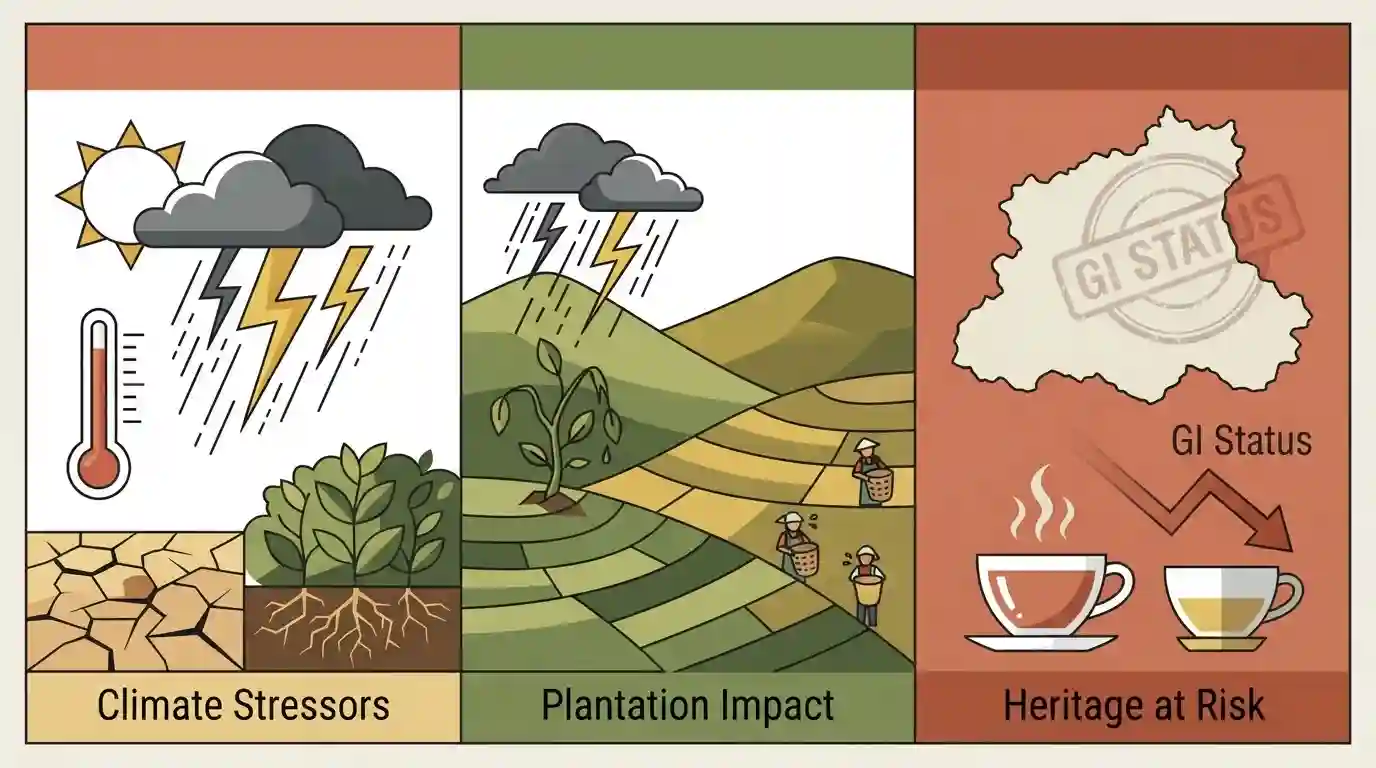
Why It Matters
Crucial for West Bengal state-specific administrative awareness (Darjeeling tea, agriculture) and general geography/environmental studies concerning climate change impacts on plantation crops in Northeast India.
Summary
The article highlights how climate change—specifically erratic rainfall and warm weather patterns—is adversely affecting tea plantations, crop yields, and quality in Darjeeling and the broader Northeast Indian tea industry. This poses severe challenges to heritage crops like Darjeeling tea, which relies heavily on specific climatic conditions for its unique flavor and GI status.
Key Points
- Climate change, characterized by erratic rainfall and rising temperatures, is severely impacting tea plantation yields and quality in Darjeeling and Northeast India.
- Darjeeling tea holds significant historical, economic, and cultural importance as India's first GI-tagged product (2004-05).
- Changes in weather patterns disrupt the flush seasons, affecting the distinctive aroma and flavor profile that give Darjeeling tea its global reputation.
- The northeastern tea industry is facing mounting economic challenges due to declining productivity, pest infestations driven by warmth, and unpredictable weather cycles.
Important Terms
Geographical Indications of Goods (Registration and Protection) Act, 1999

An Indian legislation enacted to comply with WTO TRIPS agreements, providing legal protection and intellectual property rights to distinct regional products. Darjeeling tea was its historic first recipient in 2004.
UPSC context
Important for WBCS (Polity/Economy & West Bengal economy), testing statutory protection of heritage regional goods and intellectual property rights.
Tea Board of India
A statutory body established under the Tea Act of 1953 and headquartered in Kolkata, functioning under the Ministry of Commerce and Industry to regulate and promote Indian tea.
UPSC context
Crucial for WBCS (West Bengal Economy & Indian Geography), examining institutional frameworks, commodity boards, and agricultural export administration.
Prelims Trap
Darjeeling tea received its GI tag concurrently with India joining the WTO in 1995.
Aspirants often assume Darjeeling tea was given a GI tag at the inception of the WTO in 1995, whereas the Indian Act passed in 1999 and the tag was officially awarded in 2004-05.
Static Concepts Connected
What are the key legal and administrative frameworks governing Geographical Indications and the tea industry in India?
- GI Act 1999: GI Act of 1999 governs registration and protection; Darjeeling tea was India's first GI tag in 2004-05.
- Tea Board of India: Statutory body under the Ministry of Commerce and Industry established under the Tea Act of 1953.
- Tocklai Institute: World's oldest and largest research station for tea, located in Jorhat, Assam, aiding regional productivity.
Cross-Topic Patterns
GI Tags and Climate Vulnerability
GI tag protection under the WTO TRIPS agreement directly intersects with climate-induced shifts altering the unique terroir of heritage regional products.
Plantation Economy and Climate Stress
Declining tea yields and pest infestations in North Bengal and Assam impact plantation labor welfare and export revenues under State economic planning.

Climate impact on West Bengal's GI-tagged Darjeeling tea + Tocklai Research role will likely feature in regional economic geography.
Linked PYQs · 2
Linked PYQs · 2
- 2020WBCS_PRELIMSGS1
First Indian product to get G.I Tag is
- 2023WBCS_PRELIMSGS1
In Assam the Tea Research Centre is at
