Climate Change Jurisprudence and Intergenerational Equity Principles
Source:Indian Express ↗
Why It Matters
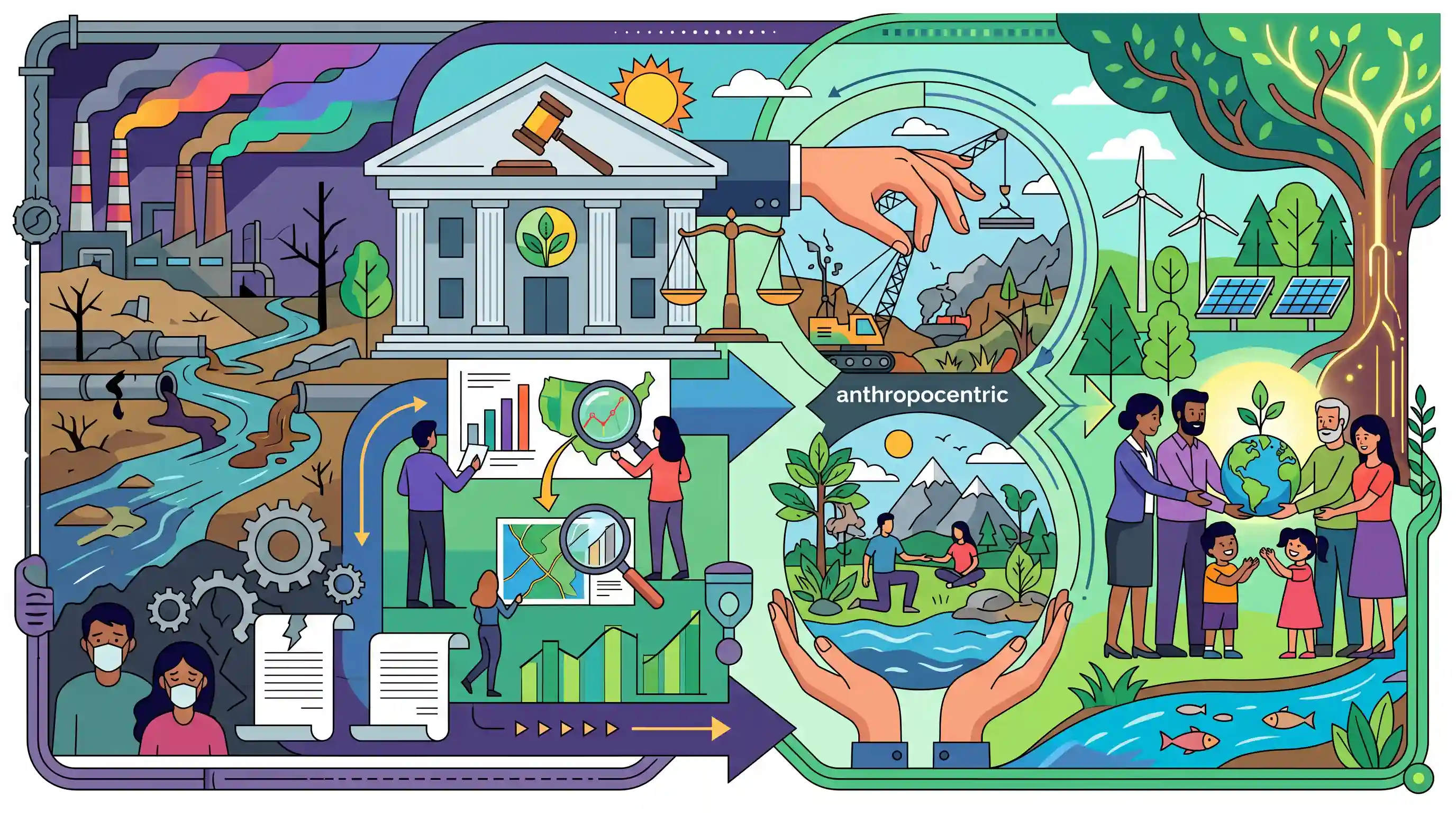
This article provides excellent perspectives for UPSC Mains on environmental ethics (eco-centric vs. anthropocentric views, trusteeship principle), underscores the significance of statutory bodies like the NGT in bridging institutional gaps in environmental governance, and serves as a case study for intergenerational equity and historical environmental disasters (Bhopal).
Summary
Vice President Jagdeep Dhankhar emphasized that climate change is an existential challenge during a National Green Tribunal (NGT) conference, advocating for an ethic of intergenerational equity where humans act as trustees of the planet. Experts at the event noted a critical shift in environmental jurisprudence from an anthropocentric to an eco-centric approach. Additionally, the historic 1984 Bhopal gas tragedy was highlighted as a grim reminder of environmental negligence from an era lacking strong regulatory frameworks like the NGT, emphasizing the ongoing need for robust institutional mechanisms against pollution and ecological degradation.
Key Points
- Vice President Dhankhar characterized climate change as a critical existential threat, urging individuals to act as responsible trustees of Earth's resources for future generations.
- The 1984 Bhopal gas tragedy was cited as a mega-disaster resulting from severe environmental negligence, exacerbated by a lack of institutional awareness and the absence of regulatory bodies like the NGT at the time.
- The National Green Tribunal (NGT) was recognized for its essential and catalytic role in containing environmental degradation, exploring viable ecological solutions, and delivering environmental justice.
- The discourse at the conference emphasized a vital transition in legal and international frameworks from an anthropocentric (human-centered) to an eco-centric (nature-centered) approach to jurisprudence.
- Solicitor General Tushar Mehta highlighted ongoing governmental efforts to combat air and water pollution, acknowledging that despite proactive measures, climate change impacts—such as erratic monsoons and extreme weather events—pose escalating challenges.
Important Terms
National Green Tribunal (NGT)

A statutory body established under the National Green Tribunal Act (2010) for the effective and expeditious disposal of cases relating to environmental protection and conservation of forests.
UPSC context
GS Paper II/III: Statutory bodies; Environmental pollution. Tests understanding of specialized judicial mechanisms and institutional environmental governance.
Intergenerational Equity
A principle of environmental ethics stating that the current generation holds natural resources in trust and must preserve them for the benefit of future generations.
UPSC context
GS Paper III/IV: Sustainable development; Ethics. Tests the application of moral frameworks to ecological conservation and long-term policy.
Eco-centric Approach
A nature-centered philosophy recognizing that ecosystems and species have intrinsic value and rights, regardless of their utility or importance to human beings.
UPSC context
GS Paper IV/III: Environmental ethics; Conservation. Relevant for analyzing the judicial shift from human-centric to nature-centric legal reasoning.
Public Trust Doctrine
A legal doctrine where the State acts as a trustee for vital natural resources like air and water, ensuring they are preserved for public use.
UPSC context
GS Paper II/III: Judiciary; Environmental law. Tests knowledge of landmark doctrines (e.g., M.C. Mehta v. Kamal Nath) protecting common property.
Absolute Liability
A legal principle holding enterprises engaged in hazardous activities fully liable for any harm caused, without the standard exceptions available under "strict liability."
UPSC context
GS Paper III: Environmental legislation. Vital for understanding industrial accountability post-Bhopal Gas Tragedy and the M.C. Mehta (Oleum Gas) case.
Environmental Jurisprudence
The branch of law and legal theory focused on environmental protection, integrating principles like 'Polluter Pays' and the 'Precautionary Principle' into judicial decisions.
UPSC context
GS Paper II/III: Judiciary; Conservation. Tests awareness of how the legal system adapts to address ecological and industrial risks.
Prelims Trap
"The NGT has overarching jurisdiction over all environmental laws, including the Wildlife (Protection) Act."
NGT adjudicates civil cases under seven specific environmental laws. It explicitly does not cover the Wildlife (Protection) Act, 1972, or the Indian Forest Act, 1927. Aspirants often assume blanket jurisdiction.
Static Concepts Connected
What is the jurisdiction and procedural mandate of the National Green Tribunal (NGT)?
- Statutory basis: Established under the NGT Act 2010 to handle civil environmental cases falling strictly under 7 specified acts (including Air, Water, and Environment Protection Acts).
- Procedural flexibility: It is not bound by the rigid procedures of the Code of Civil Procedure, 1908, but is guided by the principles of natural justice.
- Excluded Acts: It explicitly excludes the Wildlife (Protection) Act, 1972, and the Indian Forest Act, 1927 from its jurisdictional purview.
How does Eco-centric jurisprudence differ from the Anthropocentric approach?
- Anthropocentric approach: A human-centered view that protects the environment primarily as a resource for human survival, health, and economic benefit.
- Eco-centric approach: A nature-centered view recognizing the intrinsic value of ecosystems, independent of human utility (e.g., granting legal personhood to rivers).
- Constitutional backing: Judicial interpretation of Article 21 (Right to Life) and Article 51A(g) (Duty to protect environment) support this jurisprudential shift.
Cross-Topic Patterns
Disaster Management + Environment Protection Act
The Bhopal Gas Tragedy catalyzed the enactment of the Environment (Protection) Act, 1986 via Article 253. It connects industrial disaster management frameworks directly to Parliament's constitutional power to implement international agreements.
Public Trust Doctrine + Climate Pledges
The concept of humans as "trustees" derives from the Public Trust Doctrine, forming the philosophical bedrock for inter-generational equity and India's long-term climate commitments like the Panchamrit strategy.

Expect a 2026 Prelims statement differentiating anthropocentric vs eco-centric jurisprudence, paired with NGT's excluded statutory acts.
Linked PYQs · 3
Linked PYQs · 3
- 2018PrelimsGS1
How is the National Green Tribunal (NGT) different from the Central Pollution Control Board (CPCB)? 1. The NGT has been established by an Act whereas the CPCB has been created by an executive order of the Government. 2. The NGT provides environmental justice and helps reduce the burden of litigation in the higher courts whereas the CPCB promotes cleanliness of streams and wells, and aims to improve the quality of air in the country. Which of the statements given above is/are correct?
- 2020MainsGS3
Explain intra-generational and inter-generational issues of equity from the perspective of inclusive growth and sustainable development.
- 2024MainsGS4
Global warming and climate change are the outcomes of human greed in the name of development, indicating the direction in which extinction of organisms including human beings is heading towards loss of life on Earth. How do you put an end to this to protect life and bring equilibrium between the society and the environment?
